dailynewsnblog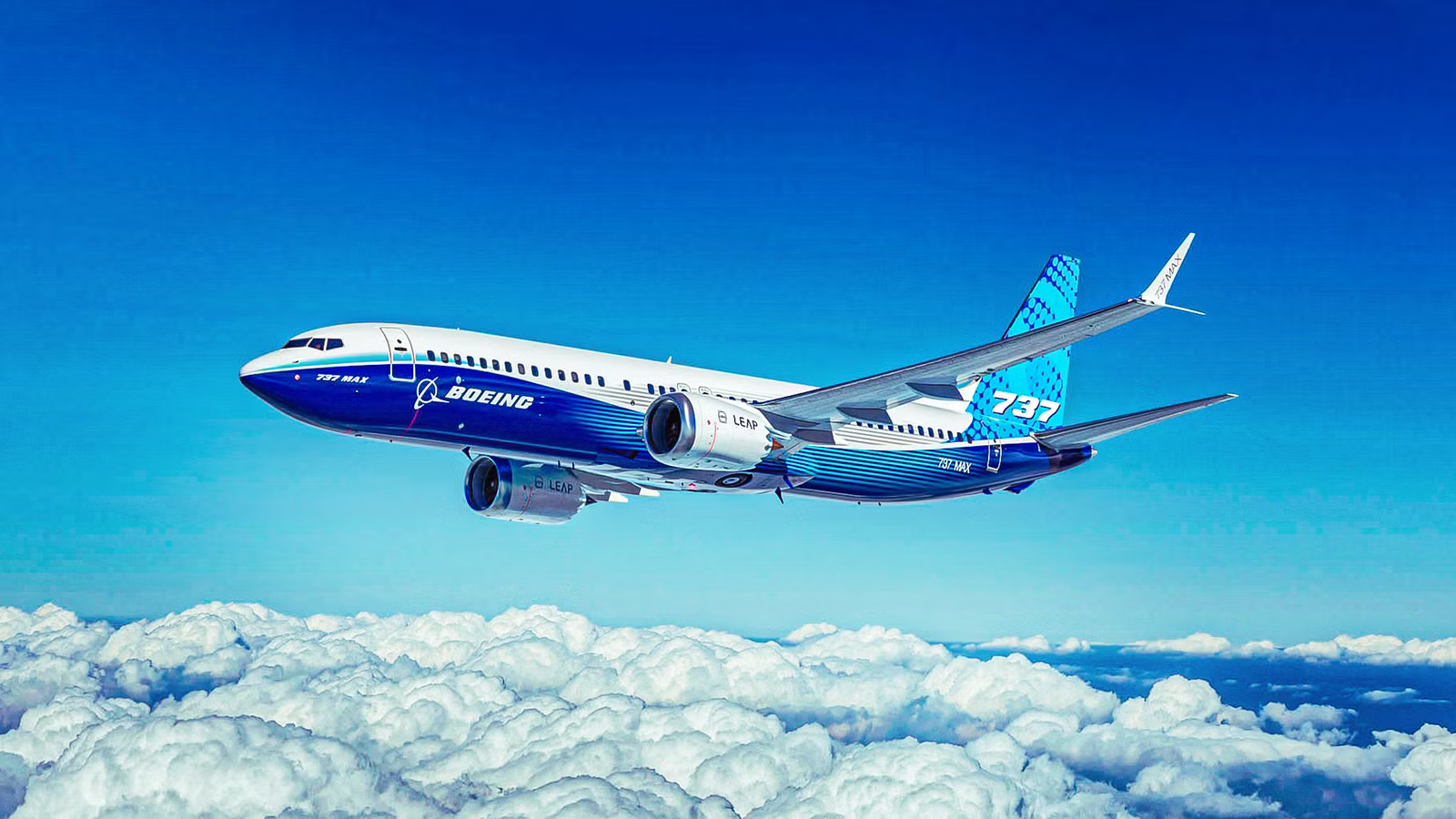
 Boeing is fighting to claw back a long-lost backlog slot while Airbus has spent months locking down nearly 200 firm Airbus A320neo commitments across
  Air China, China Southern, and Xiamen Airlines. US Trade Representative Jamieson Greer confirmed on September 21, 2026, that roughly 150 of the 200 Boeing commitment slots are actively moving through formalization. The expected mix blends domestic Boeing 737 MAX narrowbodies with international Boeing 787 aircraft, but Boeing CEO Kelly Ortberg clarified that specific allocations will be announced by individual Chinese carriers at their own pace rather than as a single consolidated block.
This breakthrough effectively ends an almost decade-long purchasing freeze that began with a 300-jet package in November 2017. President Donald Trump indicated the deal could eventually scale to 750 aircraft if phased implementation succeeds. However, beneath the political fanfare, China’s aircraft procurement is strictly centralized through state-owned entities. Turning diplomatic frameworks into active deliveries means navigating CAAC airworthiness certifications, pilot training cycles, and local industrial policies, an ecosystem where Airbus holds a distinct, decisive advantage.
Shipped From The Source

Recent progress on China’s commitment to buy 200 Boeing aircraft, reported by Reuters, is a major diplomatic victory for the American airframer, but it does little to sway Airbus’s dominant operational footprint in East Asia. The European manufacturer capitalized on Boeing’s decade-long absence to entrench its narrowbody aircraft across state-owned fleets, establishing a commercial lead that a single 200-jet order tranche cannot easily dismantle.
Airbus maintains a distinct edge through its Final Assembly Line Asia (FAL Asia) facility in Tianjin, allowing Chinese carriers to take delivery of A320neo and A321neo airframes in local currency while fulfilling state industrial manufacturing quotas. In contrast, Boeing operates an export-only model from Washington state and South Carolina, exposing Chinese airlines to foreign exchange volatility and cross-border tariff risks during trade disputes.
To support the incoming Boeing fleet, the deal incorporates critical engine supply guarantees from GE Aerospace to ensure operational stability, as per Simply Wall St. Nevertheless, until central procurement agencies formally distribute delivery slots across Air China, China Eastern, and China Southern, Boeing is still locked in a multistep conversion process, and Airbus continues delivering factory-fresh aircraft directly from within Chinese borders.
State-Owned System

So why does Boeing still lag behind Airbus despite this multi-billion-dollar breakthrough? It’s easy to take the headline jet counts at face value and overlook the underlying mechanics of Chinese airline fleet procurement, the real difference-maker here. In China’s commercial aviation sector, major aircraft acquisitions are governed centrally through state-owned entities before individual airlines ever assign tail numbers or flight schedules, as detailed in Simple Flying analysis.
The main procurement mechanism runs through the China Aviation Supplies Holding Company (CASC), alongside the State-owned Assets Supervision and Administration Commission (SASAC) and the Civil Aviation Administration of China (CAAC). CASC serves as the central purchasing agent, negotiating high-level framework agreements before assigning specific delivery slots to state-owned carriers such as Air China, China Southern, and China Eastern. While Boeing is currently formalizing its 200-jet framework, Airbus has consistently locked in firm, carrier-specific orders over recent months. This includes 60 A320neo-family aircraft for Air China in late 2025 and 137 A320neo-family jets for China Southern and Xiamen Airlines in early 2026, according to coverage by AeroTime.
This difference in order maturity highlights Airbus’s commercial head start across the country. Taking delivery of an aircraft through CASC means aligning factory production lines with CAAC airworthiness clearances and airline pilot training cycles. Airbus’s order pipeline is already integrated into Chinese fleet planning, whereas Boeing must follow a multi-step process to turn a diplomatic commitment into active, flying airframes.
Timelines Are Down To The Airlines

Converting political goodwill into tangible aircraft deliveries is Boeing’s toughest operational hurdle. While diplomatic announcements establish overarching purchasing targets, airline fleet managers need to be able to justify aircraft additions based on route network demand, crew availability, and long-term operating costs.
Boeing CEO Kelly Ortberg highlighted this operational reality when discussing the 200-jet commitment, noting that individual Chinese airlines will announce their aircraft allocations and models on their own timelines rather than as a single block buy. As reported by Air Data News, aviation trade observers point out that Chinese carriers are carefully balancing their narrowbody intake between Western imports and the domestic Comac C919, China’s own homegrown answer to Western-built narrowbody platforms. As a result, Boeing’s order book will fill gradually as carriers finalize individual finance and delivery schedules with CASC.
Meanwhile, trade officials see the deal as a critical step to stabilize American aerospace exports. Speaking to media outlets after bilateral discussions, US Trade Representative Jamieson Greer confirmed that about 150 jets are moving through formalization, with 140 in a “good state” of negotiation. President Donald Trump suggested the overall agreement could eventually scale to 750 aircraft, but analysts warn that such expansion depends heavily on uninterrupted supply chains and stable trade relations over the coming years.
The Third Challenger

The commercial airframe duopoly between Seattle and Toulouse is rapidly evolving into a complex triopoly as China’s domestic aerospace manufacturer, COMAC (Commercial Aircraft Corporation of China), grows. Founded in 2008, the manufacturer found early success with the C909 (ARJ21) before bringing the C919 to the market in 2023. Crucially, COMAC’s state backing protects it from typical free-market pressures, and operating within the world’s most rapidly expanding domestic aviation market, the manufacturer has plenty of room to grow
Catch what other flight trackers miss
Emergency squawks, holds, NOTAMs — live signals, no signup.
Open tracker
Catch what other flight trackers miss
Emergency squawks, holds, NOTAMs — live signals, no signup.
Open tracker
While Airbus and Boeing compete for high-yield long-haul and trunk routes, Chinese state-owned carriers are increasingly turning to COMAC’s domestic C919 narrowbody to build internal capacity. Major domestic airlines, including Air China, China Eastern, and China Southern, have each signed massive 100-jet commitments for the C919, as reported by Simple Flying. This domestic shift caps the long-term market share available to Western manufacturers, leaving Boeing to compete against Airbus for a shrinking pool of imported narrowbody delivery slots.
Airbus foresaw this strategic shift over a decade ago when it built its first Final Assembly Line (FAL Asia) in Tianjin, securing a home-court advantage early on. Assembling A320neo and A321neo jets inside Chinese borders, Airbus aligned its business model directly with Beijing’s Five-Year Plan manufacturing targets.
External Forces May Throw In Uncertainty

Despite the positive momentum around Boeing’s 200-jet framework, major operational and geopolitical risks could delay or disrupt deliveries. The biggest vulnerability comes in the form of trade policy instability and potential tariff fluctuations. Commercial jetliner purchases are often considered high-profile diplomatic bargaining chips, so any sudden escalation in transpacific trade disputes could prompt central Chinese regulators to pause aircraft import approvals or defer delivery acceptances.
A second critical hurdle involves the re-integration of stored 737 MAX airframes, often referred to as “white tails” or stored aircraft built during the multi-year delivery freeze, detailed by Reuters. Re-commissioning these stored jets will need extensive engineering inspections, Civil Aviation Administration of China (CAAC) airworthiness sign-offs, and flight crew recertification. For Chinese airline fleet managers, accepting an older-build stored airframe has distinct maintenance and scheduling challenges compared to receiving a brand-new, factory-fresh A320neo straight off the assembly line in Tianjin.
Operational Risk / Exception | Potential Impact on Boeing | Mitigation / Status |
Bilateral Trade Policy Volatility | Delays in formalizing remaining 50 commitments into firm orders | Bilateral discussions via the US-China Board of Trade |
CAAC Certification and Delivery Clearance | Extended delivery timelines for stored 737 MAX airframes | Ongoing alignment with Chinese aviation regulators |
Engine and Components Supply Bottlenecks | Assembly line slowdowns impacting global delivery slots | Supply guarantees secured through GE Aerospace |
Ultimately, Boeing’s true progress in East Asia is not really shown in the preliminary MoU signatures; instead, actual delivery slot registrations on airline balance sheets will be the key metric. State carriers must first turn these allocations into binding, noncancelable contract lines with assigned serial numbers; until then, the order framework remains vulnerable to broader geopolitical shifts.
One Small Step For Boeing

Whether Boeing’s 200-aircraft agreement is a true competitive turning point in East Asia depends on distinguishing high-level diplomatic frameworks from operational fleet realities. The deal is a vital breakthrough that ends a nearly decade-long ordering freeze, but it is an incremental step in a longer market recovery rather than an overnight shift in market share.
Airbus’ lead in China, bolstered by its Tianjin assembly line, RMB currency settlement frameworks, and massive firm narrowbody order book across state-owned carriers, stands formidable. Boeing will benefit as Chinese airlines formalize these commitments to support domestic route growth and international fleet renewal. However, as domestic airframer COMAC continues to scale C919 production for major Chinese airlines, both Western aerospace giants will increasingly find themselves competing for a more tightly regulated pool of imported widebody and narrowbody delivery slots.