dailynewsnblog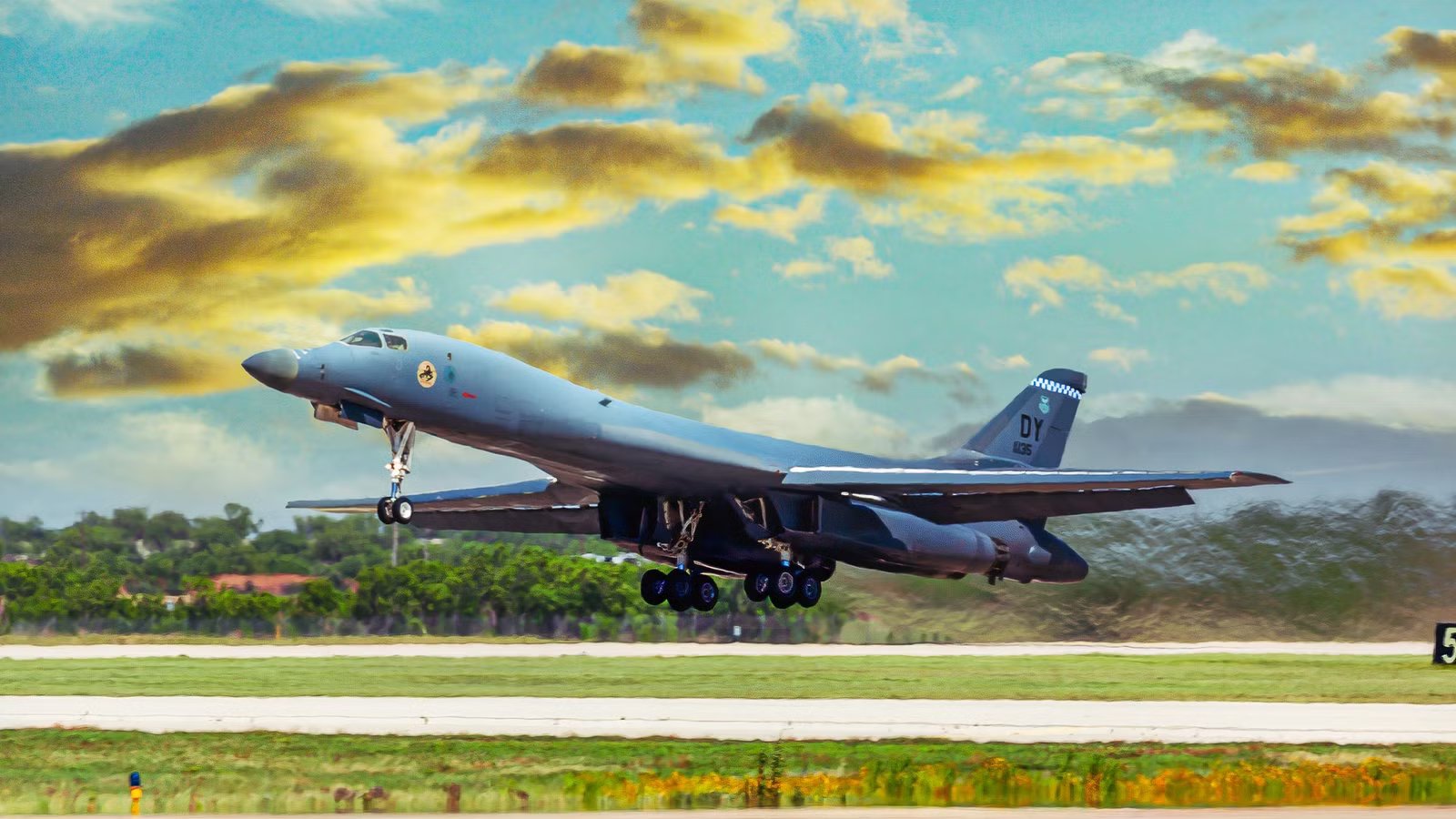
Operation Epic Fury was a massive undertaking and a demonstration of raw, coordinated airpower. The operation involved the largest forward deployment of US Air Force (USAF) bombers in two decades. To accomplish this, the service deployed around one-third of its B-1B Lancer fleet, in addition to several  Boeing B-52 Stratofortresses.
Moving these aircraft to a forward location showed the importance of not only being closer to target sites, but also reducing operational costs, crew fatigue, and mechanical wear on the bombers themselves. Operating from the United States and flying round trips to Iran, as the bombers did during the initial days of the campaign, was profoundly impractical.
Furthermore, launching missions from RAF Fairford increased sortie generation and potentially provided a more cost-effective way to sustain long-range strikes than maintaining an additional carrier battle group, which would have had to undertake some of the same or similar mission sets as the bombers deployed to England.
A Third of the B-1 Fleet Moves to Fairford

Epic Fury commenced on February 28 at 1:15 AM and officially concluded on May 5. According to US Central Command, the operation involved 26 aircraft types, including fighters, bombers, refueling tankers, electronic warfare, reconnaissance, heavy transport aircraft, and drones. This diverse array of aircraft launched from numerous locations across the United Kingdom, Europe and the Middle East, coordinating to strike and destroy more than 13,000 targets.
The bomber force was used to devastating effect against Iranian military sites, primarily operating from RAF Fairford, the USAF’s only bomber forward operating location, in the Cotswolds, South West England. The base is home to the 501st Combat Support Wing and 420th Air Base Squadron, which enable US and NATO warfighters to conduct a full spectrum of aerial operations. Fairford has also played an important role in US bomber operations in Europe for decades, making it a natural location for supporting long-range strike missions.
London had initially denied the US the ability to use its bases; however, following an Iranian drone strike on a UK base in Cyprus, the British government reversed course and cleared the way for US-led strikes operating from its territory. The buildup of the B-1B force for Epic Fury promptly began on March 6. By the end of the month, RAF Fairford had become a major forward operating hub for a sizable contingent of American airpower rather than merely a temporary waypoint.
At that time, the USAF had forward-deployed 15 B-1Bs and six B-52Hs, for a total of 21 heavy bombers operating from the location. The 15 B-1Bs represented roughly one-third of the USAF’s B-1B fleet and constituted one of the largest concentrations of Lancers in recent decades. The deployment was significant in scale, but Fairford’s value extended beyond the number of aircraft stationed there. Its location placed the B-1Bs substantially closer to Iran than bases in the continental US, reducing the distance aircraft had to travel to reach the theater and creating the potential for significant savings in flight time, operating costs, and aircraft wear.
The 36-Hour Sortie Problem

In the opening days of Epic Fury, bombers were flying roughly 36-hour round-trip sorties from the continental US to target sites in Iran and back to their home bases. For B-1B crews, these missions covered enormous distances; Dyess AFB in Texas—the primary operating base of the B-1B—is approximately 7,400 miles (11,909 km) from Iran, making a theoretical round trip of nearly 14,800 miles before accounting for operational routing, aerial refueling, and additional flight around the target area.
A 36-hour round-trip mission from Dyess places a substantial burden on both the B-1B and its crew. Such missions require enormous quantities of fuel and multiple aerial refueling contacts, while aircrews must contend with significant fatigue over what amounts to a day-and-a-half mission. Colonel Mark Gunzinger (USAF Ret.), director of future concepts and capability assessments at the Mitchell Institute for Aerospace Studies and a former B-52 pilot, stated that operating out of Fairford “reduces strain on pilots, shorter sortie durations, less refueling, all translates to higher sortie rates,” adding that “greater rates mean more bombs on target.”
Beyond crew fatigue, the aircraft also accumulates substantially more flight hours, increasing wear on engines, airframes, and other components and adding to maintenance demands. Most importantly, the time required for such a lengthy sortie limits the number of missions an individual B-1B can generate, making distance a direct constraint on the bomber force’s overall sortie-generation capacity. Air & Space Forces Magazine similarly reported that the 36-hour missions were reducing the number of flights crews could make.
As previously discussed, British officials initially denied the USAF access to their basing infrastructure. However, following the March 5 attack on a UK base in Cyprus, American bombers operating from RAF Fairford could dramatically reduce the distance required to reach western Iran. A theoretical round trip of roughly 5,000 miles (8,047 km) reduced the distance by more than 8,000 miles (12,875 km) compared with operating from Dyess.
That distance translated into fewer hours in the air, less fuel consumed, fewer refueling requirements, and less strain on both crews and aircraft. More importantly, the value of Fairford was not merely that it saved fuel; it transformed the B-1B from a long-range expeditionary asset into a much more sustainable theater-level strike platform, allowing individual aircraft to return to base and generate another sortie substantially sooner. This increased the number of strikes the bomber force could sustain over the course of the campaign.
The $60,000-Per-Hour Equation

If you take a cold look at the Lancer’s operating cost, it becomes clear why operating from Fairford could allow the USAF to achieve substantial savings in flight-hour expenses. The B-1B’s operating cost has been estimated at approximately $60,000 to $63,000 (£44,000–£46,400) per flight hour. Using the lower figure, the documented 36-hour round-trip missions from the continental US would represent approximately $2.16 million (£1.59 million) in flight-hour expenses per sortie. By comparison, a theoretical 5,000-mile round trip from Fairford to western Iran, traveling at roughly 600 mph (966 km/h), would take approximately 8.3 hours and cost about $500,000 (£367,000) in flight-hour expenses.
The potential savings become considerably more pronounced when multiplied across numerous sorties undertaken by the 15 B-1Bs deployed to Fairford. Even without assigning a precise number of missions, the reduction in flight hours demonstrates why the forward base could substantially improve the force’s efficiency, reduce operating demands and increase its sortie-generation capacity.
The economics become even more interesting when compared with the substantial resources required to sustain a deployed naval force, including an aircraft carrier, destroyer escorts, replenishment vessels, and the personnel, equipment, and daily operations required to keep the group at sea. A carrier strike group can cost multiple millions of dollars to operate each day, even before accounting for weapons expended during combat operations.
This makes a forward bomber operating from an established allied airbase potentially attractive when the mission is measured by the cost of delivering repeated long-range strikes. While a carrier battle group can bring immense firepower to bear on a targeted area, operating bombers from a fixed base can provide a less expensive way to sustain long-range strikes while avoiding the need to keep a complex naval force continuously forward deployed.
Fairford Proved the Value of Forward-Based Bombers

Operation Epic Fury demonstrated that the value of the B-1B is not determined solely by its weapons capacity or ability to reach distant targets. Distance itself can become an operational liability, consuming fuel, exhausting crews, increasing maintenance demands and limiting sortie generation. By moving roughly one-third of the Lancer fleet to RAF Fairford, the USAF dramatically reduced those burdens while creating a more sustainable platform for delivering repeated long-range strikes against Iran.
The lesson extends beyond this campaign. Forward bases provide the infrastructure needed to turn America’s long-range bombers into persistent theater-level strike assets without requiring an entire naval task force to remain continuously deployed. Fairford therefore represents more than a convenient staging location in the Cotswolds; it demonstrates how geography can directly influence the cost, tempo, and sustainability of American airpower.
Catch what other trackers miss
Emergency squawks, holds, NOTAMs — live signals, no signup.
Open tracker
Catch what other trackers miss
Emergency squawks, holds, NOTAMs — live signals, no signup.
Open tracker