dailynewsnblog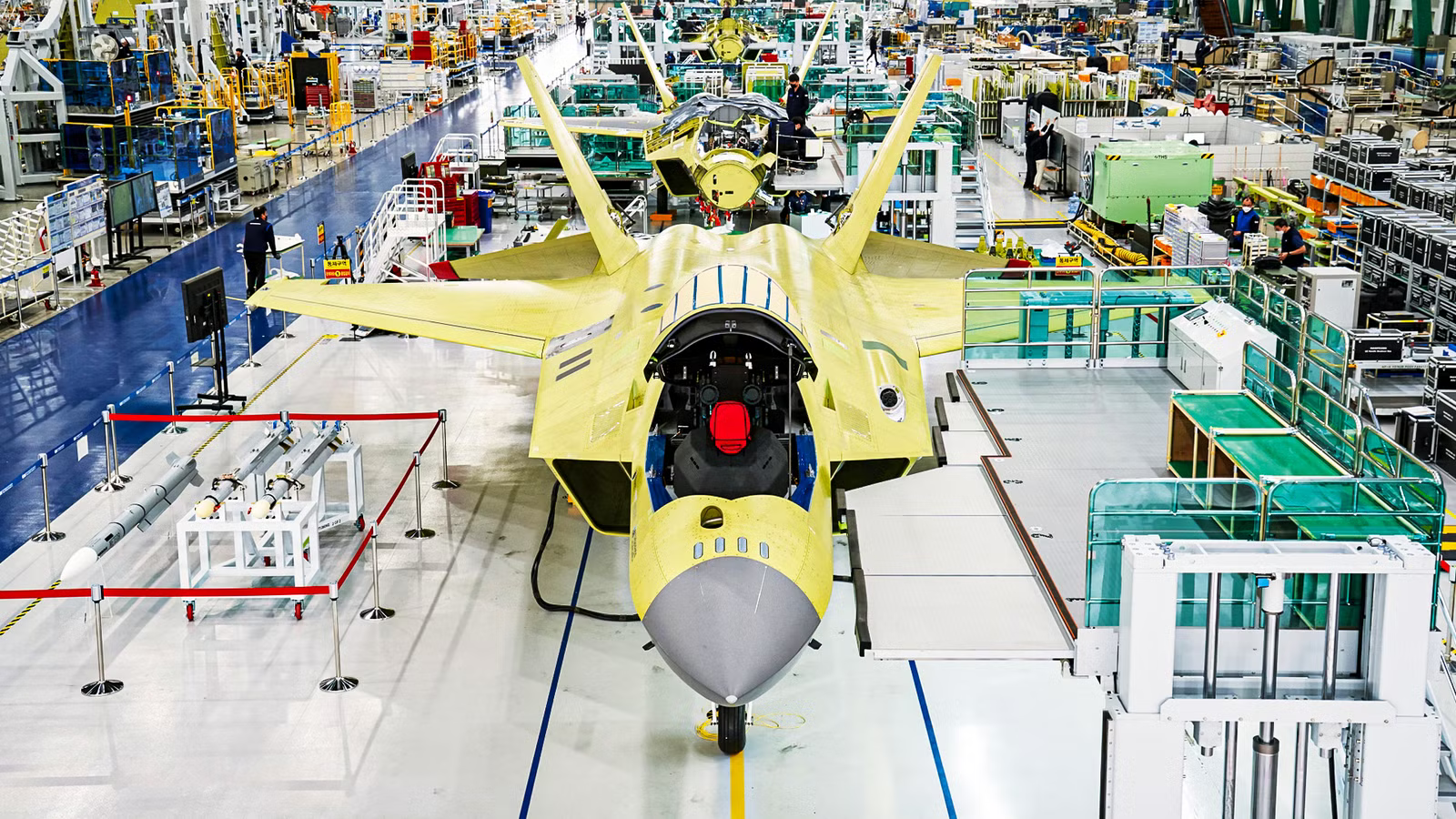
South Korea is pushing to modernize its Cold War-era fighter jets rapidly as the defense landscape in Asia, and around the world, is swiftly making its oldest airframes obsolete. That effort has been compounded by stiff competition from export customers of its new KF-21 Boramae stealth fighter. The Republic of Korea Air Force took delivery of its first example from Korea Aerospace Industries in September, as the Korea Herald covered, but allies and adversaries alike are already developing sixth-generation warplanes.
To salvage the plane’s edge in a 21st-century battlespace, KAI is now pitching a stealthier variant, the KF-21EX Block III. This upgrade package promises superior radar-absorbent material, enhanced internal weapons bays, and a superior engine designed to break free from American export dependence. However, ground testing and development schedules mean this domestic engine will not take its first flight until 2040.
The ROKAF can’t wait that long to receive its full 120-strong fleet of new fighters and appears to be on course for a mixed-fleet procurement strategy. Regardless of how it compares with other next-gen fighters like the Lockheed Martin F-35 Lightning II or future platforms, the KF-21 is still a generational leap in technology and performance over the jets it replaces. Those are the McDonnell Douglas F-4 Phantom II and Northrop F-5 Tiger II, which are pushing 50 to 60 years of service.
A Welcome Successor Arriving A Little Too Late

South Korea’s new indigenous fighter has finally entered production, but it arrives far too late to prevent a serious gap in the country’s air defense. KAI officially handed over the first production KF-21 Boramae to the air force on September 22, 2026. Yet the legacy F-4 Phantoms it was built to replace were retired over two years ago, and the remaining F-5 fleet is scheduled to vanish by 2027.
The ROKAF originally introduced the F-4E in September 1977, acquiring 94 airframes over its five-decade operational lifespan. When the ROKAF officially retired its final operational F-4E Phantoms on June 7, 2024, the fleet had logged a staggering 55 years of continuous service. The individual airframes that flew the final missions had been in active service for roughly 45 years.
Similarly, its earliest F-5A/B Freedom Fighter variants date back to 1965. The ROKAF later integrated the upgraded F-5E/F Tiger II models starting in the mid-1970s. Its newest examples are domestically licensed variants known as the KF-5E/F Jegong-ho from the 1980s.
That puts the remaining 50 or so active F-5 variants still flown by the ROKAF at between 40 and 61 years of total fleet age. By the time the KF-21 completely takes over their responsibilities, South Korea will have extracted every conceivable ounce of operational life out of these third-generation platforms. As the jets progressively deteriorate and maintenance support is nearly nonexistent, ROKAF Chief of Staff General Son Seok-rak moved the F-5 retirement deadline forward from 2030 to the end of 2027.
The Boramae’s Advantage For The ROKAF

The transition from the Cold War-era F-4 Phantom II and F-5 Tiger II to the standard KF-21 Boramae and its upcoming KF-21EX Block III stealth evolution represents a massive multi-generational leap. The old jets use ancient mechanical radars that easily lose track of targets. The standard KF-21 uses an active electronic radar to track dozens of threats at extreme distances. This lets pilots maximize modern over-the-horizon tactics with advanced weapons like the Meteor missile.
The airframe is one of the most important tactical advantages, thanks to its low-observable, angular aerodynamic shapes. The design of the legacy fleet makes it highly reflective and therefore an easy target for enemy radar systems. The KF-21 reflects fewer radar waves, and its dual modern engines also burn far less fuel, which gives the ROKAF a modern platform capable of patrolling the Pacific while presenting a credible threat to adversaries like the People’s Republic of China.
The upcoming KF-21EX Block III upgrades the platform into a true stealth fighter. The biggest change will be to its internal weapons bay. Instead of hanging missiles on the wings where they reflect radar waves, Block III will shield weapons completely inside its belly. This single design change slashes the radar signature to near invisibility for dangerous penetration missions into enemy airspace.
Finally, Block III will also introduce a powerful digital combat computer that far eclipses what its legacy predecessors offered. These new avionics expedite tactical decision-making by blending data from all sensors into one clear picture. It lets the pilot act as a commander, directing teams of autonomous combat drones like the Collaborative Combat Aircraft.
These pilotless ‘loyal wingmen’ can fly ahead to scout dangerous areas or jam enemy defenses while the KF-21 is still out of range. Putting all this together makes for a highly capable 4.5-generation fighter on par with many global competitors like the Boeing F-15EX, Eurofighter Typhoon Tranche 5, or Dassault Rafale F4. This huge technological leap will transform the ROKAF’s capabilities, but it has received only one, with 119 yet to arrive.
Budget Creep And The Real Unit Cost

The official unit cost of the KF-21 Boramae varies widely by production block. Official pricing figures place the initial air-superiority variant, Block I, at approximately $83 million per aircraft. The multirole Block II variant, which integrates advanced software, radar upgrades, and hardpoints for heavy air-to-ground precision-strike weapons, costs roughly $112 million per unit.
The catch is that is just a price for an airframe. Factoring in the separate $11.25 million cost for the General Electric F414 engines and adding the localized Active Electronically Scanned Array radar system, the realistic price to bring a Block II jet to actual combat readiness sits closer to $94 million to $112 million per aircraft. That price tag only climbs higher for export models. There is a significant price hike to bundle in localized pilot training, parts infrastructure, and weapons packages. For example, the layout proposed to sell an initial batch of 16 Block II fighters to Indonesia was valued at roughly $2 billion. That breaks down to an average price of $125 million per jet.
The latest Typhoon and Rafale models come in at comparable price points. However, America’s leading 4.5-generation and entry-level fifth-generation stealth fighters are a bit cheaper. That makes the Boramae more expensive than the F-15EX, around $95 million, and even the F-35A, about $85 million.
The Economic Imperative Behind The Export Pitch

One of the primary reasons cited for the KF-21’s high cost is the ROK Defense Acquisition Program Administration’s decision to limit the initial Block I mass-production order to a small batch of 40, according to MiGFLUG. DAPA’s official reviews show that Block II production costs spiked by nearly 30%. High fixed startup costs, like factory tooling and assembly line setups, had to be absorbed by far fewer planes, driving up individual unit costs.
Early marketing hype painted the KF-21 as a cheap $70 million alternative to more ‘exquisite’ options like the F-35, as 19FortyFive covered. DAPA wanted to split production into smaller increments to verify the new radar and missiles’ performance. Yet, since the program’s launch, macroeconomic conditions have also hit the aerospace sector hard. This surge was fueled by global supply chain disruptions, severe defense-sector inflation, and a steadily weakening South Korean won.
Indonesia, once the closest prospect for the KF-21, passed over the KF-21 when it agreed to become the launch customer for Turkey’s Kaan fifth-generation fighter. The financial cushion of the program was heavily impacted when partner-nation Indonesia defaulted on its agreed cost-sharing arrangement. Meanwhile, in the Philippines and Peru, the KF-21 is locked in fierce bidding wars against entrenched Western platforms like the Lockheed Martin F-16 Block 70 and the Saab Gripen E.
Potential Customers For The KF-21: The Long View

KAI is now aggressively marketing the KF-21 Boramae as a strategic third option for nations seeking advanced fighters to modernize their fleets. The United Arab Emirates is exploring an immense package of up to 100 aircraft. Following a January 2023 memorandum of understanding, the UAE and South Korea signed a framework agreement to pursue joint work on a KF-21 variant, local co-production, and third-country exports.
The Philippines Air Force is also seriously considering purchasing a number of airplanes to continue expanding its fighter fleet. The PAF is considering 12 to 24 KF-21s after completing a procurement deal for South Korea’s FA-50 light fighter in its first major combat airframe contract in years.
Malaysia is also reviewing the Boramae as part of its Next-Generation Multi-Role Combat Aircraft program. The Royal Malaysian Air Force needs to replace its aging fleet of Russian Su-30 Flankers and legacy F/A-18 Hornets. Malaysia is currently evaluating the purchase of up to 30 KF-21 units.
Simultaneously, KAI has not given up on making a deal with Indonesia, although the co-development partner arrangement fell through. There still remains a strong possibility that the country will purchase some direct export models of the KF-21. All the same, the ROKAF will be the first to put the Boramae to the test, and if its performance impresses, there could be even more potential export opportunities on the horizon.