dailynewsnblog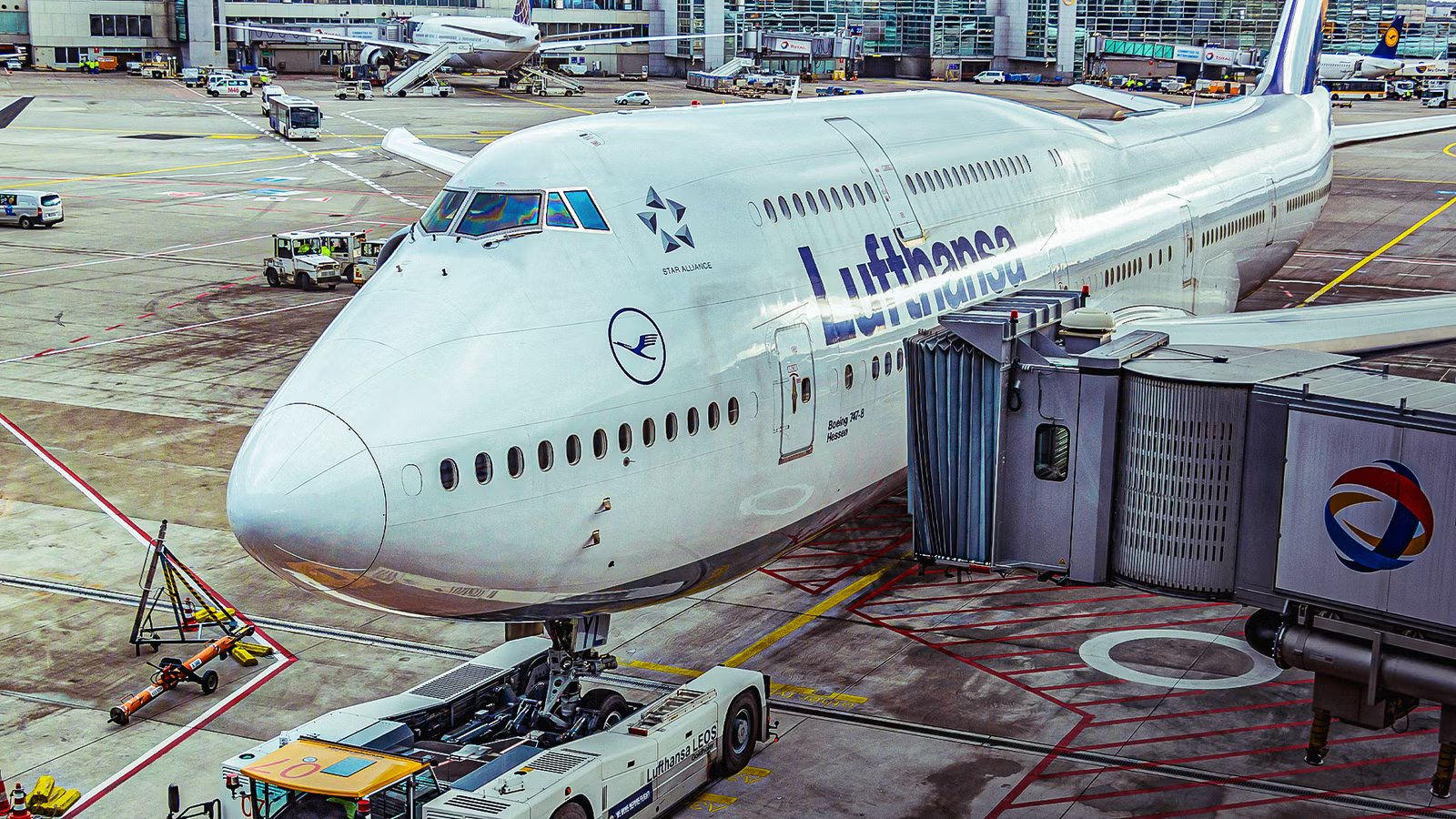
Whether long-haul or short-haul, the enigma that is crew duty time underpins the schedules of operators worldwide. Ensuring flight crew and cabin crew stay within regulations and receive adequate rest is vital for the safe and efficient operation of flights. Long-haul flights present a larger challenge than short-haul flights. With airlines now offering ultra-long-haul services lasting upwards of 20 hours, how do they ensure their crews can receive the required rest?
The answer is scarcely known or realized by passengers on the flights, but it is actually quite straightforward. Crew rest areas. These vary from aircraft to aircraft, but usually comprise a separate area compared to the passenger cabin, offering beds and sometimes other amenities for crews to obtain suitable and required rest. Let’s examine these facilities on the Boeing 747-8.
Do All Aircraft Have Crew Rest Areas?

Not all aircraft have crew rest areas. Dedicated crew rest compartments are mainly found on long-haul and ultra-long-haul aircraft, where flights last many hours and crews must rotate duties to avoid fatigue. On these aircraft, aviation regulations require extra pilots and cabin crew, and those crew members need a place where they can lie down and properly rest during the flight.
Aircraft such as the Boeing 747, 777, 787, and Airbus A350 and A380 typically include hidden rest areas located above or below the passenger cabin or just behind the cockpit. These spaces usually contain bunks with curtains, lighting, and ventilation, and they are strictly for crew use. Pilots and cabin crew normally have separate rest areas, and passengers cannot access them.
In contrast, short-haul and medium-haul aircraft like the Boeing 737 or Airbus A320 family do not have dedicated crew rest areas. Their flights are usually short enough that crews remain in their normal seats for the entire journey and rest between flights on the ground instead. On some longer routes using these aircraft, a blocked passenger seat may be used for crew rest, but this is not the same as a true bunk-style crew rest compartment.
The Boeing 747-8 In A Nutshell

The Boeing 747-8 was developed as the final iteration in the hugely successful Boeing 747 family. The freighter variant saw its first flight on 8 February 2010 from Paine Field in Everett, Washington. The 747-8 Intercontinental (747-8I), Boeing’s passenger offering, made its maiden flight just over a year later on 20 March 2011.
Both variants saw their entry into service shortly after, with the freighter variant entering service with Cargolux in late 2011, and the passenger variant by  Lufthansa on 1 June 2012 on flights between Frankfurt and Washington. The Boeing 747-8 was based on the hugely successful 747-400, but with major improvements in efficiency, performance, and technology. It features an all-new wing design with raked wingtips derived from the 787, along with GEnx-2B engines.
Specifications (Per Lufthansa) | Value |
|---|---|
Length | 250 feet 4 inches (76.3 m) |
Wingspan | 224 feet 5 inches (68.4 m) |
Height | 63 feet 8 inches (19.4 m) |
Max Take‑off Weight | 975,000 lb (442 tonnes) |
Cruising Speed | 570 mph (920 km/h) |
Max Cruising Altitude | 43,000 feet (13,100 m) |
Range | 8,140 mi (13,100 km) |
These changes reduce fuel burn, emissions, and noise while allowing the aircraft to fly farther and carry more passengers or cargo than the 747-400. The 747-8 is also slightly longer, measuring 250 feet 2 inches (76.3 m) compared to the 747-400’s 231 feet 10 inches (70.7 m), making it the longest passenger aircraft ever built until the debut of the 777X. The 747-8 has an increased weight, with a maximum takeoff weight of about 987,000 lb (447,700 kg) versus roughly 875,000 lb (396,900 kg) for the 747-400.
Despite this, the design and engineering of the 747-8 means it still delivers better fuel efficiency per seat. Inside, it includes updated avionics and flight-deck systems that lower pilot workload, along with a quieter cabin and more modern interior options for airlines. Overall, the 747-8 modernized the classic 747 design while keeping its iconic shape.
Inside The Boeing 747-8’s Crew Rest Areas

On the Boeing 747‑8, crew rest areas are an essential part of its long-haul capability, designed to let flight crew and cabin attendants take regulated rest during extended flights. Because the 747‑8 often operates routes that exceed 10–12 hours, aviation safety rules require dedicated spaces where crew members can lie down and sleep, rather than just sit in their normal seats.
These rest areas are completely separate from the passenger cabin and are secured behind crew‑only doors. The pilot rest compartment on the 747‑8 is located just behind the flight deck on the upper deck. It typically contains two horizontal bunks arranged one above the other, each with bedding, lighting, and airflow controls to help pilots rest properly during cruise.
This area is compact but functional: privacy curtains and sound dampening help block cabin noise, and access is restricted to off‑duty pilots through a discrete door with no view to passengers. Further back in the aircraft is the cabin crew rest area, usually above the aft section of the main deck.
This space is larger than the pilot rest compartment and contains multiple bunks for flight attendants to rotate rest periods. Crew access is typically via a narrow staircase from the service area in the rear of the passenger cabin. Both rest sections are built around strict safety and fatigue management standards, providing quiet, dimmable, and ventilated spaces where crew can get meaningful rest on ultra‑long intercontinental sectors.
Inside Other Aircraft’s Crew Rest Areas

Crew rest areas across modern long-haul aircraft share many common features, even if the exact layout or location varies. On aircraft like the Boeing 787, Airbus A350, and Boeing 777, pilots typically have fully flat or semi-flat bunk compartments located above the main deck, while cabin crew have smaller rest spaces, often curtain-enclosed or modular bunks.
The focus is on providing privacy, comfort, and the ability to sleep in a secure, quiet environment during long flights, just like on the 747-8. The technology and design elements are also very similar. Most long-haul aircraft now include advanced lighting systems to support circadian rhythms, better air circulation, soundproofing, and ergonomic layouts to reduce fatigue.
Even if the placement differs, such as above the cockpit on an A350 or near the rear galley on a 777, the core purpose remains the same: helping crew rest effectively to maintain alertness and safety throughout ultra-long flights. In essence, the 747-8’s crew rest areas are part of a larger trend in aviation.
While each aircraft type has slight variations in size, location, or features, the underlying design principles of privacy, comfort, and fatigue management are consistent across most modern long-haul jets. This means that pilots and cabin crew can generally expect similar levels of rest quality and support, regardless of the aircraft they operate.
The Future Of Crew Rest Areas

The future of crew rest areas in aviation is shifting from simply meeting regulatory requirements to prioritizing actual sleep quality and fatigue management. Modern long-haul aircraft are increasingly equipped with flat bunks, noise insulation, and climate control, ensuring that crew members can rest effectively during flights.
Innovations like circadian-friendly lighting and improved air circulation are being introduced to help crews maintain alertness during critical phases of flight, such as takeoff and landing. Technology is playing a major role in next-generation rest areas. Smart monitoring systems may track sleep quality and integrate with crew scheduling software, allowing airlines to predict and prevent fatigue rather than just comply with rest time rules.
These innovations extend to both pilots and cabin crew, addressing historical inequalities where cabin crew often had inferior rest facilities. The integration of data and adaptive environments represents a move toward scientifically informed rest solutions. Aircraft design is also evolving to support crew well-being.
Modular, lightweight rest compartments can now be installed in various parts of an aircraft, perfect for the increasing use of longer-range narrowbodies with limited room for a traditional crew rest area. Regulators are expected to tighten requirements on rest quality, not just duration, pushing airlines to adopt designs that maximize safety and crew performance.