dailynewsnblog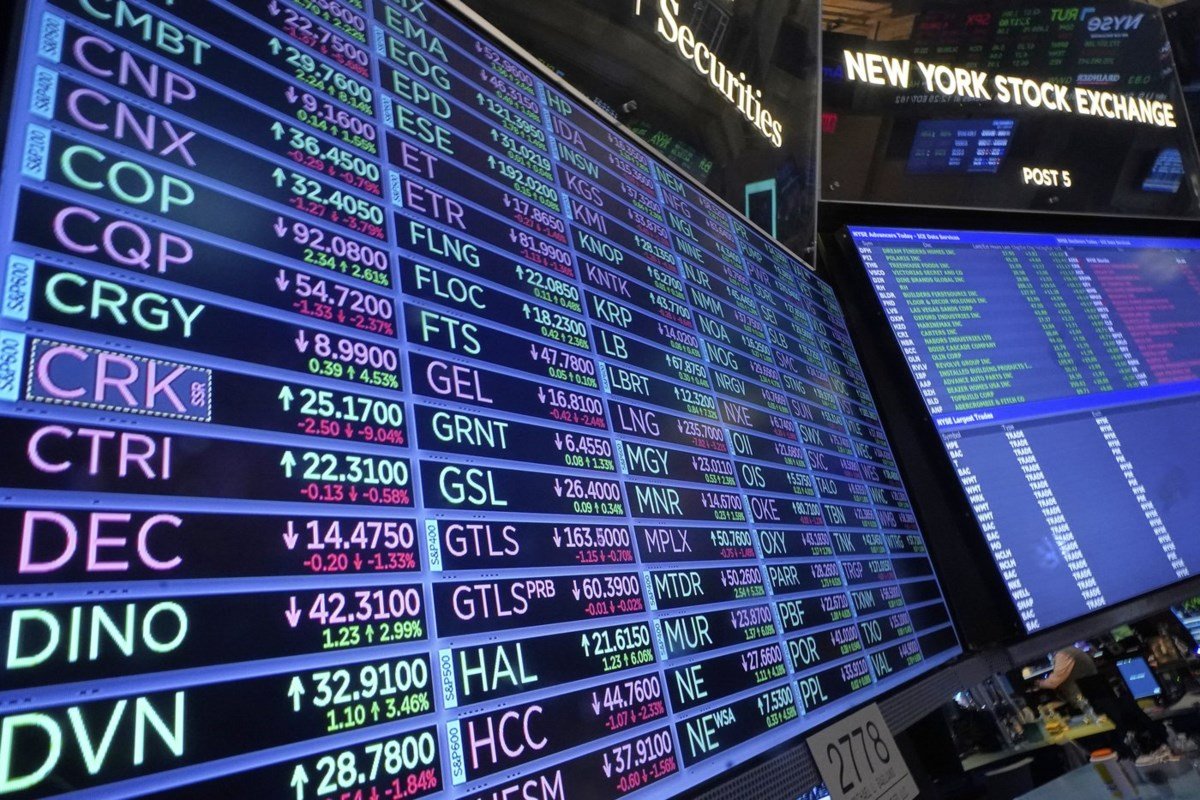

TORONTO — Canada’s main stock index gained ground while U.S. markets continued to push into record territory as the U.S. and Iran were reportedly working toward a deal to extend a ceasefire.
TORONTO — Canada’s main stock index gained ground while U.S. markets continued to push into record territory as the U.S. and Iran were reportedly working toward a deal to extend a ceasefire.
“We’re still rallying on the increasing likelihood that the conflict in Iran and the Straits of Hormuz gets resolved shortly,” said Brian Madden, chief investment officer with First Avenue Investment Counsel.
U.S. President Donald Trump held a White House Situation Room meeting with his advisers as he pondered moving forward with a deal to extend the Iran ceasefire and reopen the Strait of Hormuz. Iran said the agreement has not been finalized.
The S&P/TSX composite index was up 251.44 points at 34,769.14.
In New York, the Dow Jones industrial average was up 363.49 points at 51,032.46. The S&P 500 index was up 16.43 points at 7,580.06, while the Nasdaq composite was up 55.15 points at 26,972.62.
The S&P 500 rose 0.2 per cent, notching its seventh consecutive gain and ninth straight winning week — the longest such streak since 2023. The benchmark index set an all-time high for the fourth day in a row.
Big technology stocks have been behind much of the market’s record-breaking streak. Their pricey stock values give them more influence in directing the market higher or lower. In May alone, technology stocks within the S&P 500 rose more than 15 per cent, while most of the sectors in the benchmark index actually lost ground.
Dell Technologies surged 32.8 per cent to lead all stocks in the S&P 500 after delivering profits that blew past expectations. The company also raised its outlook, citing powerful demand for AI computing.
High oil prices remain a key concern for Wall Street. The war has stifled the flow of oil shipments through the Strait of Hormuz. Roughly a fifth of the world’s oil and natural gas is shipped through the waterway.
The price for August delivery of Brent crude, the international standard, fell 1.7 per cent to settle at US$91.12 per barrel
The July crude oil contract was down US$1.54 at US$87.36 per barrel.
Madden said that lower oil prices weighed on the TSX energy sector on Friday, which acted as the biggest weight on the overall index.
In Canada, technology stocks led the TSX higher, which Madden said appeared to be a spillover effect from gains in U.S. tech stocks.
Investors also sifted through gross domestic product figures for the Canadian economy in the first quarter.
Statistics Canada said economic growth stalled in the first quarter, leading to a second consecutive decline in real gross domestic product — the technical definition of a recession, though economists cautioned against reading too much into that fact.
Real gross domestic product by expenditure was essentially unchanged on a quarter-over-quarter basis, StatCan said. Converting that to an annualized rate — the figure most economists pay close attention to — magnifies the quarterly changes and results in a decline of 0.1 per cent in real GDP for the first quarter.
“Markets are shaking it off pretty good, especially when you consider that at least by what people like to call a technical recession, which is two back-to-back quarters of down GDP, Canada officially printed one after the end of the first quarter with that marginal slip in the size of the economy in Q1, which was quite surprising,” Madden said.
He said the reason for the resiliency in the market appeared to be due to the fact that there is not a widely accepted rule for what constitutes a recession in Canada.
The Canadian dollar traded for 72.47 cents US compared with 72.42 cents US on Thursday.
The August gold contract was up US$60.60 at US$4,593 an ounce.
This report by The Canadian Press was first published May 29, 2026.
Companies in this story: (TSX:GSPTSE, TSX:CADUSD)
— With files from The Associated Press.
Daniel Johnson, The Canadian Press