dailynewsnblog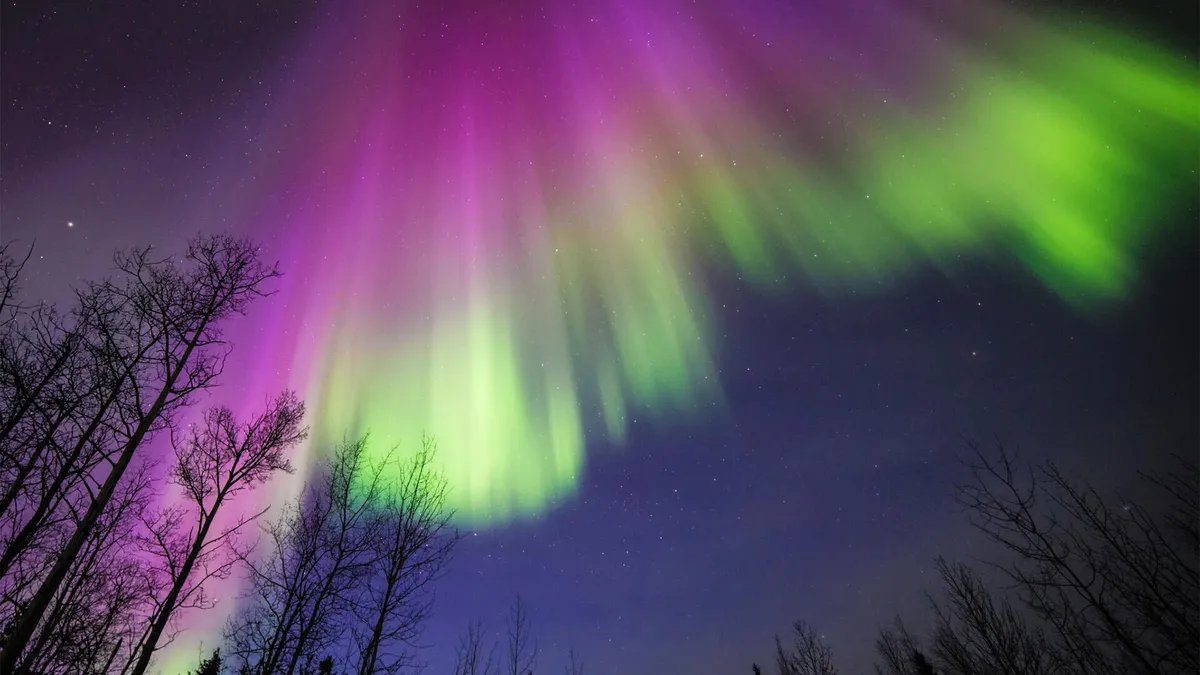
Sometimes the sun throws a temper tantrum, and that tantrum hits Earth. For some people, that means a chance to see the beautiful aurora borealis light up the night sky. But solar storms can cause damage to Earth and the various people and items orbiting in space. That’s because, according to a new study, the risks from solar storms might be worse than originally thought.
The study, authored by NASA’s Nithin Sivadas and Maria Walach of Lancaster University, posits that science’s understanding of solar storms and the electrical currents generated in Earth’s upper atmosphere may have been misunderstood, and that solar storms may be much riskier, especially for satellites and astronauts in orbit.
To understand the problem, understanding what the science currently says is key. When solar winds hit the upper atmosphere, they create all sorts of interactions, resulting in effects such as the auroras and electrical current. The current scientific consensus is that there’s a maximum amount of electrical current that can exist in the upper atmosphere because of factors such as solar wind energy, atmospheric limits and current saturation. Once that threshold is reached, Earth’s magnetosphere naturally dissipates the excess.
But this new research suggests that the limit doesn’t actually exist and that earlier assumptions about it were based on “uncertainties in solar wind measurements.” Those uncertainties likely arose because most solar wind measurements are taken by spacecraft about a million miles closer to the sun than Earth, at a location known as Lagrange Point 1.
Measurements taken closer to Earth’s surface by NASA spacecraft show a direct correlation between solar wind strength and electrical current in the atmosphere, and suggest that there is no upper limit as previously assumed. That means the atmosphere can produce as much electricity as there is solar wind to generate it.
Extreme solar wind events can be seen far away from the point of impact in the form of the aurora borealis.
How much risk are we talking?
It’s not well understood how much riskier solar storms are versus what science already knew. Solar storms have caused a lot of damage in the past, with instances such as the Carrington Event in 1859 setting telegraph machines on fire or the 12,350 BC solar storm, which researchers said was “orders of magnitude stronger than everything directly observed.” Further study is still needed to understand the potential risks.
“If there is no upper limit to our planet’s response to the solar wind, modeling for extreme cases needs to take this into account, and we should be vigilant of space weather effects,” Walach said in a statement. “Fortunately, these very extreme cases are rare, but this also means we have limited data to work with and only time will tell what happens at the very extreme one-in-a-thousand-year kind of event.”
Current simulations that use the limits explained above already paint a pretty grim picture for our electronic-heavy modern existence. A solar storm of the magnitude of the Carrington Event would level a significant number of Earth’s satellites and cause untold damage to systems here on Earth as well. And it wouldn’t be the first time: During the Halloween solar storms in 2003, Earth lost contact with 59% of its satellites at the time. While modern technology is better at resisting these risks, it’s not immune.
But there is some good news. First, such a catastrophic solar storm wouldn’t spell the end for humanity. Walach says that the Earth’s magnetic field “does a really great job of protecting us against many space weather effects,” and that most of the time, all humans will notice is the occasional glitch or a beautiful aurora. She says satellites would fare more poorly in such extreme space weather conditions.
The other good news is that the sun is nearing the end of its solar maximum for its current 11-year cycle (assuming it hasn’t already ended), so the odds of extreme space weather are much lower than they were in 2024, when Earth was treated to an extreme solar weather event that pushed the aurora borealis down to Texas for an entire week.