dailynewsnblog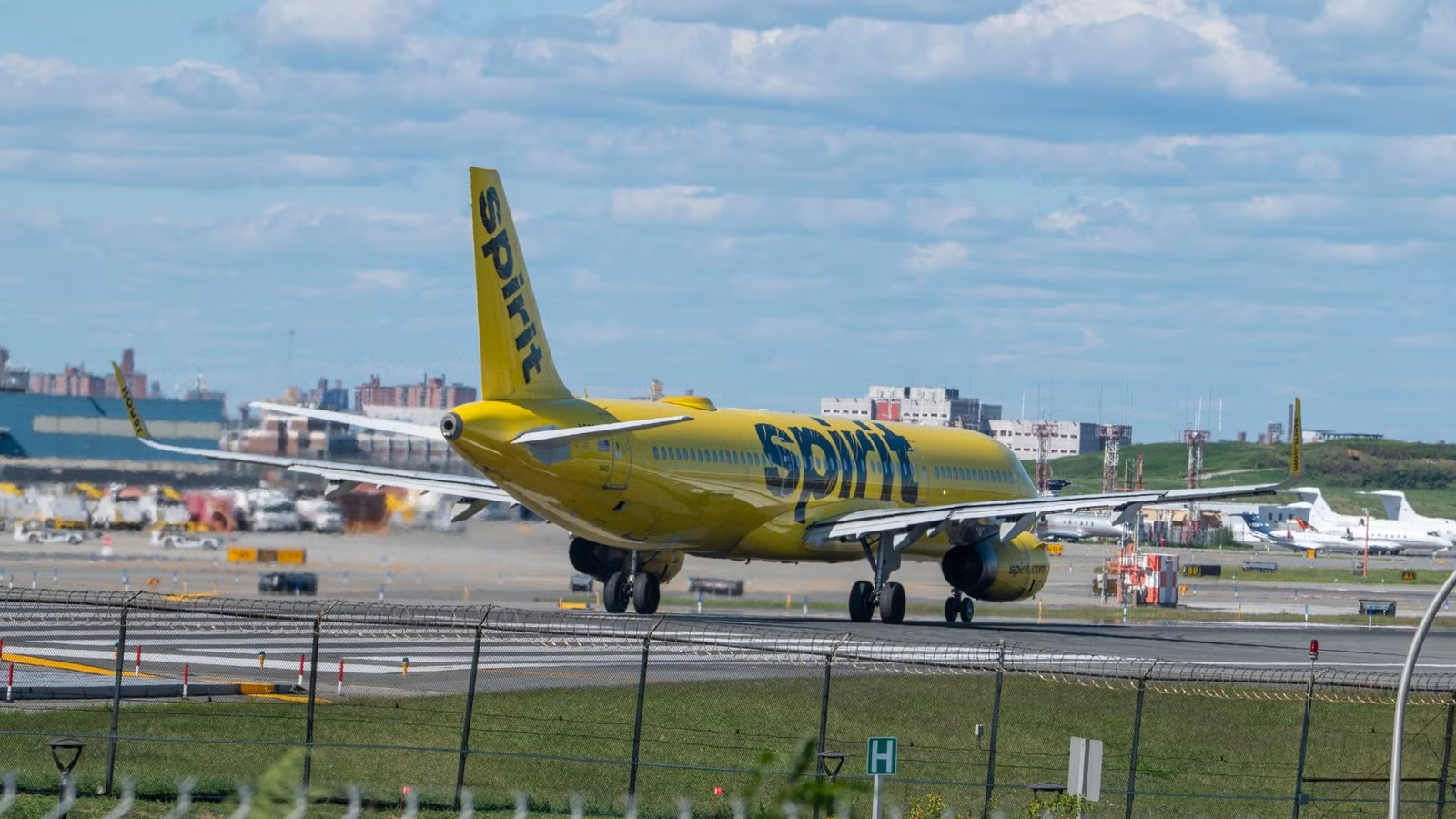
After struggling to overcome a series of financial struggles, American budget carrier Spirit Airlines succumbed to the rising cost of fuel caused by the crisis in the Middle East following Operation Epic Fury. Now, the International Air Transport Association is forecasting that other low-cost carriers around the world will be in similar jeopardy.
The IATA slashed its projection for global airline revenue in 2026 down to half of that in 2025, to $23 billion versus $45 billion, according to AeroTime. Even as traffic is expected to rise and airfare margins to be greater, the 40% higher cost of jet fuel is expected to drain profits. As Reuters wrote, that will force carriers to reduce services, cut destinations, or even suspend operations.
The Perfect Storm Of Market Forces Against Affordable Airlines

Further compounding the dilemma for LCCs, since the end of global travel lockdowns in the COVID-19 era, flyers have shown a rising preference for premium airfares and long-haul destinations. This has led to a shrinking customer pool for Low and Ultra-Low-Cost-Carriers, while they now battle with increased fuel prices. On top of that, many major full-service legacy airlines successfully cloned the LCC model by offering basic economy tiers on newly configured aircraft.
Post-pandemic pilot and crew shortages also forced budget airlines to aggressively hike salaries to match major carriers. These wage increases spiked their operating costs and have contributed to the smaller price gap between budget and legacy airlines. Meanwhile, airports have also begun charging carriers more to fly, driving out LCC and ULCC operators. The most dramatic example is Ryanair’s planned exit from Berlin Brandenburg Airport (BER) following a 50% increase in fees.
Rising airfares are failing to rescue budget airlines because operational costs are escalating at a much faster rate than ticket prices can realistically be raised. AeroTime recounted this comment from Willie Walsh, IATA’s Director General:
“Airlines are bearing the brunt of the fuel price shock. While air fares are rising, airlines are still absorbing part of the hike in their bottom lines.”
Catch what other flight trackers miss
Emergency squawks, holds, NOTAMs — live signals, no signup.
Open tracker
Catch what other flight trackers miss
Emergency squawks, holds, NOTAMs — live signals, no signup.
Open tracker
How The Crisis Over The Strait Of Hormuz Is Hurting Flyers

Jet fuel prices have experienced an unprecedented 70% explosion over the last year, pushed by escalating conflict and compounded by airspace restrictions. Airlines cannot pass 100% of sudden fuel spikes onto consumers without crushing demand. IATA reports that the industry is currently absorbing roughly 50% of the massive fuel price increases directly. Unlike legacy carriers, many regional LCCs do not aggressively hedge their fuel costs, leaving them completely exposed to oil market volatility.
While hedging serves as a financial insurance policy against jet fuel market shocks, it requires millions of dollars in upfront premiums to purchase option contracts. Cash-strapped LCCs operating on razor-thin margins simply lack the liquid capital needed to buy these expensive contracts. If fuel prices drop, the result can cause massive losses for the airline. Legacy carriers possess multi-billion dollar revolving credit facilities to survive these cash drains.
LCCs cater to highly price-sensitive vacationers. If an LCC raises its base fare by $30 to cover unhedged fuel spikes, demand craters immediately. Legacy carriers don’t suffer this penalty. Their profit stems largely from premium fares, like business travelers, who are relatively price-insulated. That allows them to dynamically pass unexpected fuel spikes directly to customers via fuel surcharges.

Spirit Airlines’ 22 Coveted LaGuardia Slots Will Go To Highest Bidder, Valued At $87 Million
Prime real estate is heading to the auction block.
Fewer Choices For Affordable Airfare In America

The total shutdown of Spirit Airlines after its multi-million dollar restructuring efforts collapsed under the weight of soaring fuel bills shook the American flying industry. The Federal Aviation Administration is even taking measures to ensure that LCCs will take up the slack so that the ‘Spirit effect’ of forcing down prices to competitive rates does not evaporate. The FAA even said that slots at some of the busiest airports Spirit used to fly to and from may be closed instead of sold off to legacy carriers if no LCC can successfully bid for them.
The major full-service airlines have aggressively expanded their own basic economy seat tiers on newer fuel-efficient aircraft. They are now matching budget prices on many domestic routes while capturing 100% of the premium cabin and loyalty flyers. Budget carriers in the US now have a smaller market share than ever to compete for. Before its collapse, Spirit’s CEO warned that competitors like Frontier and JetBlue “are not that far behind us in the race” because they are all bleeding cash from the same unhedged fuel spikes, according to Forbes.