dailynewsnblog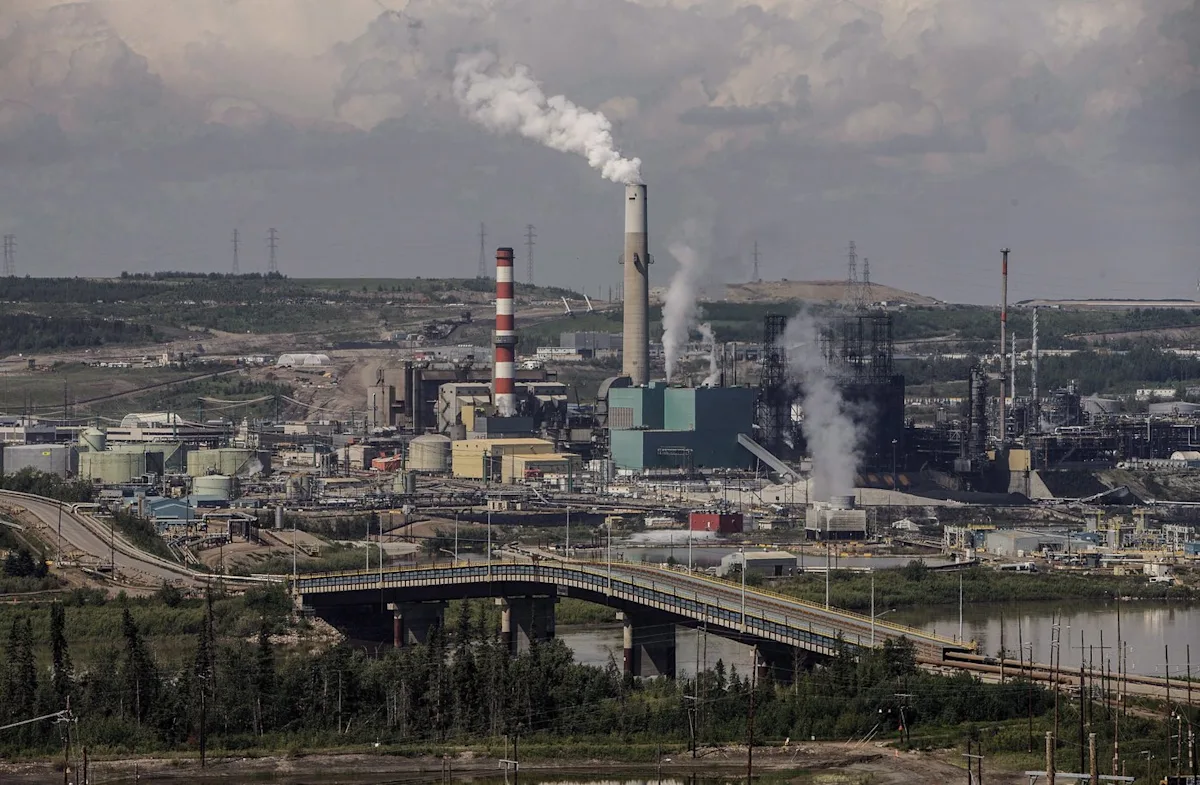
CALGARY — The Alberta and federal governments have tied up one of the last remaining loose threads hanging from the energy accord they signed late last year.
The memorandum of understanding included a goal to increase the carbon cost industry emitters truly bear to $130 a tonne. But they did not set out a timeline or details on how it would be implemented. On Friday — a month and a half past the governments’ self-imposed April 1 deadline — Prime Minister Mark Carney and Alberta Premier Danielle Smith announced an agreement on the nitty gritty details.
Here are some highlights from the plan:
The status quo:
Alberta has had an industrial carbon pricing regime for almost two decades. Under its Technology Innovation and Emissions Reduction policy (TIER), each facility that emits more than 100,000 tonnes of carbon dioxide a year is subject to a certain performance benchmark.
Facilities that fall under the limit can generate and sell credits. Those that exceed their limit can comply by buying credits, investing in on-site carbon reducing technology or paying into a provincial technology fund.
Federal and provincial officials agree the program hasn’t been working. Though the “headline” price for the amount paid to government is set at $95 a tonne, it’s rarely the cost polluters bear in real life. That’s because there is a surplus of credits in the marketplace, which acts like any other based on supply and demand.
The ready supply has pushed down what’s known as the “effective” price to less than half the headline price. In that scenario, companies aren’t compelled to reduce their emissions because it’s must more cost-effective to offset them with cheap-as-dirt credits.
What’s changing:
Both governments have agreed to target an effective carbon price of $130 by 2040. That is to be done by both gradually raising the headline price from its current level and setting a floor price for carbon credits, with the effective price falling within that range. The minimum transfer price for the trade of credits is to rise to $110 in 2040 from $60 in 2030.
“This gives industry the time and certainty needed to plan, invest and deliver real emissions-reducing projects without undermining competitiveness,” Smith said before she signed the agreement alongside Carney.
Several climate advocates panned the move.
“There will be no effective action to reduce oilsands emissions for a generation,” said Chris Severson-Baker, executive director of the Pembina Institute clean-energy think tank.
Rick Smith, president of the Canadian Climate Institute, agreed the timeline stretches too long.