dailynewsnblog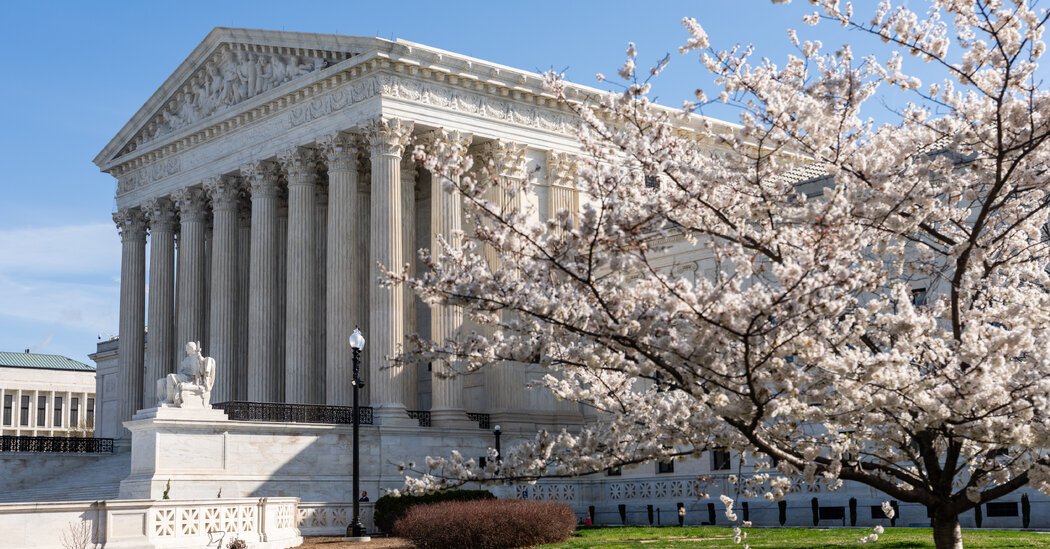
The Supreme Court on Friday rejected an emergency request by Democratic officials in Virginia to use a newly approved congressional district map in the midterms that would give their party an edge.
Instead, the justices declined to overturn a recent decision by the Virginia Supreme Court striking down the map, a ruling that dealt a major blow to Democrats in the nationwide redistricting fight.
The one-sentence emergency order by the justices did not give a vote count or provide reasoning for the decision, which is typical in such rulings. No dissents were noted.
The Supreme Court’s ruling blocking the map wipes out four newly drawn Democratic-leaning House districts in Virginia, and was the latest in a string of election-related decisions that the justices have weighed in on in recent months.
The Supreme Court does not ordinarily review rulings by state supreme courts interpreting state constitutions.
The ruling marks the latest in a string of election-related cases that the justices have weighed in on in recent months.
The fight over the Virginia map stems from a redistricting push that began last summer when President Trump pressured Republican-led states to redraw their district maps ahead of the midterms in hopes of maintaining the party’s razor-thin majority in the House.
First, Texas officials redrew their lines to give Republicans an advantage. Then, California responded by crafting a new map to help Democrats. Similar efforts have followed in other states throughout the country.
In the fall, Virginia lawmakers voted to amend their state constitution to clear the way for Democrats to redraw the map, a process that required two votes of the state’s General Assembly, with an election in between.
The timing of that fall vote is crucial for understanding what followed. Lawmakers authorized the amendment just days before the fall’s legislative election, while early voting was already underway. More than a million voters had already cast their ballots.
After another vote of the assembly, Virginians approved the map in a statewide referendum in April. The move was widely seen as a victory for the party that put it on equal footing with Republican redistricting efforts nationwide, or even might give Democrats a narrow advantage.
But Republicans swiftly challenged the new map, arguing that Democrats had violated the procedural guidelines required to pass the redistricting amendment by beginning the process once an election was underway.
Democrats countered that they had voted in time, since they acted before Election Day. They also argued that the state Supreme Court should not undercut the will of the voters who took part in the spring referendum.
On May 8, the Virginia Supreme Court sided with the Republicans, deciding 4 to 3 that the Democratic lawmakers had violated the state’s constitution by taking up the matter after early voting was underway.
Three days later, Jay Jones, Virginia’s Democratic attorney general, filed an emergency petition asking the Supreme Court to temporarily block the Virginia Supreme Court’s ruling and clear the way for the new map to be used in the midterm elections.
Democratic leaders cited two arguments for why the justices should intervene.
First, they argued that the Virginia Supreme Court had misinterpreted the meaning of “election” under federal law. They also argued that the state court had overstepped its bounds, asserting that state legislatures have nearly exclusive power to regulate federal elections.
Republicans pushed back strongly on those claims, asserting in a filing to the justices that the Democrats “have no case on the merits.” They argued that the Virginia Supreme Court had the final word on the matter and that “from the outset, this case has concerned only state-law claims and state-law defenses.”