dailynewsnblog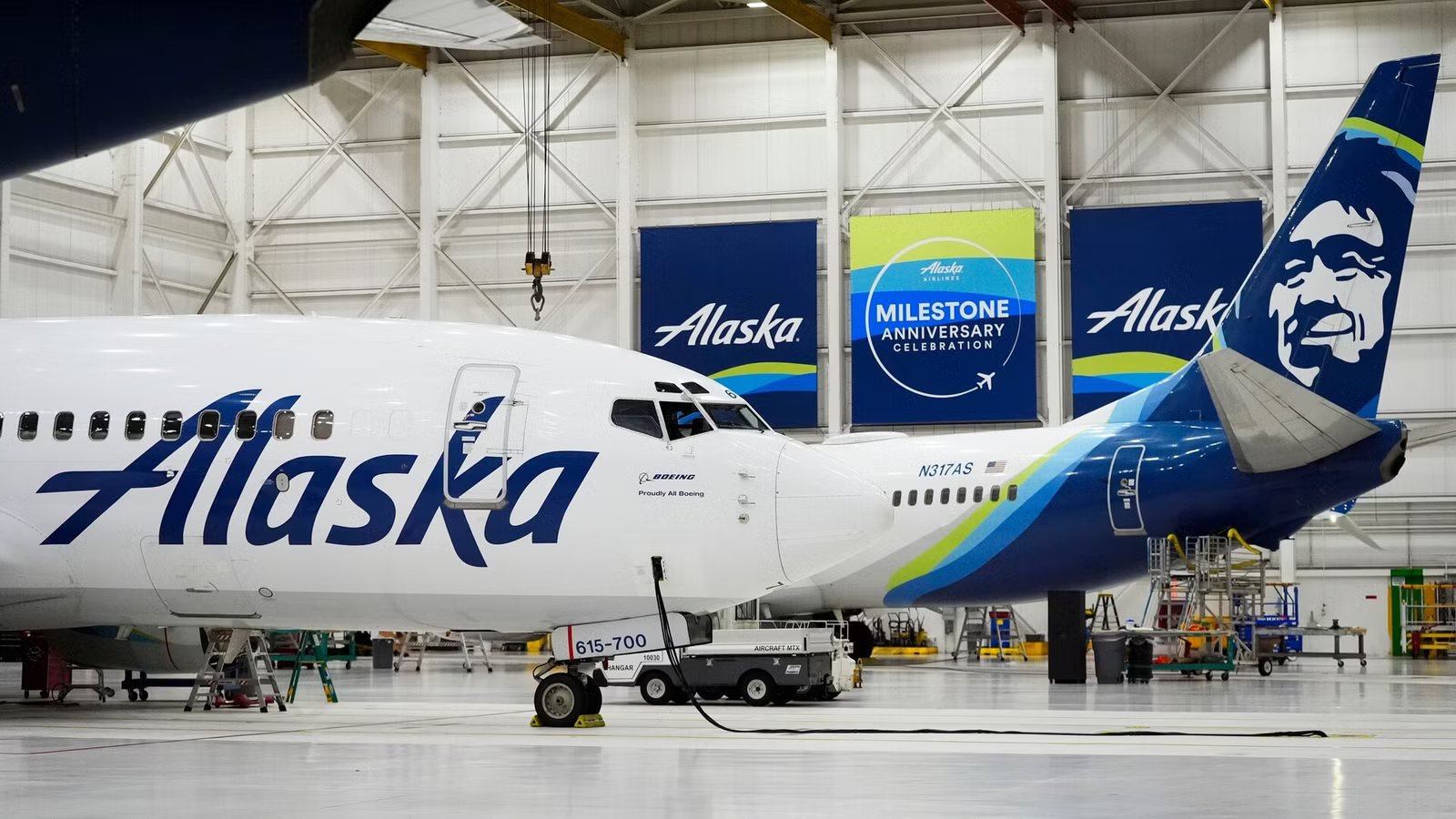
 Alaska Airlines has broken ground on a major new maintenance hangar at Portland International Airport (PDX), deepening its long-running commitment to one of its most important West Coast hubs. The $135 million project will add widebody-capable maintenance space at PDX and gives Alaska greater flexibility as it integrates Hawaiian Airlines and looks to relieve pressure on its increasingly busy operation at
  Seattle-Tacoma International Airport (SEA).
The investment is notable not just because of its size, but because of what it says about Portland’s role in the enlarged Alaska Air Group network. Alaska has been growing flights, adding passenger facilities, expanding its lounge footprint, and increasingly positioning PDX as a strategic second hub in the Pacific Northwest. The new hangar also raises an obvious question: how much bigger could Alaska’s Portland ambitions eventually become?
Alaska Breaks Ground On A Widebody-Capable Hangar

Alaska Airlines celebrated the ceremonial groundbreaking of its new Portland maintenance hangar on June 16. The facility will be built adjacent to the existing Horizon Air Operations Center and Maintenance Hangar at PDX, giving the airline a much larger technical footprint at an airport where it has served passengers since 1979. Once complete, the hangar will add around 125,000 square feet of indoor aircraft maintenance space, along with approximately 60,000 square feet of offices, engine, machine and sheet metal shops, and support areas.
The most important detail is that the hangar will be capable of handling widebody aircraft, with Alaska saying the new facility will be able to accommodate up to three narrowbody aircraft or two widebody aircraft at one time. That matters because, following its acquisition of Hawaiian Airlines, the Alaska Air Group now has widebody aircraft in its combined fleet, including Airbus A330s and Boeing 787-9s. A Portland hangar that can handle larger aircraft gives the combined airline more options across its network.
Benjamin Brookman, Alaska Airlines’ vice president of real estate and airport affairs, says that the facility is also expected to create more than 100 highly skilled jobs for local maintenance technicians, engineers, and service professionals. He described the project as both a Portland investment and an operational tool for the wider airline.
“A new maintenance hangar in Portland is both an investment in one of our critical hubs and a key that unlocks growth possibilities throughout our network. With increased flexibility on where we can perform maintenance and the aircraft we can service, we can run our operation more efficiently.”
Portland Is Becoming More Important To Alaska Airlines

The hangar is only the latest piece of a much broader Portland story. Alaska is already the largest carrier at PDX, operating approximately a third of all flights at the airport, and the airline says it will have over 130 daily departures from the airport this summer. That is significant because Portland is increasingly functioning as more than a spoke city. It is a meaningful West Coast hub that can support local traffic, regional connectivity, and some network relief for Seattle.
Alaska’s PDX Commitment | |
|---|---|
Years serving Portland: | 47 |
Destinations: | 60+ |
Daily departures: | 130+ |
Market share: | 32% |
Seat growth: | 50% versus 2024 |
New hangar: | $135 million+; 185,000 sq ft |
New lounge: | $18 million; 14,000 sq ft |
Alaska has also been adding more routes from Portland. This summer, the airline is launching year-round service to Everett Paine Field (PAE) and Pasco (PSC), while also adding seasonal routes including Baltimore (BWI), Philadelphia (PHL), St. Louis (STL), and Jackson Hole (JAC). By this fall, Alaska says it will offer 50% more seats in Portland than it did just two years earlier, which is a striking increase for a market that is often overshadowed by its northern neighbor.
The airline is investing in the passenger experience as well. Earlier this month, Alaska opened a redesigned Portland Lounge, a roughly 14,000-square-foot facility with nearly 250 seats. The lounge is about twice the size of the previous space and reflects the same broader theme as the hangar: Alaska is putting real money into PDX, not simply adding a few flights. The airline is building the airport into a more complete hub, with more flights, more premium facilities, and now a significantly larger maintenance base.
Alaska Airlines’ Portland Strategy Aims To Reduce Capacity Pressure On Seattle
The carrier has big plans for its Portland hub.
Could Portland Eventually Become A Long-Haul Gateway?

The natural question is whether a widebody-capable hangar points toward Alaska Airlines introducing long-haul international flying from Portland. For now, the answer should be treated cautiously. Maintenance infrastructure does not automatically translate into new routes, and Alaska has been clear that it is focussed on Seattle for its long-haul expansion.
However, the airline has also been very open in saying it is constantly evaluating which routes make sense for each market, and it has certainly become a lot more creative since the Hawaiian acquisition. In PDX, Alaska has a hub that already sustains long-haul routes, such as  British Airways from
  London Heathrow Airport (LHR) and KLM from
  Amsterdam Schiphol Airport (AMS). With Alaska building more domestic feed at PDX, there is at least a plausible long-term case for one or two carefully selected international routes, particularly if Seattle becomes increasingly congested or if Alaska wants a second Pacific Northwest gateway.
The counterargument is just as strong. Seattle remains Alaska’s main hub, and has a much larger corporate base, so is far better positioned to support premium-heavy long-haul international flights. Alaska also has a limited number of widebody aircraft to deploy, so those aircraft will almost certainly be prioritized for Seattle. The more realistic takeaway is that PDX is becoming a stronger relief valve and secondary hub for Alaska, and international long-haul, if it happens, is likely still a few years away.
Even so, a $135 million widebody-capable hangar makes one thing clear: Alaska’s Portland commitment is no longer just about domestic routes. It is about building flexibility for a much larger, more global airline. And that is good news for the people of Portland and the broader Pacific Northwest.