dailynewsnblog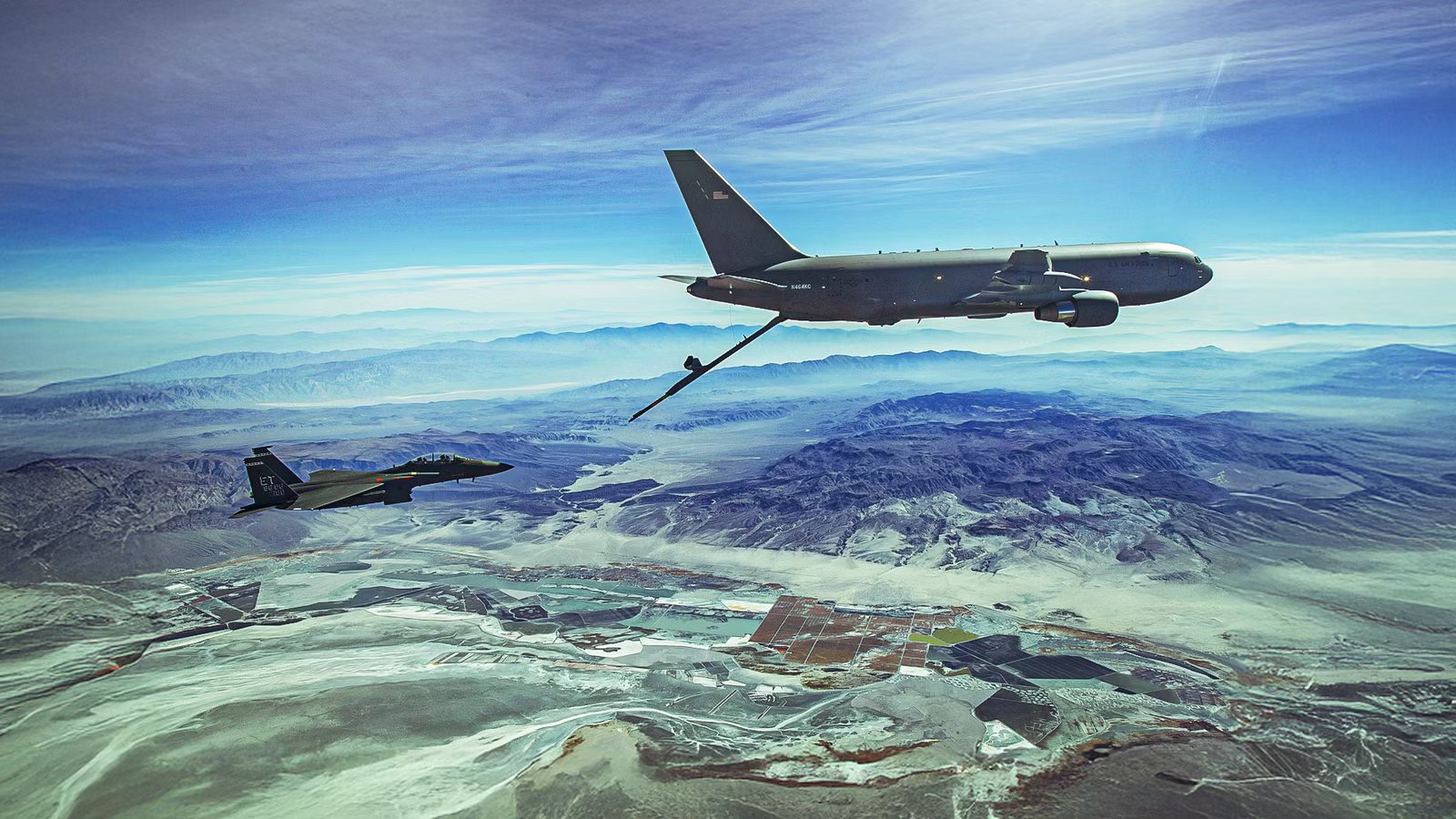
The United States Air Force built the KC-46A Pegasus around one mission above all others: aerial refueling. The tanker was supposed to replace aging KC-135 Stratotankers and KC-10 Extenders while modernizing one of the most important systems behind American global airpower. Fighters, bombers, surveillance aircraft, and transports all rely on tankers to extend their range and remain operational far from home bases. Without reliable aerial refueling, the Air Force’s ability to project power across the world begins to erode.
Yet more than a decade after development began, the KC-46 remains trapped in a strange and costly limbo. The Air Force has already spent roughly $10 billion fielding the aircraft, while Boeing has absorbed more than $7 billion in losses under the program’s fixed-price contract. Despite those enormous sums, the Pegasus still operates under restrictions due to unresolved problems with the very system that enables it to refuel other aircraft. Even so, the Air Force continues buying more of them because its older tankers are retiring, whether their replacement is fully ready or not.
A Tanker Built Around Remote Vision

Unlike earlier tankers, the KC-46 replaced the traditional rear-facing boom operator station with a digital Remote Vision System, or RVS. Instead of physically lying in the rear of the aircraft and looking directly out a window to guide the refueling boom into another aircraft, operators now sit behind the cockpit using multiple high-resolution screens fed by cameras and sensors mounted around the tanker. The system represented one of the KC-46’s biggest technological changes compared to older aerial refueling aircraft. Boeing and the Air Force originally envisioned the design as a major modernization effort that would reduce crew fatigue, improve situational awareness, and allow more precise boom control during refueling operations.
But the system quickly became one of the KC-46 program’s defining failures. Under certain lighting conditions, shadows, glare, and image washout distort the picture operators see, damaging depth perception and making it difficult to accurately judge the boom’s position relative to receiving aircraft. Bright sunlight, cloud cover, and low-angle lighting conditions all proved capable of degrading image quality in ways that were not fully apparent during early development. Air Force officials warned that the visual distortions created a real risk of accidentally striking receiver aircraft during refueling attempts, particularly during delicate boom contact operations.
Operators also reported headaches, eye strain, and difficulty maintaining accurate boom control over extended periods of operation. The problems became serious enough that the Air Force imposed operational restrictions on the tanker while Boeing worked on a redesigned system intended to correct the flaws. In some cases, boom operators reportedly had to rely on experience and estimation rather than consistently reliable visual cues during refueling contacts. For an aircraft built specifically around the mission of transferring fuel in flight, the inability to safely and consistently perform that task became a devastating flaw hanging over the entire program.
The Long Failure Of The Original Vision System

The original Remote Vision System traces back to design decisions made during the early development phase of the program in 2011. Boeing attempted to push the KC-46 toward a more advanced digital architecture, but the technology repeatedly failed to meet operational standards once exposed to real-world flight conditions. Lighting angles, weather, and reflections all produced inconsistent image quality.
The Air Force eventually classified the issue as a Category 1 deficiency, meaning the flaw could potentially cause death, severe injury, or major damage to equipment. That designation placed enormous pressure on Boeing to redesign the system, but the fix itself soon became another source of delays. Instead of solving the tanker’s core problem quickly, the replacement effort evolved into its own years-long development program.
The tanker’s refueling problems have produced a steady stream of incidents and restrictions. In one of the most serious episodes, a boom detached during a refueling operation in 2025, adding fresh scrutiny to a system that was already under intense criticism. While the fleet continues flying operational missions, confidence in the aircraft’s most important capability remains deeply uneven.
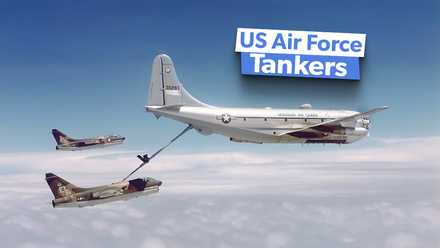
From KC-97 To KC-46: A Brief History Of US Air Force Tankers
The first tanker was propeller-driven and today they are based on airliners (the Boeing 707 and 767), but this is soon set to change.
RVS 2.0 And The Endless Delays
![8508950 - KC-46 Maximum Endurance Operation - Project Magellan [Image 3 of 6]](https://static0.simpleflyingimages.com/wordpress/wp-content/uploads/2024/07/8508950.jpg?q=49&fit=crop&w=500&dpr=2)
To address the original system’s failures,  Boeing developed a replacement known as RVS 2.0. The redesign incorporates six cameras, upgraded sensors, and a new full-color 3D 4K display intended to restore accurate depth perception for boom operators. Boeing and the Air Force initially presented the redesign as the long-awaited solution that would finally bring the KC-46 to full operational capability.
But the replacement system has repeatedly slipped behind schedule. The original target date for fielding RVS 2.0 was 2023. That deadline was later moved to October 2025, then summer 2027, before slipping again to 2028 as of May 2026. Each delay extended the period in which the Air Force would continue operating a tanker fleet under known restrictions.
Neither Boeing nor the Air Force has provided detailed public explanations for the latest schedule slip beyond vague statements about ongoing coordination efforts. The repeated delays have reinforced concerns that the KC-46’s central technical problems are proving far harder to solve than originally expected. More than a decade into development, the tanker still has not escaped the shadow of its original design flaws.
Operational Restrictions Continue To Pile Up

The Air Force’s own testing and evaluation reports show the KC-46 still falling short of required operational standards. Annual assessments released in 2026 confirmed that the tanker remains in restricted service and has not yet achieved full operational capability. Availability and mission-capable rates continue to lag behind official targets.
Part of the problem is that not every aircraft counted as mission-capable can actually perform its primary refueling mission under all conditions. Some tankers remain operational for transport or secondary tasks while still carrying limitations related to aerial refueling operations. That distinction significantly complicates readiness calculations for a fleet already under pressure.
The KC-46 also continues facing aircraft-specific compatibility problems. The tanker still cannot safely refuel the A-10 Warthog because of boom stiffness issues, and testing with the incoming E-7 Wedgetail airborne early warning aircraft has not yet been completed. Those unresolved compatibility gaps further highlight how incomplete the program remains despite years of production and operational deployment.

Why America’s KC-46 Tanker Fleet Is Already Falling Behind The Demand Its Own Air Force Created
The Boeing KC-46 is one of the world’s most capable tankers, although it continues to face teething problems seven years after entering service.
Boeing’s Multi-Billion-Dollar Losses

Financially, the KC-46 has become one of the most painful defense programs in Boeing’s portfolio. Under the fixed-price structure negotiated with the Air Force, Boeing, not the government, is responsible for absorbing most cost overruns tied to development problems, delays, and redesign work. What was intended to shield taxpayers from spiraling costs instead turned into a multi-billion-dollar burden for the company as technical issues continued piling up years after development began.
By early 2026, Boeing had accumulated more than $7 billion in charges tied to the tanker program. In the fourth quarter of 2025 alone, the company recorded another $565 million loss connected to the KC-46. Executives have repeatedly described the tanker as one of the company’s most financially damaging fixed-price defense contracts, with repeated delays to the Remote Vision System continuing to drive costs higher.
The Air Force, meanwhile, has continued paying for production aircraft as deliveries proceed. Roughly 96 KC-46s have already been delivered, with the total program of record covering 188 aircraft before additional orders are counted. The strange result is a program that remains financially punishing for the contractor while simultaneously remaining essential for the customer. Boeing is effectively stuck building a tanker the military still urgently needs while continuing to absorb the financial consequences of fixing it.
Why The Air Force Keeps Buying More

Despite the tanker’s unresolved deficiencies, the Air Force continues expanding procurement of the KC-46. In November 2025, Boeing received a $2.47 billion contract for 15 additional KC-46A Pegasus tankers, while future budget plans call for billions more in continued purchases. The service is also seeking $3.9 billion to acquire 15 more aircraft in the next fiscal year, with procurement expected to ramp up to roughly 18 aircraft per year between 2028 and 2031.
The logic behind those purchases is harsh but straightforward: the Air Force has no realistic alternative ready to replace its aging tanker fleet. Many KC-135 Stratotankers currently in service first entered operation during the Eisenhower administration, and maintaining them is becoming increasingly expensive and difficult. Structural fatigue, maintenance demands, and the growing challenge of sustaining aircraft built around 1950s-era airframes leave the Air Force with limited options. The Air Force likely views even a troubled replacement as preferable to relying indefinitely on tankers that are among the oldest operational aircraft in the American military inventory.
That reality has produced one of the strangest paradoxes in modern American defense procurement. The KC-46 remains an aircraft still struggling to consistently fulfill the mission it was specifically designed around, yet it has simultaneously become indispensable because there is no credible backup plan waiting behind it. The Air Force cannot fully rely on the Pegasus in the way it originally intended, but it also cannot afford to stop buying it. As older tankers continue retiring on a fixed timeline, the service is effectively being forced to expand a program that remains unfinished, betting that the aircraft’s problems will eventually be solved after hundreds of billions in long-term fleet investment are already locked in.
Catch what other trackers miss
Emergency squawks, holds, NOTAMs — live signals, no signup.
Open tracker
Catch what other trackers miss
Emergency squawks, holds, NOTAMs — live signals, no signup.
Open tracker