dailynewsnblog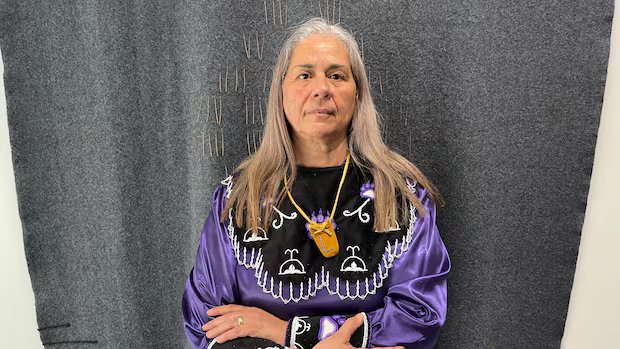

Listen to this article
Estimated 5 minutes
The audio version of this article is generated by AI-based technology. Mispronunciations can occur. We are working with our partners to continually review and improve the results.
In the past five years, the Survivors’ Secretariat in Six Nations has acquired over 36,000 records related to children who attended the Mohawk Institute Residential School, according to secretariat lead Laura Arndt.
The Survivors’ Secretariat, a non-profit survivor-led organization, has been investigating the Mohawk Institute in Brantford, Ont., Canada’s longest-running residential school, since 2021.
Arndt said despite accessing thousands of records through archives using access to information requests, privacy law restricts them from sharing those with families of survivors or lost children.
“When it comes to the idea of bringing the children home, we don’t have stewardship of the records, we don’t have stewardship of the memories,” she said.
“We’re like children looking in the window. We can see it, we can read it, we can touch it, but it’s not ours to use.”
Arndt was part of a panel that presented evidence on ground and archival searches for missing children and unmarked burials at residential schools to the Permanent Peoples’ Tribunal on Wednesday.
The international independent court of opinion began its week-long investigation into missing Indigenous children and unmarked burials associated with residential schools on Monday at the daphne art centre in Montreal.
Requested by the Native Women’s Shelter of Montreal in 2024, the tribunal has been hearing evidence regarding Canada’s responsibility for the residential school system and the human rights violations associated with it.
Crown-Indigenous Relations and Northern Affairs Canada has said the Government of Canada will not be participating in the proceedings.

Warning: The following story shares emotional testimony and experiences of residential school survivor stories of the Mohawk Institute.
Diane Hill is from Six Nations of the Grand River in Ontario and is a survivor of the Mohawk Institute, the longest-running residential school in Canada. Located in Brantford, Ont., the institute was notorious for the abuse reported by children. Hill’s story is one of many documented in a travelling exhibit that looks at more than 140 years of the institute’s history and its impact on survivors.
Arndt said the Survivors’ Secretariat, established in 2021, has been able to identify over 6,000 children who attended Mohawk Institute and 105 children who died there.
Arndt said the focus is to “bring the children home,” but that doesn’t always mean excavating grave sites, and they often won’t share publicly what they find in their ground searches.
“You don’t need to dig up ancestors, it’s nobody’s spectacle,” she said.
“We want the lives of children to be honoured.”
Lack of funding stalls searches
Arndt said a reduction in federal funding in recent years for ground searches at residential schools has impacted the secretariat’s work.
Between 2021-22 and 2023-24, the secretariat received about $10.3 million from the $320-million Residential Schools Missing Children Community Support Fund. In 2024, Canada tried to cut and cap the available cash from the community support fund, only to have to walk that back.
“The relationship of the funding to what the need was just wasn’t there,” Arndt said.
Archaeologist Scott Hamilton, a professor emeritus at Lakehead University in Thunder Bay, Ont., has been involved in many ground searches for unmarked burials related to residential schools. He told the tribunal about the sheer scope and complexity of these searches.
“We have no real sense of the magnitude of search in one of the largest countries in the world, just how far and how wide we have to explore,” he said.

Hamilton said the investigations he’s part of are all Indigenous-led and are heavily dependent on survivor testimony and archival records.
Hamilton said from the research into archival records he’s conducted, children who died at residential schools were more likely to be buried at grounds associated with the school or church than to be returned home.
Returning children home to their families for burial, he said, was the exception and not the rule.
He said funding cuts have created a sense of distrust between communities doing the searches and the government. It means many have not been completed.
“We have to stare [survivors] in the face and say we’re not likely going to be able to do this, not because there’s a loss of will on our part, we simply don’t have the resources and tools to continue this kind of work,” Hamilton said.
Hamilton and Arndt said the lack of funding and its consequences on ground searches and organizations has added to residential school denialism.
“Whenever you try to change a behaviour, there’s always this resurgence of behaviour before it goes away, and my hope is that’s what this denialist frame is,” Arndt said.
“It is the last fight of a history that doesn’t account for truth.”
The tribunal continues the rest of the week. An interim ruling from the judges is expected on Friday, while a full ruling will be delivered on Sept. 30.
A national 24-hour Indian Residential School Crisis Line is available at 1-866-925-4419 for emotional and crisis referral services for survivors and those affected.
Mental health counselling and crisis support are also available 24 hours a day, seven days a week through the Hope for Wellness hotline at 1-855-242-3310 or by online chat .