dailynewsnblog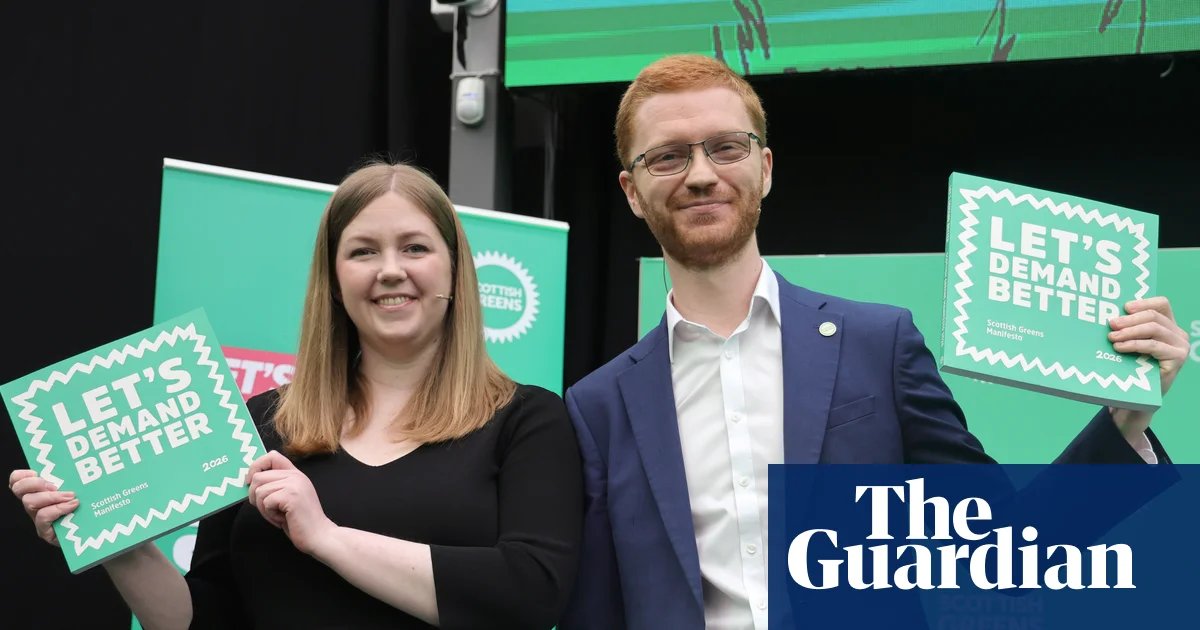
The Scottish Greens have called for free bus travel, thousands of extra teachers and doctors and a universal basic income among hundreds of uncosted manifesto pledges.
The party is enjoying a bounce in Scottish opinion polls, with some putting it ahead of Labour, driven partly by the surging support for the Green party of England and Wales under the leadership of Zack Polanski.
Some pundits believe the Scottish Greens are on the brink of winning their first constituency seats at Holyrood in the 7 May national election, including unseating the current Scottish National party (SNP) cabinet minister Angus Robertson in Edinburgh Central.
Gillian Mackay, the party’s co-leader, told the party’s manifesto launch in Glasgow the Greens representpeople angry with a Labour government that “promised change but failed to deliver for so many. We’re the party that can mobilise that anger.”
Their plan for “radical change” was built on a “vision of Scotland where we use the full powers of devolution and stretch them to their limits so that we can build the more equal future that so many are crying out for”.
The 168-page document calls for all bus services to be taken into public ownership, primary school class sizes to be cut to 20, a family doctor for every 1,000 residents, the building of nearly 80,000 new social homes by 2031 and several new railway lines, and the introduction of 570 hours of free childcare each year for children between six months and two years old.
Ross Greer, the other co-leader who helped broker the Greens power-sharing deal with the former first minister Nicola Sturgeon, said these policies would be funded by new taxes and levies targeting the wealthy and large companies.
Those would include taxes on rich property owners and landlords, a surcharge on large corporate headquarters and Amazon warehouses, higher aviation taxes, a new carbon-based land tax for rural land, health taxes on supermarkets selling tobacco and taxes on casinos and bookies.
But Greer admitted they did not know how much this would all cost. “The concept of a fully costed manifesto is frankly a misleading one to the public,” he said.
“[There] has been this fallacy in UK politics for decades now that government budgets are like household budgets where you just have a list of spending and then the income that comes in. Government budgets are far more complicated than that.”
A series of opinion polls suggest the Scottish Greens could tip the balance of power at Holyrood in favour of the Scottish National party, its former coalition partner. The SNP is expected to win comfortably but fail to get an overall majority.
Lorna Slater, the Greens’ former co-leader bidding to win Edinburgh Central, said it was “absolutely” the case that Polanski’s arrival as leader in England and Wales had been “transformative” for the Scottish party’s fortunes. He had made headlines, stealing air time and attention from Reform UK.
She said the surge in support should translate into the Scottish Greens winning regional lists in every part of Scotland, landing up to 12 MSPs, which would prevent Reform from getting the last top-up list seats in close-fought contests.
“We all saw in the Gorton and Denton byelection [in Manchester in February] that Green can keep out Reform,” she said. “And that, to me, is this very powerful message.”