dailynewsnblog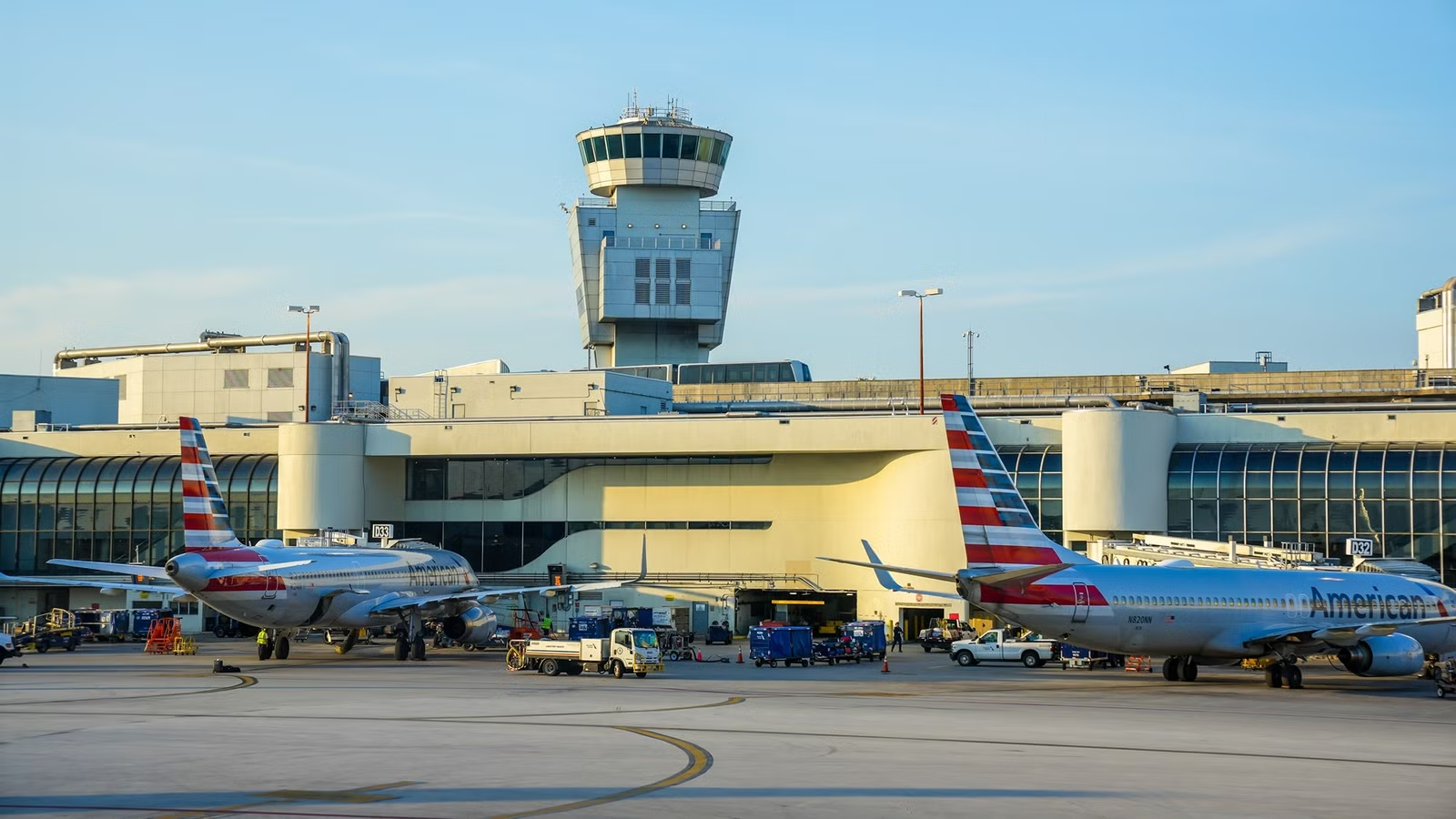
 Miami International Airport (MIA) is moving aggressively to acquire land surrounding its campus as officials prepare for decades of anticipated passenger and cargo growth. The property purchases are part of the airport’s long-term expansion strategy, ensuring space remains available for future aviation facilities, cargo operations, and supporting infrastructure as demand continues to rise.
The acquisition effort comes as MIA continues investing in its broader modernization program while handling record traffic levels. Airport leaders say securing nearby parcels is now essential because developable land around the airport is becoming increasingly scarce, making future expansion significantly more difficult and expensive if action is delayed.
Strategic Land Purchases Support Long-Term Expansion

According to Miami Today, Miami-Dade County is pursuing multiple property acquisitions adjacent to the airport, including a proposed purchase of a warehouse and surrounding land west of MIA for approximately $19.1 million. The site is expected to support future airport development rather than immediate construction, giving planners greater flexibility as aviation demand evolves over the coming decades.
The purchases align with MIA’s long-range vision, which projects substantial increases in both passenger traffic and air cargo volumes. Rather than waiting until expansion projects are ready to begin, airport officials are securing strategically located properties while they remain available. This approach reduces the likelihood that surrounding commercial development will limit future airport growth.
Miami International Airport occupies one of the most land-constrained positions among major US international gateways. Unlike airports with large undeveloped buffers, MIA is surrounded by established industrial, commercial, and residential development, making every nearby parcel increasingly valuable for future aviation uses.
Growth Continues To Drive Infrastructure Planning

The land acquisition campaign complements the airport’s broader capital improvement strategy. Through its MIA Future-Ready modernization program, Miami-Dade Aviation Department is investing billions of dollars in terminal upgrades, additional gates, baggage handling improvements, roadway enhancements, and cargo facilities to accommodate continued growth.
MIA handled a record 56 million passengers in 2024, a seven percent increase over the previous annual high, while also remaining one of the nation’s busiest international cargo airports. Officials expect those figures to continue climbing as South Florida’s population grows and international travel strengthens. The airport also anticipates continued elevated demand associated with major global events in South Florida. A major stress test came in recent months as Miami served as a host city for the 2026 FIFA World Cup.
Cargo remains another significant driver of expansion. In 2024, MIA had the fourth-largest amount of landed cargo weight among all US airports, only behind the major global cargo hubs of Anchorage International Airport (ANC), Memphis International Airport (MEM), and Louisville Muhammad Ali International Airport (SDF). Miami still serves as the leading US gateway for trade with Latin America and the Caribbean, making additional logistics capacity increasingly important as international freight volumes continue to expand.
Buying Today To Avoid Constraints Tomorrow

Airport expansion projects often require years of environmental reviews, engineering work, funding approvals, and construction. Acquiring land well in advance allows airport planners to preserve development options before surrounding properties become unavailable or prohibitively expensive.
That strategy has precedent. Miami airport authorities have periodically expanded the airport’s footprint throughout its history to accommodate aviation growth, but opportunities to add land have become increasingly limited as the surrounding area has urbanized. Today’s acquisitions reflect a recognition that preserving space is as important as constructing new facilities.
While no immediate development timeline has been announced for every parcel under consideration, the purchases demonstrate a long-term planning philosophy focused on future flexibility rather than short-term needs. As passenger numbers, cargo operations, and airline activity continue to grow, officials believe securing land now will position Miami International Airport to expand efficiently without facing the space constraints that challenge many mature airports worldwide.