dailynewsnblog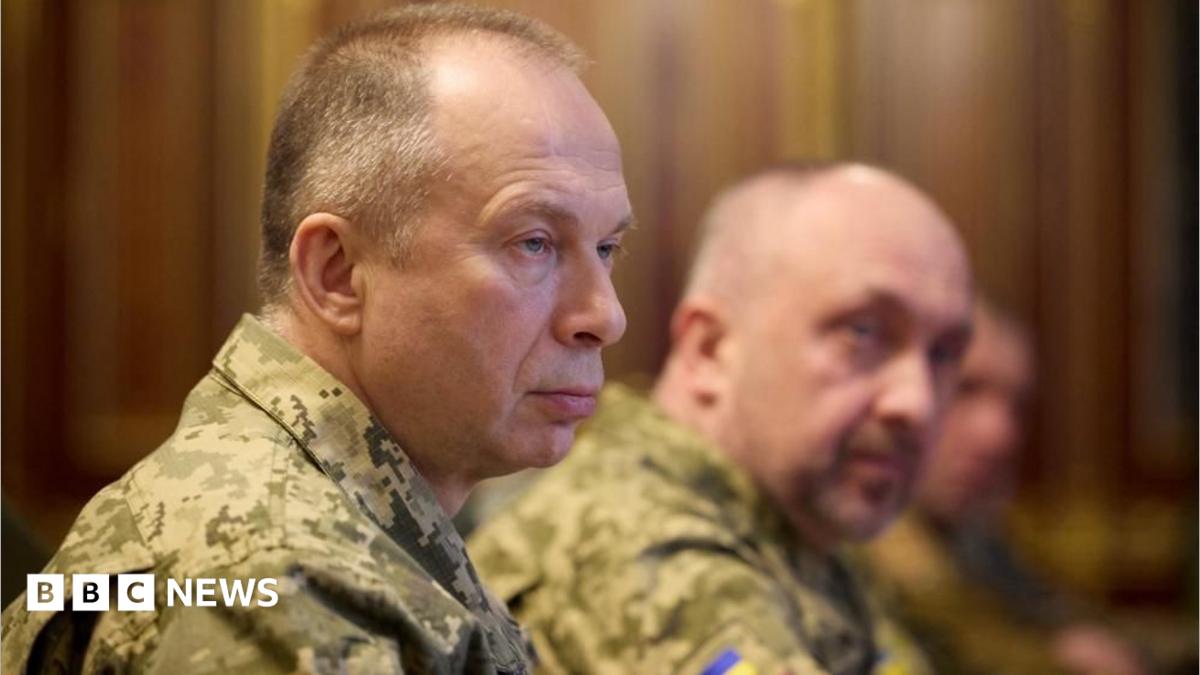
“I perceived our relationship as a working one,” he wrote in an op-ed for the Militarny website.
“If I offended anyone, Mykhailo Albertovych [Fedorov], I’m sorry.”
The general said the issues of military contracts, procurement and mobilisation currently being aired in the press and boiled down to pithy slogans on pieces of cardboard carried aloft by protestors were a great deal more complicated than most people realised.
“Decisions on which people’s lives depend are not made with slogans,” he said. “Real work, not the public drama surrounding it, wins the war.”
Like the ousted defence minister, the commander-in-chief avoided directly personal attacks, but the object of much of his criticism was pretty clear.
“Presentations should not turn into self-representations,” he wrote, in a thinly veiled swipe at Federov’s long, detailed news conference last week.
“Behind each slide there should be a document, a budget and a procedure,” the general went on. “Otherwise, instead of a decision the army gets disappointment.”
Syrskyi’s problem however is that most Ukrainians, especially the younger ones, seem to trust Federov’s analysis of what needs to change in order for Ukraine to win the war, not the general’s.
More than anyone, Federov is seen by many as driving innovation in the military, gradually improving Ukraine’s chances of beating back its numerically superior enemy.
“Right now, the war is changing, so we need new ideas and a new structure,” 44-year-old law company employee Tetiana Makarenko told me at one of the protests over the weekend.
“It’s often said that a small Soviet army can’t defeat a big Soviet army. It’s time to change the mindset and start the new type of war.”
Federov’s six months at the helm in the defence ministry have coincided with a string of military successes for which the minister, not always fairly perhaps, is credited.
“We had this feeling because we saw the changing situation,” Makarenko said. “We had the feeling that we can do this.”
In his article, Syrskyi hit back at those accusing him of a lack of strategy, or that he had failed to embrace new technology.
“The strangest reproach that I have heard is that I supposedly do not want to fight with drones,” he said, pointing out that he had presided over the creation of an unmanned systems force as a separate branch of the military.