dailynewsnblog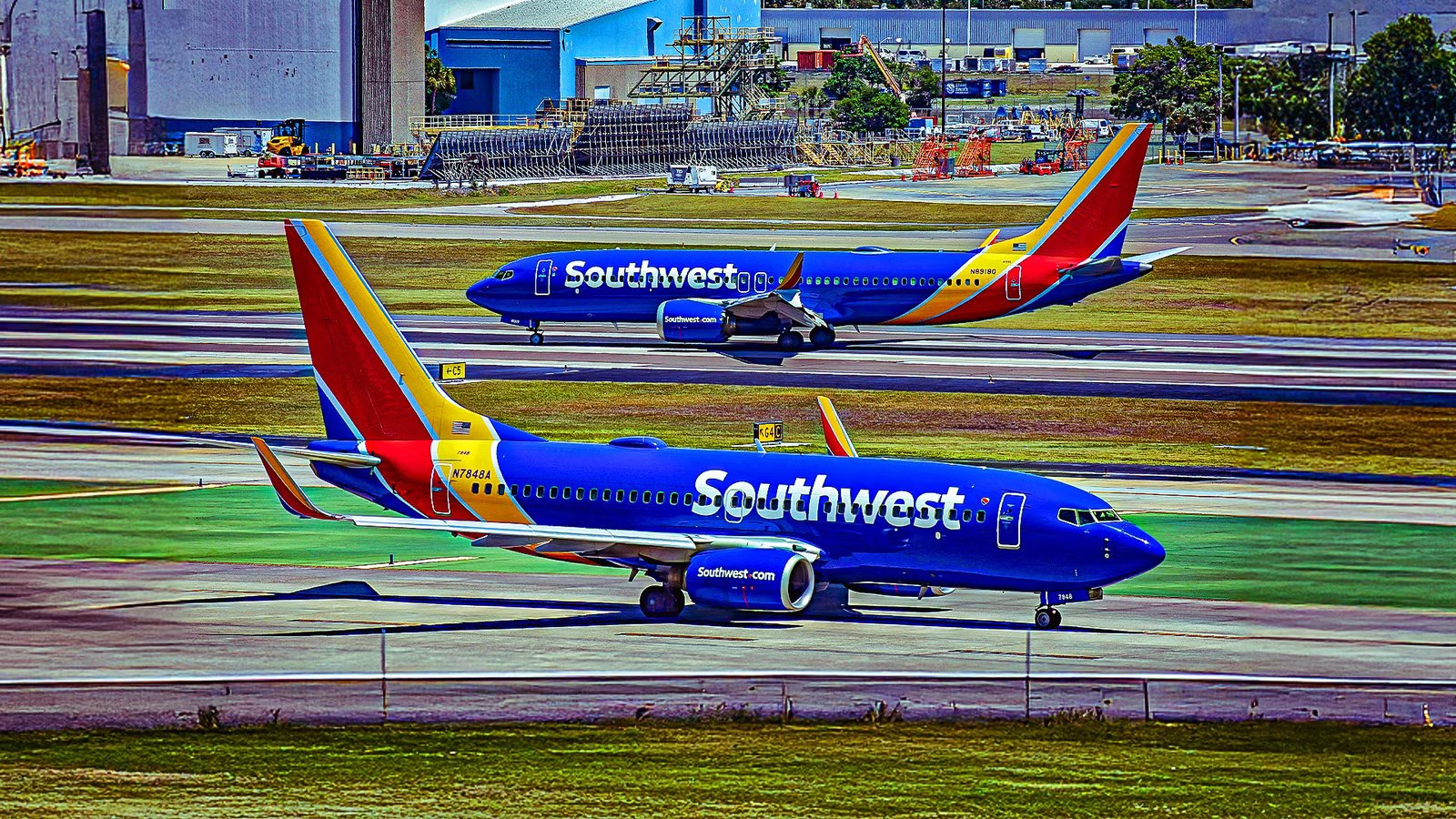
A  Southwest Airlines Boeing 737 suffered an apparent landing gear fire in Las Vegas on Friday afternoon after smoke was spotted coming from its right main landing gear while it taxied for departure. The narrowbody returned to the gate at
  Harry Reid International Airport (LAS) after the crew of another Southwest aircraft taxiing behind informed air traffic control that its gear appeared to be on fire.
The jet was operating Southwest flight WN759 to Chicago’s Midway International Airport (MDW), but ultimately never reached the runway and was towed back to the terminal as airport fire crews responded. Passengers deplaned and later boarded a replacement aircraft before continuing onward to Chicago.
Southwest 737 Dumps Chunks Of Brake After Reported Fire

The problem was radioed in by the pilots of a second Southwest aircraft — identified in air traffic control (ATC) audio as Southwest 334 heading to Houston Hobby (HOU) — which was second in line for departure from Runway 26R. One of the pilots told ATC that “it looks like the right landing gear’s on fire,” before a pilot from a different aircraft said there was “heavy smoke” emanating from the Southwest jet’s right main landing gear.
One pilot also reported what appeared to be “chunks of brake” lying on the taxiway, adding that a trail of fluid had been left around the tire chunks, before declaring the situation required an emergency response. One of the pilots on Southwest 334 told ATC:
“Southwest in front of us. It looks like the right landing gear’s on fire… we need trucks.”
Brakes And Hydraulics In Focus

Fortunately, the incident occurred while the Southwest jet was taxiing for departure, rather than during the takeoff roll itself. Southwest spokesperson Lynn Lunsford told KSNV News 3 that there were concerns about a “possible hydraulic issue,” but said there were no reports of a fire. Simple Flying has contacted the airline to request additional details and will update our story accordingly.
On the Boeing 737, each of the four main landing gear wheels has its own brake. These brakes use hydraulic pressure, normally supplied by hydraulic system B, with system A available as an alternative. The nose wheels do not have brakes, so any brake-related problem would involve the main landing gear, where the smoke was reported.
A hydraulic fluid leak onto hot brake components can produce heavy smoke without a fire breaking out, although the combination of brake damage and leaking hydraulic fluid has caused landing gear fires before. Neither the NTSB nor the Federal Aviation Administration (FAA) has commented publicly at the time of writing.
Replacement 737 MAX 8 Arrives In Chicago Almost Four Hours Late

Flight tracking data shows that Southwest flight WN759 eventually departed Las Vegas at 4:44 PM local time, around four and a half hours after its scheduled 12:15 PM departure. The carrier used a replacement Boeing 737 MAX 8, which landed at Chicago Midway at 9:40 PM, almost four hours after its scheduled 5:45 PM arrival.
Southwest has not said how many passengers were aboard the original flight, but its MAX 8 jets can accommodate up to 175 passengers. US passengers are not entitled to automatic cash compensation for flight delays, unlike under some European passenger-rights rules. However, passengers are entitled to a refund under DOT rules if they choose not to travel on delayed flights arriving three or more hours later domestically, or six hours internationally.
WN759 is a service between Las Vegas and Chicago Midway that runs three times a week (Mondays, Thursdays and Fridays), with a scheduled flight time of around three and a half hours. Southwest is by far the largest airline at Harry Reid International Airport, carrying 21.8 million in 2025, well ahead of second-place Delta Air Lines, which carried 5.2 million.