dailynewsnblog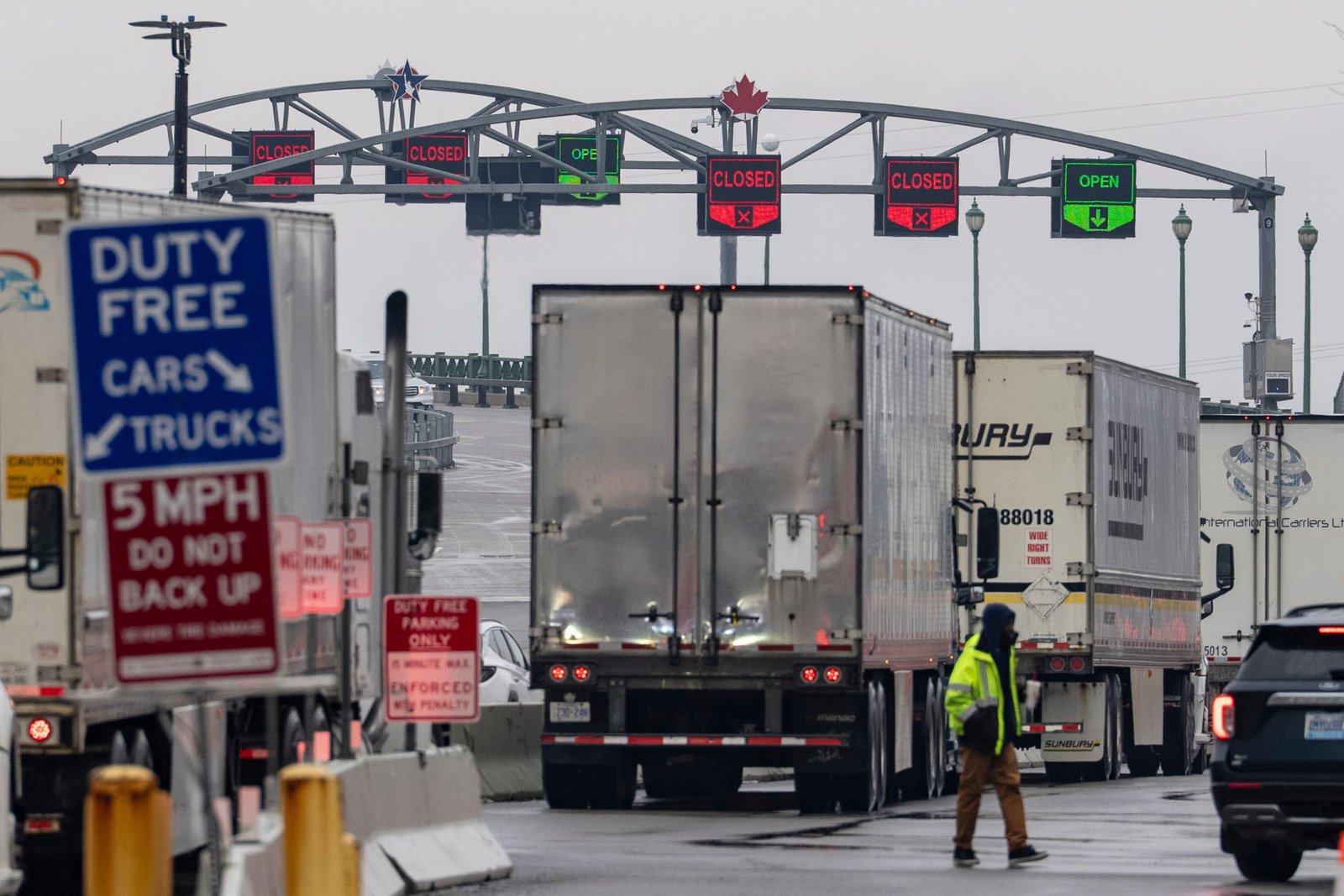
Here’s what the activist media is reporting on this week.
Now that Prime Minister Mark Carney has “belatedly (come) around to the position” of his New Democrat counterpart, Avi Lewis, as well as Manitoba Premier Wab Kinew and “organized labour” — namely, “that no trade deal was better than a bad deal” — it is now “imperative that (Carney) and his majority government to ensure not only that workers who face job losses are protected, but also make sure that the richest individuals and corporations pay their fair share to resist the MAGA regime,” according to Ricochet contributor Christo Aivalis.
“What killed the negotiations was the stupidity, greed, and arrogance of Trump and his top advisors, who took Carney’s sweetheart deal and said ‘what if we pushed Canada just a little bit more?’ They demanded truly insulting things, from controlling our trade with other nations to attacks on the French language. Even Carney couldn’t endorse something this unacceptable and save his political career.”
Instead, the prime minister has “made a gamble: That capitalism and trickle-down economics will save Canada,” Aivalis contends.
“That gamble is wrong, and as we enter a new phase in the trade war against Trump’s USA, it becomes even more clear that the only path forward is to oppose the United States on all fronts, not simply to try and out-capitalism Trump and his cronies. By creating a special tax on wealth and excess profits, Carney can forge the Canadian Freedom Fund, dedicated to building a Trump-proof economy now, and preparing to build a future in which we need not rely on the whims of the American capitalist class, or any capitalist class for that matter.”
His prediction: “If Carney wants to simply get a slightly better surrender deal, capitalism is the way forward. But if he wants Canada to be truly Strong and Free, he’s going to have to realize his own ideology is a dead end. If we want a post-American order, it must be a post-capitalist order.”
Elsewhere on the site, Ricochet podcast host Adrian Harewood chatted with Brett Popplewell about his recent trip to Greenland “to get reaction to Trump’s annexation threats, and Canada’s failure to stand firm with the Greenlandic people,” as he wrote in a subsequent feature story that hit the cover of The Walrus earlier this year.
“Popplewell said Trump views annexation as a real estate transaction. In addition to its strategic value for the American military, which could have implications for the world, Greenland is seen as a valuable piece of property that Trump wants to acquire,” according to a recap of the conversation by Ricochet writer Joshua Bezanson.
“Popplewell said Trump views annexation as a real estate transaction. In addition to its strategic value for the American military, which could have implications for the world, Greenland is seen as a valuable piece of property that Trump wants to acquire. If those arguments prevail in Greenland, he said, what’s to stop those arguments from spreading to justify annexation of Canada?”
As Popplewell sees it, “Canada cannot be on both sides of this issue.” He also called out the “hypocrisy of Canada expressing solidarity with Greenland while participating in ‘war games’ with the American military, at the same time as the president is threatening to invade,” Bezanson notes.
“No one should have to cry out for help to be heard,” he told Harewood. “The people of Greenland are longing for an earnest deepening of ties to Canada. “Canadians and their government should listen.”
Also keeping a close eye on reaction to the reignited cross-border trade war: Rabble contributor David Climenhaga, who points out that when the government made the call to walk away from the table, “Canadian provincial and federal leaders of all political stripes immediately closed ranks behind (Carney), the leader who had the awful responsibility of deciding whether or not to pull the plug on ‘negotiations’ with a government that was neither capable of making an agreement nor sticking to it.”
In fact, “there was only one exception,” he notes: “It was Alberta Premier Danielle Smith, of course,” who “piously insisted tariffs are always a terrible thing and Canada should immediately roll over and let the United States have its way with us.”
And so, “while Ontario’s Conservative Premier, Doug Ford, said “Ontario is ready to do its part,” his Alberta Conservative counterpart tacitly indicated, forget about it.”
Meanwhile, Rabble correspondent Nick Seebruch checks in with New Democrat byelection hopeful Shannon Devine as she prepares to make a final lap of the hustings in Beaches-East York, one of the two previously Liberal-held ridings in which voters are poised to head to the polls on Aug. 31.
“More than one year on from the federal general election of April of 2025, Shannon Devine says that constituents of the Beaches-East York riding feel they were given a bait-and-switch from Mark Carney’s Liberals,” and the New Democrats “are offering … real solutions to the cost of living crisis and a promise to stand-up to big corporations,” he reports.
“By-elections can sometimes be muted affairs. Unless the outcome has the chance to change the balance of power in the House of Commons, by-elections can often gain little national attention and they often see lower engagement from voters. Devine says however that for her campaign, that has not been the case so far in this race.”
Over at The Breach, Bruce Livesey explores “the rise and potential fall of Doug Ford” in a lengthy dispatch that asks: “Is the Ontario premier’s corrupt, authoritarian, and inept governance finally catching up to him?”
For her part, Press Progress associate editor Rumneek Johal chronicles newly installed B.C. Conservative leader Kerry-Lynne Findlay’s “eventful few months” — and, more specifically, the “recent shakeups and questionable social media activities (that) make it appears as though the party is moving even further to the right.”
Earlier this month, Findlay “shared an eyebrow-raising AI-generated video” in which B.C. New Democrat Premier David Eby “is portrayed in an outfit resembling a dictator, pointing at BC on a map and with various flags intended to represent BC NDP policies or actions,” she notes.
“According to the video, the NDP’s culture war is a ‘war on British Columbia,’ and Findlay accuses the premier of “dividing British Columbians, demonizing our history, [and] injecting ideology into every corner of public life. However, Findlay herself recently tried to police language or ideology within her own party, with leaked guidance from Findlay’s office last month showing that she encouraged MLAs to stop using the ‘woke’ term First Nations, and start using terms like Indigenous, Aboriginal or ‘Indian,’ instead.”
She also tallies up the growing number of newly former B.C. Conservative MLAs who have chosen to leave the caucus in recent weeks, including Peter Milobar, who, after running against Findlay in the leadership race, “announced he was leaving the BC Conservative caucus this week and sitting as an independent,” she explains.
“One of the things Milobar cited as being behind the decision was that his ‘values don’t align with this new direction,’ that the party is taking under Findlay.”
During that now-wrapped leadership race, Findlay “was one of the candidates pushing for ‘real’ conservative values–separating herself from her opponents,” Johan points out.
“But now, with the ever-changing composition of her staff and her latest social media activities, it’s unclear what those values exactly represent.”
Rounding out the progressive-left roster, The Maple’s Alex Cosh takes a closer look at Conservative Leader Pierre Poilievre’s oft-reiterated call for Canada to “present the Americans with the prospect of a Canadian strategic mineral and oil reserve available and tailor-made for our tariff-free allies,” as Poilievre described it in a back-and-forth with reporters in Charlottetown, and concludes that it would ultimately “help fuel American war efforts in exchange for tariff-free trade.”
Trending on the right-of-centre side of the Canadian activist mediaverse:
- Rebel News commander Ezra Levant scores an “exclusive, one-on-one interview” with U.S. Ambassador Pete Hoekstra “on the heels of (Carney’s) decision to walk away from trade negotiations with the United States—the very deal Carney campaigned on as the only man who could deliver,” who tells the network: “If Canada wants to reopen negotiations… I believe that may be possible, but it’ll be hard to get back to that point.”
- Montreal-based Rebel Alexandra Lavoie recounts her failed bid to cross-examine Carney over the decision to walk away from the deal during his recent appearance alongside Quebec Premier Christine Frechette at the Davie shipyard, where, after requesting accreditation, we were recognized upon arrival and immediately prevented from entering,” and “therefore covered the press conference from outside the gates.”
- Over at Juno News, Melanie Bennet talks to “former Canadian military intelligence officer” Joe Varner, who “is warning that artificial intelligence, digital surveillance and other emerging technologies pose a ‘real concern’ to Canadians and require stronger oversight as their capabilities expand.”
- Finally, Juno News founder Candice Malcolm, “a renowned Canadian journalist, author and media entrepreneur,” has received this year’s George Jonas Freedom Award from the Justice Centre for Constitutional Freedoms, joining previous honourees like Levant, Tamara Lich, Mark Steyn and Jordan Peterson.