dailynewsnblog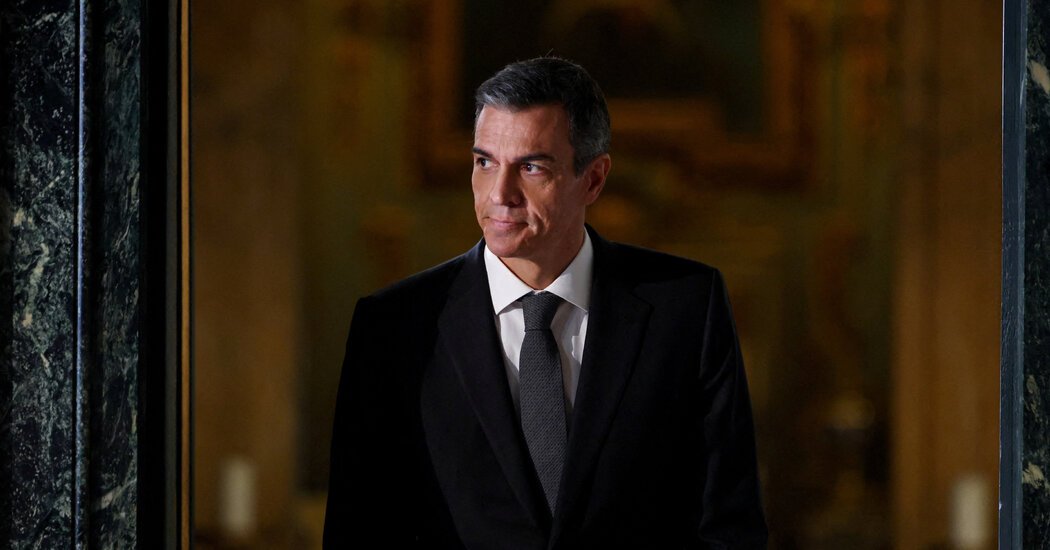
Prime Minister Pedro Sánchez of Spain faced growing pressure on Thursday to call early elections, a day after police officers spent about 12 hours searching the headquarters of his Socialist Party. They were investigating whether party members had surreptitiously funded a mudslinging campaign against judges involved in cases against the government and members of Mr. Sánchez’s family.
Judge Santiago Pedraz of the National Court, who ordered the police operation, accused the party of keeping a de facto criminal organization on its payroll, according to court documents reviewed by The New York Times. The Socialist Party said it would cooperate with the authorities and judicial officials, as did Mr. Sánchez, who added that the central figures in the investigation had been thrown out of the party more than a year ago.
“What I can say to the Spanish citizens is,” he said, “full cooperation with the justice system.”
The accusations deepened a domestic crisis for Mr. Sánchez, who has sought to distance himself from a growing aura of corruption among his party and allies by taking a more prominent role on the international stage. His vocal criticism of the war in Iran and the Trump administration, and his efforts to make common cause with Pope Leo XIV ahead of a papal visit to Spain next month, have made him a liberal darling around the world.
At home is another story. Last week, his political ally and Spain’s former prime minister, José Luis Rodríguez Zapatero, was placed under formal investigation for influence peddling. Several of Mr. Sánchez’s relatives and other former allies are on trial or under investigation for corruption, including his brother, who began standing trial on Thursday in connection with allegations that he had received a patronage job.
One of those defendants, Santos Cerdán, a former top Socialist Party official, is accused in the latest charges that prompted the police raid on Wednesday of masterminding a smear campaign against judges and prosecutors.
On Wednesday, Mr. Sánchez met with Pope Leo XIV at the Vatican. He called the pope “a moral compass in the fight against injustice” at roughly the same time his own party was being accused of corruption by Spain’s justice system. Mr. Sánchez has not been directly implicated and his office has repeatedly asserted his innocence.
But, at least in terms of public perception, that is getting harder to do.
On Thursday, the country’s conservative media lined up to attack him. An editorial in El Mundo said that early elections were a “genuine democratic imperative,” declaring that the government had no “no political or moral authority.”
“All of the Corruption Is Sánchez’s,” blared one typical front-page headline in the conservative newspaper ABC. Alberto Núñez Feijóo, the leader of the main conservative Spanish opposition party, mocked Mr. Sánchez for trying to wrap himself in the clean robes of the popular pope.
“If he wants to get closer to the pope, he should remember the seventh commandment,” Mr. Feijóo said, “‘Thou shalt not steal,’ and the eighth commandment, ‘Thou shalt not lie.’”
It followed a protest over the weekend by conservative Spaniards who marched through the streets of Madrid demanding Mr. Sánchez’s resignation.
Carlos Barragán contributed reporting.