dailynewsnblog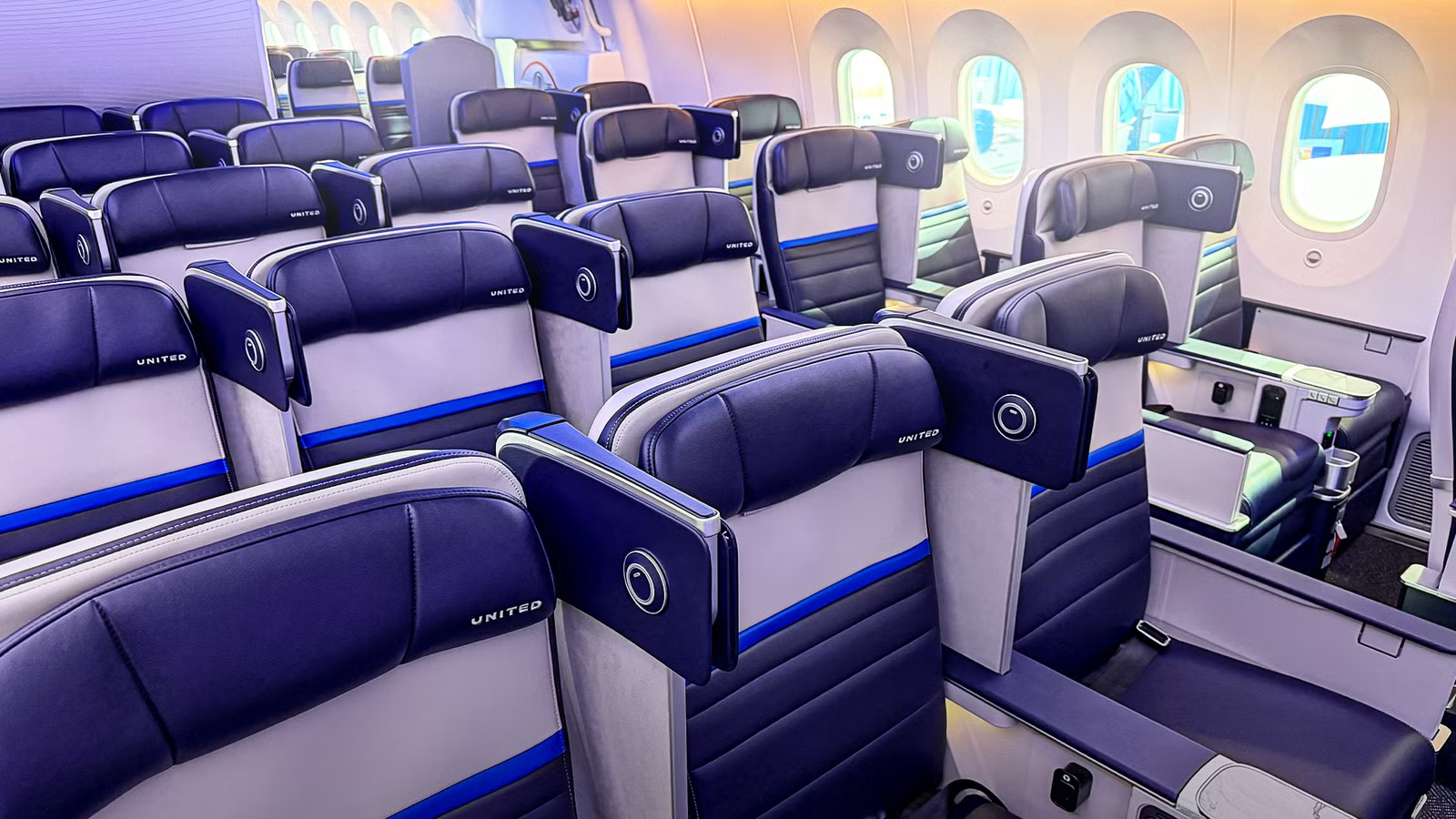
Premium economy has come to sit in a class of its own. Pioneered way back in the early nineties, the product designed to simply bridge a widening gap between standard economy and business class has evolved massively. Where passengers might once have just been granted a bit of extra space, they can now end up paying a hefty premium for something reminiscent of the business classes of days gone by. That means, in turn, room has once again opened up for something to fill a gap between coach and premium economy.
Enter extra-legroom economy seating. Deliberately or not, these slightly more spacious options have no doubt become a means of filling that void for airlines. Importantly, on the side of passengers, such products can make for an economical alternative to premium economy. Whether one is better than the other, well, therein lies the question.
Decades Since Premium Economy Originally Thought Up

For context as to how the extra legroom option may trump premium economy in some cases, it is worth looking into how the latter has evolved. Up until 1991, airlines widely stuck to offering a maximum of three standalone classes. Not long before that, passengers only had the option of up to two: economy or first.
It took Australia’s Qantas introducing business seating in the late seventies as a means to target those who may want more comfort than an economy seat could offer, but who may not want or be able to stretch to a first-class fare.  British Airways, TWA, and Pan Am were among those to soon follow suit, with the feature becoming commonplace across major long-haul operators not long after.
Taiwanese carrier EVA Air, through the introduction of its new Evergreen Class in 1992, then brought about the idea of premium economy through similar thinking. Introduced across its Boeing 747-400 fleet, wider seats laid out in a 2-2-2 rather than 3-4-3 configuration in nose sections again offered another comfier intermediate option that did not command the premium a business ticket carried. While there were reservations among some carriers that such a choice could prompt higher-paying business travelers to downgrade, these were ultimately disproven.
Airlines Now Widely Recognize Opportunity In Premium Economy

EVA remained somewhat of an outlier for a time, alongside Virgin Atlantic, which introduced its own distinguishable area to plug the hole between business and economy in 1992. Rivals toyed with alternative ideas in the meantime, including offering more spacious seats in economy classes and charging a premium, but these were to little avail.
Come 2000, British Airways was the next major carrier to cave with the rollout of its World Traveller Plus fare. At this point, the secret was out as to how lucrative premium economy fares could be. Air New Zealand followed in 2004. Then came a string of huge names to introduce their own versions: Qantas in 2008; Cathay Pacific in 2012;  Lufthansa in 2014;
  Singapore Airlines in 2015;
  American Airlines in 2016;
  Delta Air Lines in 2017;
  United Airlines in 2019; and finally
  Emirates in 2022. Ultimately, a total of 42 airlines globally offered such a product by 2017, according to aviation analytics firm Cirium. Over the next five years, that number ballooned to 63. In the meantime, an 84% jump in the number of aircraft fitted with premium economy sections was recorded.
What all of these airlines had come to recognize was that a premium economy cabin itself could be the most profitable use of space aboard an aircraft by a stretch. Lufthansa flagged previously that revenue per square foot in premium economy was 6% and 33% higher than business and standard economy, respectively, to put it into perspective. It is no surprise, then, that premium economy capacity is skyrocketing across the world. With that, what passengers actually get for such fares has evolved massively, and the amount they are being asked to pay is ever-increasing as a result.
Premium Economy, Naturally, Commanding Increasingly Premium Fares

Indeed, heated competition among airlines to attract passengers toward their premium economy products has brought about glaring upsides, but also downsides for passengers. On the one hand, innovation fueled by carriers constantly trying to one-up each other has led to an ever-improving array of premium economy options. On the other hand, the premium one has to pay for these tickets can now be hefty.
Typically, premium economy nowadays includes several checked bags, priority boarding, amenity kits, and perhaps even upgraded meal options and in-flight entertainment, on top of just a wider seat with better pitch. For all of that, one could expect to pay anywhere from 1.5 to three times more on average than they would for a typical economy ticket. Premium segment fares — incorporating first, business, and premium economy — are currently growing at a faster rate than economy ticket prices too.
Research from the Global Business Travel Association (GBTA) and TMC Altour, published in July, forecasts average economy prices would rise by 8.7% to $536 over the course of this year. Premium segment fares were seen growing by 9.5% to $4,488, meanwhile. Admittedly, soaring fuel prices are a factor, with price growth seen slowing to 1.1% for economy and 2.2% for premium seats in 2027. Nonetheless, sustained surplus demand for comfortable options in the background has meant prices for the likes of premium economy are climbing faster than those for the cheapest seats.

For the most price-sensitive travelers, or even those who do not want the bells and whistles that increasingly come with the fare, that means premium economy is becoming less and less of a viable option. In any case, the pure benefit an extra-legroom, but otherwise unchanged, standard economy product provides can make for a solid alternative.
These are offered in one form or another by airlines across the board. Be it in exit rows where more space is naturally left between seats, or via dedicated rows in economy cabins configured to provide additional room. As to how much extra passengers have to pay to secure these, research from UK-based firm Airport Parking and Hotels published in January found this can vary massively. Namely, the fees started as low as £5 ($6.74) for some short-haul routes, but could stretch to nearly £200 ($269.75) for long-haul flights with premium carriers. In the US specifically, a separate July report from travel site Upgraded Points found more spacious economy seats tended to go for $88 more than the average.
Typical seat pitches by airline and cabin type in 2026, from AwardLocker data:
Cabin / Airline Type | Typical Seat Pitch |
US ultra-low-cost economy | 28–30 inches (71.1-76.2 cm) |
US legacy economy (narrowbody) | 30–32 inches (76.2-81.3 cm) |
Higher-comfort US domestic economy | 32–34 inches (81.3-86.4 cm) |
US extra-legroom economy | 35–38 inches (88.9-86.5 cm) |
Budget long-haul economy | 28–30 inches (71.2-76.2 cm) |
Standard long-haul economy | 30–32 inches (76.2-81.3 cm) |
Premium long-haul economy | 32–34 inches (81.3-86.4 cm) |
Best-in-class economy | 34+ inches (86.4 cm+) |
Premium economy | 34–38 inches (86.4-86.5 cm) |
Business class | 60+ inches (152.4 cm) |
International first class | 75+ inches (190.5 cm) |
Using the $536 average economy price forecast for this year from above, that would leave roomier economy seats around the $624 mark in the US on average, give or take. In that sense, extra legroom can make for a far more viable option financially on shorter flights, assuming that premium economy fares — if they are offered at all — sit 1.5 to three times higher than standard ticket prices. Of course, personal opinion plays a part, but there is an argument to be made that the extra width and array of additional benefits afforded to premium economy passengers matter less during shorter journeys anyway. That said, the specific airline and even aircraft can play a major part.

Obviously, what one gets for when they fork out for premium or extra legroom economy differs carrier to carrier and aircraft to aircraft. In some cases, additional perks are included in the extra legroom price, closing the gap to premium economy even further. In another, the physical seats themselves differ between economy and extra legroom, meaning the additional cost covers more.
United,  Alaska Airlines and Hawaiian Airlines — through respective Economy Plus, Premium Class, and Extra Comfort-branded products — are among the score of airlines to market their extra legroom seats as a separate class, for example. That means more legroom and benefits such as priority boarding, free drinks, or even dedicated overhead storage space, but a service that otherwise mirrors standard economy.
 Qatar Airways, conversely, runs its Comfort+ product aboard Boeing 777-300ERs formerly operated by Cathay Pacific and Virgin Atlantic. Where the airline does not market premium economy, these extra-legroom Comfort+ seats have been left as a result of Qatar retaining interiors from the jets’ former owners, meaning passengers get a physical seat upgrade, despite staying in the economy cabin and getting the same service. While a drop in the ocean relative to all such extra legroom products on offer across the world today, these four airlines offer a glimpse into how a halfway house between economy and premium economy can make for an enticing option. Again, the cost increase the latter carries can be stark, and the reality is that price is a huge factor when it comes to assessing flight options for most.
Price Versus Comfort On Flights

As Upgraded Points’ US-based research found, 84% of 500 frequent travelers surveyed flagged that ticket price mattered when purchasing flights. Whether the route was nonstop was key to 59%, with 39% also highlighting flight time. Legroom and seat comfort were then seen as important to 37% of the respondents, ahead of whether free baggage was offered, which 34% of travelers pointed out.
It also found that 39% of frequent fliers had specifically paid extra for more room aboard aircraft, and that a further 39% would consider doing so. Interestingly, though, it was only a fifth of respondents who noted they would be happy to pay more than $100 for the privilege.