dailynewsnblog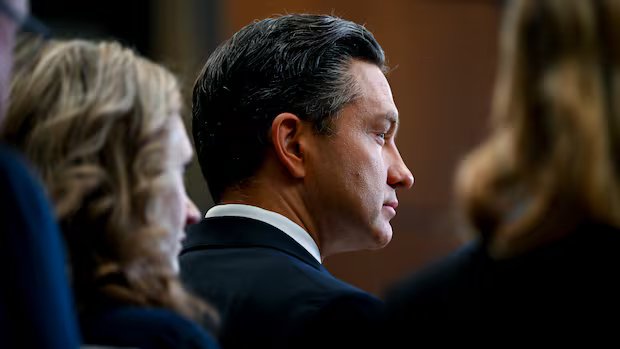

Listen to this article
Estimated 5 minutes
The audio version of this article is generated by AI-based technology. Mispronunciations can occur. We are working with our partners to continually review and improve the results.
Conservative Leader Pierre Poilievre is expected to call on Alberta to join forces with other provinces to demand Ottawa change policies he argues holds them back — a move he says is “the practical, realistic path to a stronger Alberta within a united Canada.”
An excerpt of his keynote speech, which will be delivered Monday in Calgary as part of Poilievre’s campaign to persuade Alberta to remain in Canada, was provided to CBC News by the Conservative Party on Sunday morning.
Poilievre is planning to say that if someone listens to the concerns of Albertans, “you will find they do not have a problem with fellow Canadians or even with Canada. They have a problem with the federal government,” according to the excerpt.
“Unblocking resources and pipelines, respecting firearms owners, locking up criminals, relieving taxpayers, respecting provincial autonomy, unlocking free enterprise — we know that these are the things Albertans have been demanding,” the speech reads.
Poilievre is expected to point to various provinces, including Saskatchewan, Newfoundland and Labrador, Ontario and Quebec as allies in the fight. The demands mirror what federal Conservatives have been focusing on for months.

Conservative Leader Pierre Poilievre said he wants Alberta to stay ‘within a united Canada,’ and said his Conservatives will start campaigning in Alberta ‘every day, in every way to unite this country around hope.’
“All Canadians want these things,” the speech says. “The answer is not to pull away from our friends in other provinces but to lock arms with them to make the changes we need.”
“We do not need a different country, Alberta. We need different government policies in Ottawa,” Poilievre is expected to say.
‘Campaigning for Canadian unity’
Last month, Poilievre said he would campaign across Alberta to encourage the people of his home province to “stay as part of the Canadian family.” He also vowed he would not be the only one campaigning to hold the country together.
“All Conservatives will be campaigning for Canadian unity in Alberta,” Poilievre said. “I stand for a united country and we’re going to campaign every day and every way.”
In the fall, Albertans will vote on whether they want the province to hold a binding referendum on separating from Canada. Premier Danielle Smith has framed the vote as a way to decide whether it’s a cause that’s worth devoting time and resources.

In a provincial address Thursday evening, Danielle Smith said an additional question will be added to an Oct. 19 ballot, asking whether Alberta’s government should commence the legal process necessary to hold a binding referendum on separating from Canada.
Smith has said a vote in favour of separation doesn’t trigger the formal process, but instead will allow Alberta to start a legal process required to hold a binding referendum. Smith has repeatedly stated she will vote for Alberta to remain in Canada.
Her decision to call the referendum came after a judge put a stop to a petition calling for a referendum on independence that was circulated by the pro-separatist group Stay Free Alberta.
The judge found Elections Alberta’s chief electoral officer Gordon McClure made an error in law to approve the petition and failed to consider an earlier court decision that said separation would violate Indigenous people’s treaty rights.
Smith insists ‘Canada can work’
On Friday, Smith spoke to a sold-out crowd of more than 2,000 United Conservative Party supporters and made her pitch on why Alberta should remain in Canada.
“I still believe Canada can work. I believe it’s working better every day, and it can work even better in the future if we keep fighting together for it,” Smith said.
Smith pointed to the memorandum of understanding between the federal government and Alberta that could see construction on a new oil pipeline to the West Coast start as early as September 2027.

The premier told the crowd she believes now is not the time to walk away from opportunities for the province, just as progress is being made.
Though he has credited Smith for her dedication to “fight for the good people of Alberta,” Poilievre has criticized the memorandum of understanding deal, arguing it doesn’t go far enough.
Prime Minister Mark Carney has called Smith’s referendum a “dangerous bluff” and noted the ballot question wasn’t part of the United Conservative Party’s election platform, nor was there any mention of it during the last provincial campaign.
Polling from the Angus Reid Institute released in late May shows more Alberta survey respondents would vote yes on the question for a possible second referendum than they would on a simple question about whether Alberta should separate.
The data shows about 35 per cent of respondents would vote in favour of holding a second referendum with a binding question on separation whereas only 30 per cent would vote to separate if there was a straightforward question on independence.