dailynewsnblog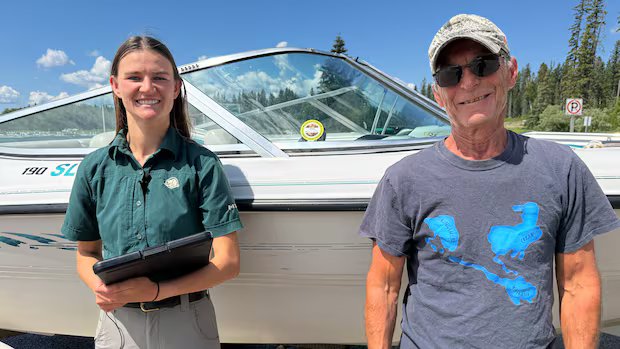

Listen to this article
Estimated 4 minutes
The audio version of this article is generated by AI-based technology. Mispronunciations can occur. We are working with our partners to continually review and improve the results.
Parks Canada says the public’s help is needed to stop the spread of aquatic invasive species (AIS).
“Preventing the spread of aquatic invasive species is a shared responsibility,” Prince Albert National Park (PANP) AIS project co-ordinator Sarah Mitchell said.
In an effort to stop the unwanted creatures from making headway, all watercraft entering Prince Albert National Park waters require an AIS certification permit and compliance sticker.
If a boat has been outside of the province in the last 45 days, it must be inspected and decontaminated by Parks Canada staff at an inspection station. The mandatory inspections began in 2025.
“I think it’s very important for us to protect our lakes. It would be horrible for us to lose something like this,” visitor Colin Trudel said at the boat launch at the Waskesiu Marina.
The regulations were created to stop invasive mussels, such as zebra and quagga mussels, from entering the park’s waterways. Veligers, the larvae of those muscles, are extremely tiny — not visible to the human eye. A single female zebra mussel produces approximately 1 million eggs per year.
Saskatchewan’s Ministry of Environment said invasive mussels pose significant economic risks to irrigation, water power generation, and municipal and industrial water use. On July 3, the ministry announced invasive mussel veligers were identified in the Lake of the Prairies, located approximately 67 kilometres east of Yorkton.
“That’s why we’re so concerned about standing water moving from one location to another, because you might not see anything in that standing water, but those veligers could be present and transferred into a new lake,” Mitchell said.

At the PANP inspection station, Parks Canada staff search watercraft for organic matter such as mud, sand and plants, which could contain AIS.
Staff use a pressure washer with water heated to 50 to 60 C to kill any aquatic invasive species that may be present.
PANP entry gate staff are advising visitors of the changes. Most people have been happy to comply, Mitchell said.
Trudel and other boaters at the marina were asked to show their 2026 permit and compliance sticker before launching their boats.
“There’s signage about being compliant with permits and stuff. I found it pretty easy to follow.” Trudel said.
“I put my boat in the water and take it out and I make sure everything is clean because I don’t want to bring whatever’s here to B.C., or whatever’s in B.C. to here,” said boater Pernell Kirby.

Educating the public has helped with compliance, Mitchell said.
The AIS certification process applies to anything entering the water: canoes, kayaks, stand-up paddleboards, wind surfboards, inflatable boats and rafts. “Anywhere that has touched water” needs to be decontaminated, she said.
The bilge area, live wells, ballast tanks and other compartments where water can sit should be cleaned, drained and dried. Owners are also required to pull the drain plugs on their boats.
Those who don’t comply with AIS rules could face fines up to $25,000 under federal AIS regulations.

Parks Canada is currently developing a long-term AIS plan with input from Indigenous nations, community partners and regional stakeholders. This plan will be adaptive and evidence-based, and will help protect park waters while supporting visitors’ experience, Mitchell said.
PANP has also increased roving AIS inspections and staff presence at boat launches.
In 2025, PANP permitted 7,000 to 9,000 watercraft and conducted 160 decontaminations of high-risk watercraft.
Invasive mussels have been found in Manitoba and south in the United States, said Mitchell.
Zebra mussels were found in Clear Lake in Riding Mountain National Park in Manitoba in 2023. This year, Parks Canada lifted a ban on watercraft from Clear Lake that was imposed in 2025 in an effort to stop the spread of the mussels.
In Saskatchewan, invasive species such as flowering rush and Prussian carp also pose a threat to native species.