dailynewsnblog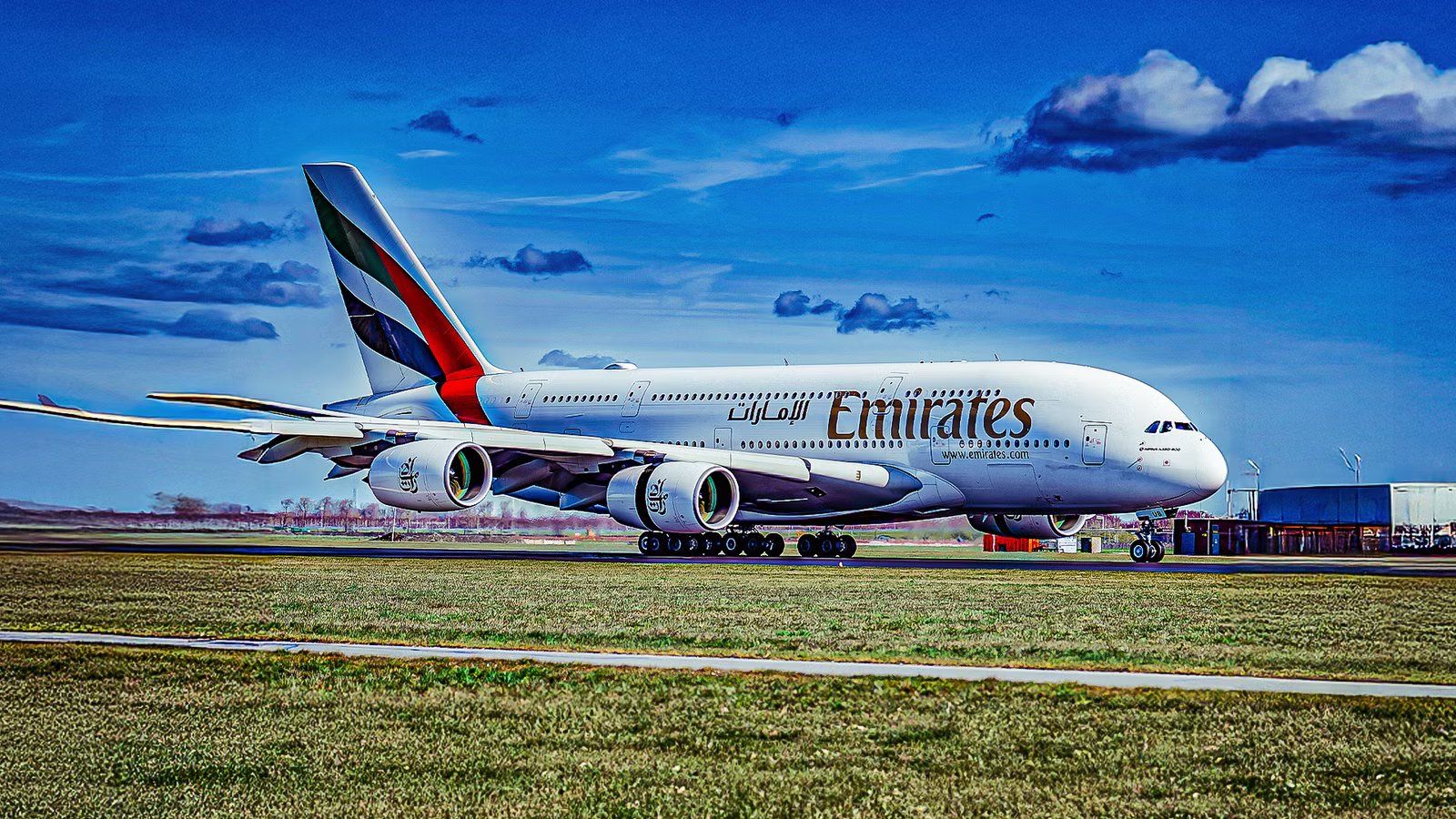
It’s hard to believe, but the world’s oldest active Airbus A380 is now more than 20 years old. The superjumbo in question, registered A6-EDF, flies alongside more than 100 of its counterparts for the Dubai-based UAE flag carrier  Emirates. According to fleet data made available by ch-aviation, this particular superjumbo is 20.2 years old, having first flown back on February 19, 2006, although it didn’t go to Emirates immediately.
Despite this aircraft not getting any younger, it seems to have plenty more flying left in the tank, with its retirement not slated until the 2030s. A key reason for this could be that it spent more than five years in storage after the onset of the coronavirus pandemic.
A Brief History Of A6-EDF

Despite first flying in February 2006, data from Planespotters.net shows that A6-EDF wasn’t delivered to Emirates until December 2009, almost four years later. It was the seventh A380 to roll off the production line, and, while the first (F-WWOW) remains active as an Airbus testbed, A6-EDF is the oldest superjumbo still flying passengers. Meanwhile, those with serial numbers from two through to six have been scrapped, stored, or preserved.
|
A6-EDF’s Five Years Of Storage |
||
|---|---|---|
|
Storage Location |
Start Date |
End Date |
|
Dubai World Central Airport (DWC) |
March 24, 2020 |
December 30, 2023 |
|
Dubai International Airport (DXB) |
December 30, 2023 |
April 5, 2025 |
While A6-EDF has served Emirates for more than 16 years now, it hasn’t been active for the entire time. Indeed, as detailed in the table above, the onset of the coronavirus pandemic saw it stored for more than five years across two different airports in Dubai. As such, it has accumulated relatively few flight hours (45,087 across 7,407 cycles as of January 31, 2026). In 2008, Emirates Chair Ahmed Bin Saeed Al-Maktoum spoke about the potential significance of the A380, according to The Register.
“Emirates was quick to recognise the potential of Airbus’ all-new A380 design, with its large double-deck capacity and excellent operating economics. It will be one of the pillars of Emirates’ future.”
Where Has This Quadjet Been Flying?

This April, Flightradar24 data shows that Emirates has been deploying its oldest A380 on a wide range of routes out of  Dubai International Airport (DXB). These have varied considerably in length. For instance, April has seen it operate multiple trips to King Abdulaziz International Airport (JED), with the return leg in particular taking just over two hours.
Likewise, Emirates has also used A6-EDF on two-and-a-half-hour flights from Bangkok to Hong Kong, although these represent the second leg of a longer two-part route that starts with a six-hour flight from Dubai to Bangkok. Elsewhere, it has also flown to Cairo, just three to four hours away.
At the longer end of the scale, April has also seen A6-EDF operate several flights exceeding eight hours, such as the Denpasar flight to the Indonesian island of Bali. Other routes in this bracket, time-wise, include Casablanca, Morocco, London, and Paris.

Emirates And Qatar Airways Drop Airbus A380 Flights To These 7 Destinations
They come amid many other changes to each carrier’s superjumbo services…
What’s It Like Onboard?

All in all, Emirates has 117 Airbus A380s in its fleet and, historically, has flown another six examples of the type. These double-decker widebody quadjets serve a wide range of routes from the carrier’s main hub at DXB, reflected in the diversity of seating configurations for the type. These range in total capacity from 468 seats across four classes to 615 across two classes.
A6-EDF falls roughly in the middle of this range, with a 517-seat configuration that can accommodate a grand total of 517 passengers. According to the current interior data from aeroLOPA, the lower deck of this layout consists entirely of economy class seats, with 427 in a 3-4-3 configuration. Meanwhile, the upper deck houses 14 first-class and 76 business-class suites, both featuring a 1-2-1 configuration.