dailynewsnblog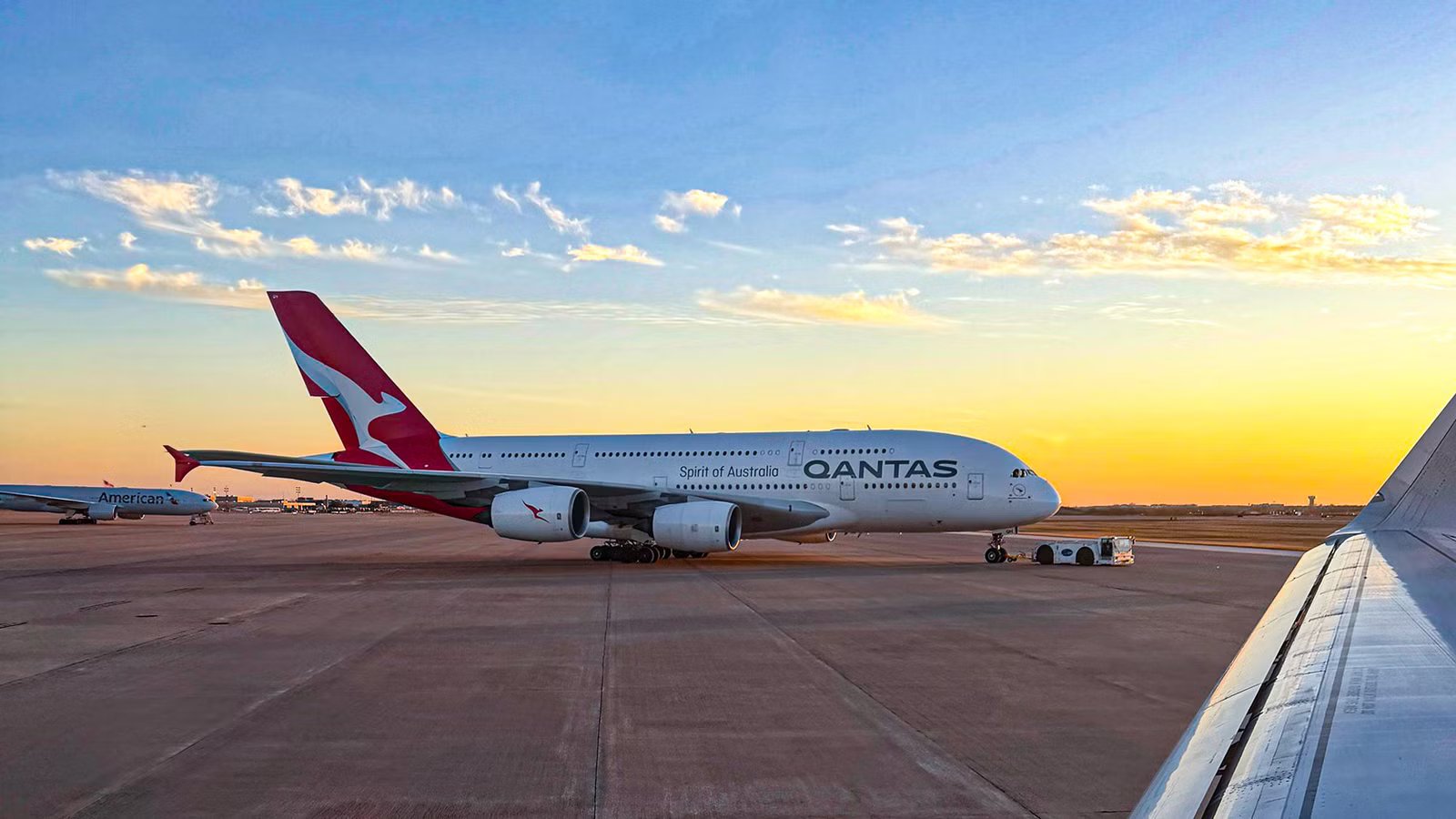
There are two major characteristics that define the mission role of the Airbus A380. First, the aircraft is famous for featuring a full-length upper deck for seating, allowing it to seat between 450 and 550 passengers in most airline configurations, although it is certified to carry up to 853 passengers. Second, the A380 has a range of nearly 8,000 NM (15,000 km), meaning that it has true ultra-long-haul capability.
The A380 is arguably overbuilt for many of the missions that it actually operates, but it can fly practically any route in an airline’s network from a technical standpoint. Some airlines have truly pushed the limits of what the A380 is capable of, with Emirates and Qantas being the most prominent examples. Using data from Cirium, an aviation data analytics company, these are the world’s seven longest A380 routes in 2026.
7
Dubai – Washington-Dulles
Up to 14 hours, 20 minutes

 Emirates is the world’s largest operator of the Airbus A380, with 116 examples, and it deploys the type on some of its longest routes. Washington DC is a major market in the US, and Emirates relies on the size and scale of its network to succeed, making this route a must. The carrier operates daily flights between Dubai and Washington Dulles International Airport using the Airbus A380.
The route is 6,142 nautical miles (11,376 km) by great circle distance, while Emirates blocks up to 14 hours and 20 minutes for the leg to Dulles. This makes it the seventh-longest A380 route to and from the United States. Many A380 routes to the US originate in Europe, with flight times rarely exceeding nine hours, while most Asian A380 operators may only have a handful of double-decker services to the US.
Emirates, however, schedules the A380 on multiple US routes, some of which are even longer than the Dulles flight. Its hub’s location in Dubai means that North America as a whole is quite far, yet Emirates sees strong demand for connecting flights to Asia as well as local travel to and from Dubai. As such, Emirates flies to 13 US airports, many of which are served with the A380.
6
Sydney – Los Angeles
Up to 15 Hours

As the flag carrier of Australia, Qantas operates a large number of long-haul and ultra-long-haul flights. The demand is high, especially to the airline’s hub in Sydney, yet Australia is far away from Europe, the US, and much of Asia. Los Angeles has long been a major spoke for Qantas, which has traditionally operated Boeing 747-400s that would continue to New York-JFK, and the airline is now deploying daily A380s to LAX.
Los Angeles is the second-largest city in the US, and it generates enormous demand to all parts of the world on its own. What’s more, the city is essentially the US’s unofficial gateway to Oceania, with more local demand to Australia and neighboring countries than practically any other US city. Combined with the fact that LAX is home to a hub for joint-venture partner  American Airlines, it’s a no-brainer for Qantas to deploy the A380 to LAX.
Qantas US Destinations |
|---|
Dallas/Fort Worth International Airport (DFW) |
Daniel K. Inouye International Airport (HNL) |
Harry Reid International Airport (LAS) *Begins December 2026 |
Los Angeles International Airport (LAX) |
John F. Kennedy International Airport (JFK) *via Auckland |
San Francisco International Airport (SFO) |
Qantas installs 485 seats on its A380s, including 14 first class seats, 70 business class seats, and 60 premium economy seats. While the A380 has eye-watering operating costs, it also generates a huge amount of revenue if the seats are occupied, especially given how many premium seats Qantas installs on its superjumbos. As such, the A380 is a highly lucrative aircraft for Qantas on this route.
5
Melbourne – Los Angeles
Up to 15 hours, 55 minutes

Melbourne is Australia’s second-largest city, and serves as a secondary hub for Qantas. The route from Melbourne to LAX is slightly longer than the Sydney-to-LAX route, at 6,883 nautical miles (12,748 km) versus 6,507 nautical miles (12,051 km), and Qantas maintains daily services between the two cities. Currently, the Airbus A380 operates two weekly flights, while the remaining five weekly frequencies are handled by the Boeing 787-9.
However, beginning in late October, Qantas will be pulling the A380 off of the Melbourne-to-LAX route, instead flying the 787-9 on all weekly flights. The reason was primarily attributed to a decline in economy demand, as the A380 has 341 economy seats compared to 166 on the Dreamliner. In addition, Qantas is trimming its Sydney-to-LAX schedule down to six weekly flights, while boosting A380 frequencies to Singapore.
Between Melbourne and LAX, Qantas is competing against thrice-weekly services by Delta Air Lines and United Airlines during the summer, with both airlines boosting their schedules during the winter. Between Sydney and LAX, meanwhile, these two airlines use the same aircraft type with slightly more frequent flights. When considering that JV-partner American Airlines also flies a daily Boeing 777-300ER to Sydney, Qantas has an extremely strong presence on the Sydney-to-LAX route.
4
Dubai – San Francisco
Up to 16 Hours

San Francisco is a relatively small city in terms of its geography, but it’s one of the world’s most influential metropolitan areas and a major business hub. For the 2026 summer season, SFO is receiving A380s from British Airways, Lufthansa, and Emirates, with Emirates’ daily services from  Dubai International Airport being the longest out of the three, as well as the fourth-longest A380 route to the US.
SFO and Dubai International Airport are 7,041 nautical miles (13,041 km) apart, and flight times for the departure are blocked for up to 16 hours. It’s a long time to spend inside an aircraft, but Emirates’ A380s are renowned as being some of the most luxurious airliners in the world. They feature 14 first class suites and 76 business class seats, while Emirates also deploys its premium economy-equipped A380s to SFO with 56 seats.
Emirates is notably the only one of the three largest Middle Eastern carriers to offer premium economy (which is not sold by Etihad Airways and Qatar Airways). The cabin is quite large compared to most other airlines, while the per-seat margins are excellent. Given the strong premium demand and long distances, Emirates has prioritized offering premium economy on its US routes.
3
Dubai – Houston
Up to 16 hours, 35 minutes

On some days, Emirates’ flight from Dubai to Houston is its longest by actual flight time, depending on winds (its route to Auckland is the longest by great circle distance). Rather notably, Emirates deploys the A380 to Houston, but only uses the Boeing 777-300ER to Dallas/Fort Worth. This is because DFW is a fortress hub for American Airlines, and as such, Qatar Airways holds the advantage, while Emirates is comparatively stronger in Houston.
Once again, Emirates schedules its four-class A380s to serve Houston, capitalizing on strong demand for premium economy. In addition, Emirates has updated the interior design of some of its A380s, incorporating new colors and finishes to create an understated appearance compared to the bright wood and gold accents that the airline is known for.
While the interior is modernized, Emirates still uses the same seat models as before. The first class showers are still present, as is the bar for first and business class passengers. In addition, the seats have received incremental improvements, such as taller privacy doors in first class, while the upgraded A380s feature additional charging options.
2
Dubai – Los Angeles
Up to 16 hours, 15 minutes

Because Los Angeles is the US’s second-largest city (behind New York), it has a huge amount of local travel demand. As such, Emirates deploys the A380 from Dubai to LAX, a route that spans 7,246 NM (13,420 km) and is blocked for up to 16 hours and 15 minutes. The block time is shorter than the Houston route due to typical winds, but by distance, the Houston route spans 7,097 NM (13,144 km).
Rival  Qatar Airways also serves LAX daily, but it uses the much smaller Airbus A350-1000, while Etihad Airways does not fly to LAX at all. Emirates is therefore the largest out of the three in Los Angeles, as it is in many other markets as well.

Dubai itself has become a major business hub with strong tourism demand, and Emirates has a behemoth network for connections. While Qatar Airways also has a large network, Emirates simply offers more capacity since the A380 makes up a massive part of its fleet, while it also flies 118 Boeing 777-300ERs.
1
Sydney – Dallas/Fort Worth
Up to 17 hours, 10 minutes

Because Qantas and American Airlines are both  oneworld members who also operate a metal-neutral joint venture together, Dallas/Fort Worth is a massive hub for both airlines. DFW is American Airlines’ largest hub, which provides Qantas with a huge level of feed for its nonstop services to Sydney, which helps support A380 services. However, there’s another benefit of the A380 that helps make the services viable.
At 7,454 nautical miles (13,804 km), this is one of the world’s longest flights, and it stretches the limits of most airliners. A Boeing 787-9 Dreamliner, for example, could make the flight but would require blocked seats and would take minimal cargo. Qantas’s Airbus A380s also depart with blocked seats, but can still carry well over 300 passengers in the worst case, and this is extremely beneficial if an airline has demand to fill the seats.
Aircraft | First Class | Business Class | Premium Economy | Economy | Total Seats |
|---|---|---|---|---|---|
Airbus A380 | 14 | 70 | 60 | 341 | 485 |
Boeing 787-9 Dreamliner | N/A | 42 | 28 | 166 | 236 |
Qantas began serving DFW nonstop in 2014 with the A380, but then placed the 787-9 on this route after the COVID-19 pandemic. In 2025, however, the airline returned the A380 to the DFW route, as the plane generates significantly more revenue than the 787-9, and despite the Dreamliner’s lower operating costs, the A380 is earning Qantas more money overall due to its higher capacity.
Catch what other trackers miss
Emergency squawks, holds, NOTAMs — live signals, no signup.
Open tracker
Catch what other trackers miss
Emergency squawks, holds, NOTAMs — live signals, no signup.
Open tracker

![American Airlines Launches 10 Nonstop Routes From New York-JFK To Europe [List & Map]](https://dailynewsnblog.com/wp-content/uploads/2026/09/aa.png)