dailynewsnblog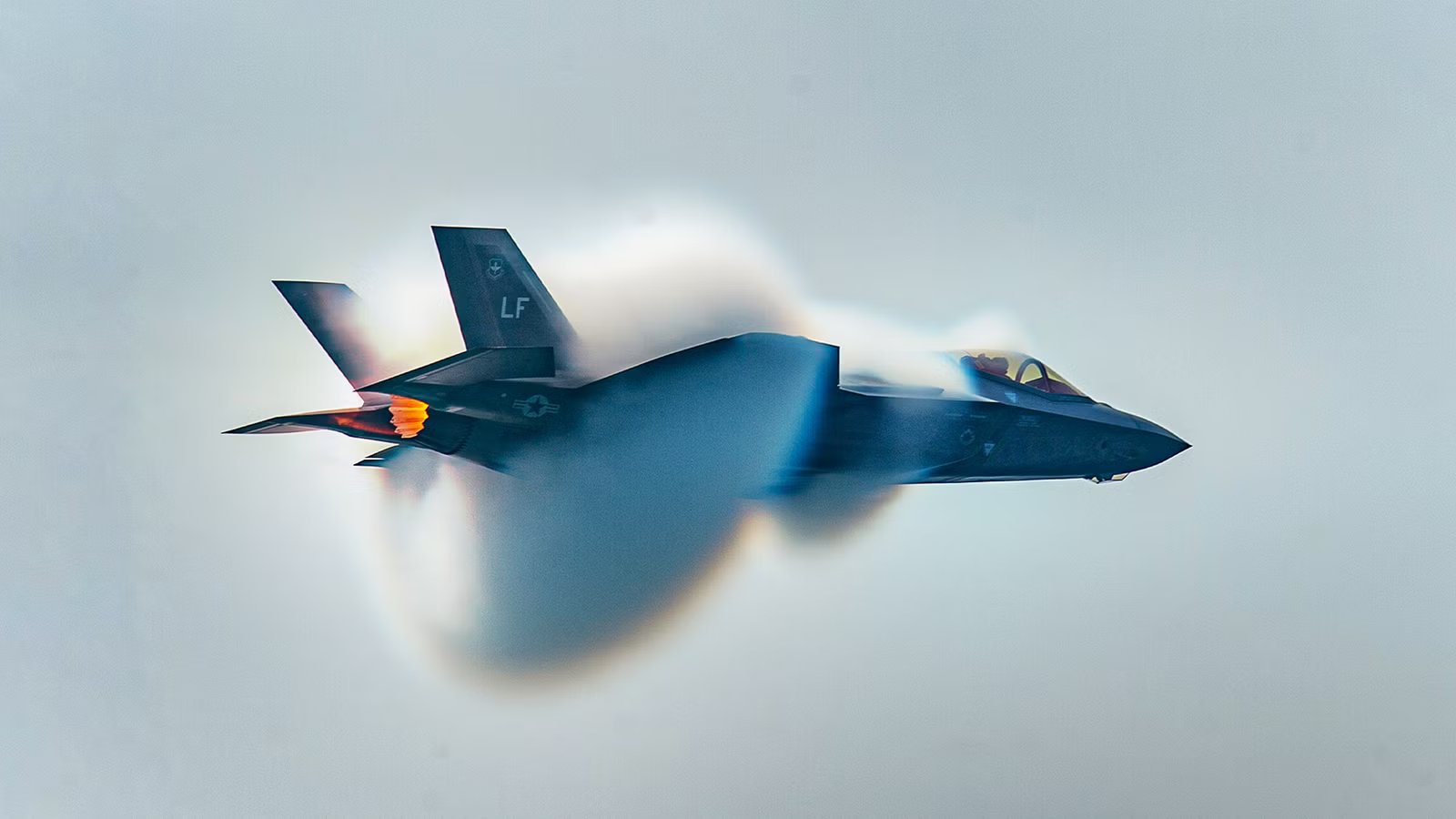
Canada’s fighter jet debate has increasingly been framed as a dramatic political decision: should Ottawa proceed with its planned purchase of F-35 stealth fighters or pivot toward alternatives such as Saab’s Gripen? Public discussions have focused on cost overruns, industrial benefits, trade tensions with Washington, and broader questions surrounding Canada’s long-term defense dependence on the United States. To many observers, the issue still appears unresolved, with government leaders publicly emphasizing that reviews are ongoing and that options remain available.
Behind the scenes, however, defense procurement has continued moving forward. Reports from The Defense Post indicate that Canada has already paid for an initial batch of 16 aircraft and has begun making payments for long-lead components for another 14 F-35s, effectively placing around 30 aircraft somewhere in the production pipeline. Political debates often move according to election cycles and parliamentary schedules, while aerospace manufacturing operates on timelines measured in years. Increasingly, those two timelines appear to be moving at different speeds.
Procurement Doesn’t Pause For Politics

Military aircraft programs differ fundamentally from ordinary purchases. Governments are not selecting finished goods from inventory; they are entering multi-decade industrial programs. The F-35, for example, is produced through a global supply chain involving more than 1,900 suppliers across allied countries, with final assembly dependent on tightly scheduled inputs from multiple tiers of manufacturers. In Canada’s case, the Future Fighter Capability Project includes not only aircraft acquisition but also infrastructure upgrades, pilot training pipelines, weapons integration, and long-term sustainment planning for operations extending into the 2060s.
Long-lead items represent the earliest procurement stage in this process. These typically include raw materials, specialized alloys, avionics components, radar systems, engine parts, and pre-production manufacturing work required before final assembly can begin. In practice, these items are ordered years ahead of delivery to maintain production flow in programs where aircraft are built on fixed global production schedules. The F-35 line, for instance, allocates aircraft production slots years in advance, meaning interruptions in ordering can result in delayed delivery positions within the queue.
This process explains why governments sometimes commit funding before political decisions are fully resolved. According to reporting from CBC, Canada has begun making payments for long-lead components associated with additional F-35 aircraft while its broader review continues. These payments are described as maintaining production positioning rather than confirming full procurement of the entire 88-aircraft requirement, effectively preserving Canada’s place in the manufacturing schedule while policy options remain under review.
Thirty F-35 Aircraft Moving Through Canada’s Procurement System

Canada’s original Future Fighter Capability Project called for the acquisition of 88 F-35 aircraft intended to replace the Royal Canadian Air Force’s aging CF-18 fleet. The initial cost for the program is $14.1 billion USD ($19.8 billion CAD). When accounting for long-term maintenance, support, and infrastructure, the total life cycle cost increases to $19.8 billion USD ($27.7 billion CAD).
Canada‘s first confirmed order involved 16 aircraft, with the first delivery expected in late 2026. These aircraft represent the initial production batch and are tied to early-stage manufacturing and integration work within the broader F-35 global production system. Payments connected to long-lead components for an additional 14 aircraft effectively extend Canada’s commitments into the next production block, bringing roughly 30 aircraft into various stages of procurement activity when combined with already-initiated work.
That distinction matters because public discussions often treat all 88 aircraft as equally uncertain. In reality, procurement commitments exist along a spectrum. Some aircraft remain planning assumptions, while others are already tied to production scheduling, supplier activity, and early-stage funding. This layered structure is typical of large multinational defense programs, where financial and industrial commitments accumulate gradually rather than arriving at a single decision point.
Why Ottawa Wants To Preserve Flexibility

Aerotime reported that Prime Minister Mark Carney characterized the payments as a “small amount” intended to preserve Canada’s flexibility as a review continues for the wider fighter program by the government. From the government’s perspective, maintaining access to future production timelines avoids forcing immediate decisions.
Catch what other flight trackers miss
Emergency squawks, holds, NOTAMs — live signals, no signup.
Open tracker
Catch what other flight trackers miss
Emergency squawks, holds, NOTAMs — live signals, no signup.
Open tracker
The review itself emerged partly from larger tensions between Ottawa and Washington. Trade disputes and broader concerns surrounding Canadian dependence on US systems added new political dimensions to what had originally been presented as a straightforward military procurement issue.
Preserving options therefore serves multiple purposes. It allows the government to continue evaluating alternatives without sacrificing manufacturing positions that may be difficult or expensive to regain later. Maintaining Canada’s place in the production queue also helps avoid potential delivery delays and disruptions to infrastructure planning, pilot training schedules, and broader modernization timelines if Ottawa ultimately proceeds with additional aircraft.
The Gripen Alternative Continues To Draw Attention

Saab’s Gripen remains the most visible alternative to the F-35 and has continued attracting attention throughout Canada’s fighter debate. During previous competition phases, Saab proposed assembling aircraft in Canada and estimated that the project could support approximately 12,000 high-technology jobs through industrial participation agreements. Unlike the F-35 program, where manufacturing is distributed across an international production network, Saab emphasized domestic industrial involvement and technology transfer as central parts of its proposal.
Supporters of the Gripen proposal argue that domestic assembly could strengthen Canada’s industrial base while reducing long-term dependence on American defense systems. The Gripen E variant is designed as a lighter multirole fighter and can reach approximately Mach 2 (around 2,470 km/h), with a combat radius of roughly 932 miles (1,500 km). Saab has also promoted the aircraft’s relatively low operating and maintenance requirements, arguing that it was built for dispersed operations and rapid turnaround times. The company has stated that ground crews can refuel and rearm the aircraft in approximately 10–20 minutes under field conditions.
However, changing direction would introduce tradeoffs of its own. A mixed fleet strategy involving multiple aircraft types would require separate maintenance systems, pilot training pipelines, spare-part inventories, and operational planning. Critics also note that Canada has already invested years into the F-35 procurement process, meaning a major shift could create delays and additional costs beyond the aircraft purchase itself.
The F-35 Is More Than A Fighter Aircraft

The F-35 increasingly functions as more than a traditional fighter platform. Beyond its airframe and weapons systems, it relies heavily on integrated software, sensor fusion, and information-sharing networks. Unlike older fighters designed primarily around speed and maneuverability, the F-35 was built around information dominance, combining data from multiple onboard systems into a single picture for the pilot.
The F-35A variant selected by Canada can reach approximately Mach 1.6 (approximately 1,975 km/h), with a combat radius of roughly 590 nautical miles (1,093 km) and a service ceiling of about 50,000 feet (15,240 m). It carries a 25mm GAU-22/A cannon and can transport up to 5,700 lb (2,600 kg) internally or around 18,000 lb (8,100 kg) externally. It features AN/APG-81 AESA radar and a six-camera Distributed Aperture System to provide pilots with 360-degree situational awareness.
Canada has participated in the Joint Strike Fighter program since the late 1990s, and more than 30 Canadian companies currently contribute to the aircraft’s global supply chain. Government estimates indicate every F-35 built includes roughly $3.6 million (USD) worth of Canadian-made components, while the worldwide fleet of over 1,100 aircraft has surpassed one million flight hours. This broader ecosystem is why the debate increasingly extends beyond pure aircraft performance.
The Political Debate May Already Be Changing

Public attention continues focusing on whether Canada will ultimately proceed with all 88 aircraft, reduce the total purchase, or pursue a mixed fleet arrangement. Formally, each of those possibilities remains available.
Yet procurement systems tend to create their own momentum. Every infrastructure investment, supplier agreement, manufacturing commitment, and long-lead payment gradually changes the practical cost of reversing course. Political scientist Justin Massie told CBC that “the longer the decision is delayed, the harder it will be to back down” once further commitments begin accumulating.
That may ultimately become the most important lesson emerging from Canada’s F-35 debate. The central question is no longer simply whether Ottawa is reviewing the fighter program. Increasingly, the issue may be whether procurement timelines have already begun shaping the outcome before the political debate itself concludes.

![American Airlines Launches 10 Nonstop Routes From New York-JFK To Europe [List & Map]](https://dailynewsnblog.com/wp-content/uploads/2026/09/aa.png)