dailynewsnblog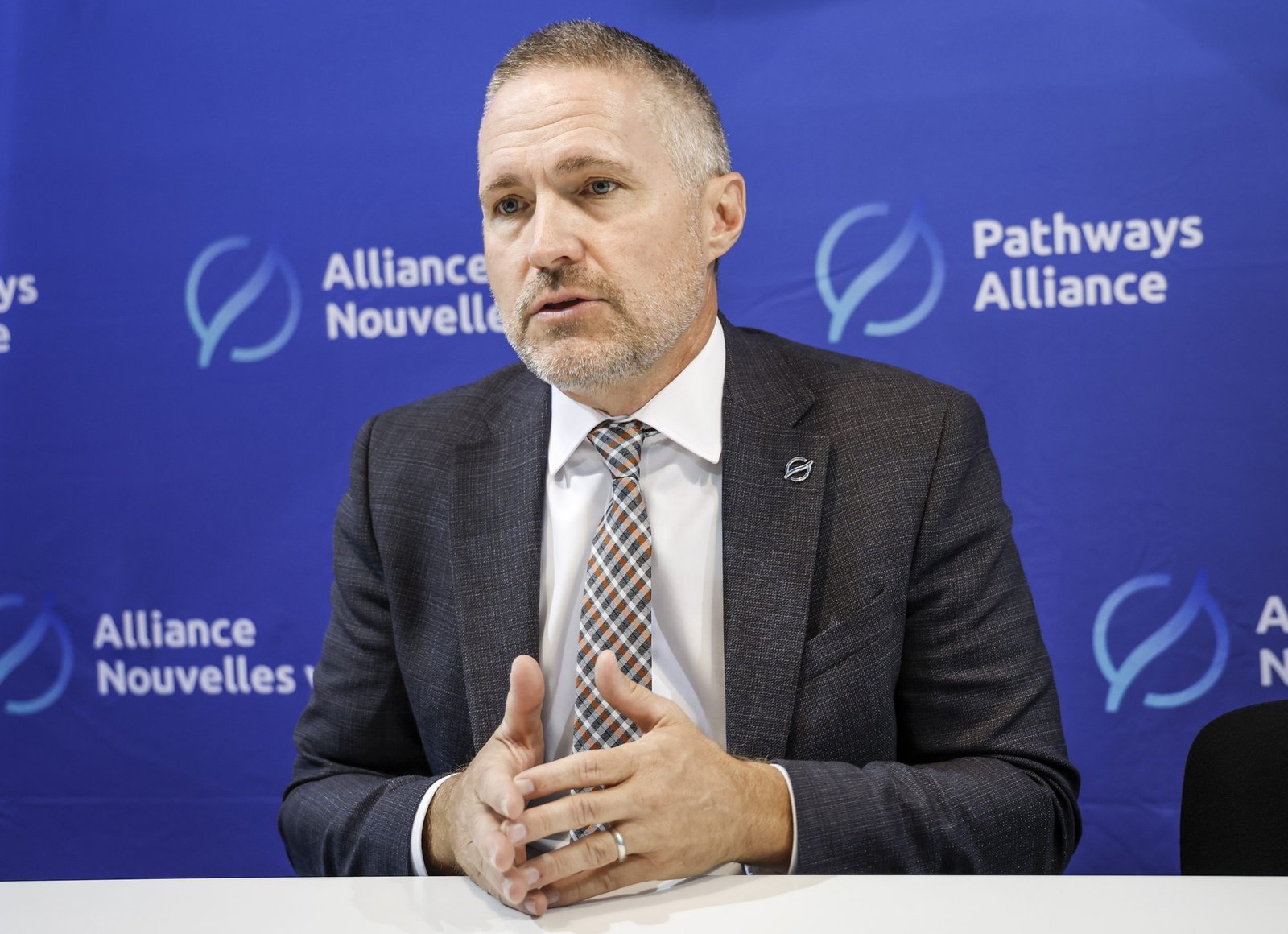
The federal government committed to developing options to help cover carbon capture operating costs, without specifying how or how much.
The last piece of the Alberta-Ottawa energy framework became public Monday, when the governments released their agreement with five oil sands giants on the Pathways carbon capture project.
The governments announced the agreement in early summer, alongside the proposal for a new West Coast pipeline, but kept the text under wraps until now.
By its own terms, the deal creates no binding legal commitments. Those are reserved for definitive agreements targeted for later in November.
The agreement restates several commitments both governments have made since signing a Memorandum of Understanding last fall, including the carbon-pricing arrangement reached in May.
That earlier deal also signalled the Pathways project’s smaller scale: once described as capable of storing up to 40 megatonnes a year by 2050, it is now on a staged path to 16 megatonnes by 2045.
READ MORE: Ottawa-Alberta carbon price deal brings some market certainty but no climate guarantees
Only six of those megatonnes must come from the Pathways project itself, due by 2035. The remaining 10 megatonnes, due in five-megatonne increments by 2040 and 2045, can come from expanding Pathways or from other technologies and production practices.
The agreement was signed by the five companies of the Oil Sands Alliance, formerly known as the Pathways Alliance: Canadian Natural Resources, Cenovus Energy, ConocoPhillips Canada Resources Corp., Imperial Oil Resources, and Suncor Energy.
Together they account for the vast majority of Canada’s oil sands production.
In exchange for hitting their carbon capture targets, the companies would get relief on Alberta’s industrial carbon price.
Under the province’s TIER system, the emissions benchmark each facility must beat normally tightens by two per cent a year, a steadily rising bar that determines how much companies pay.
The agreement cuts that rate in half, to one per cent annually through 2045, for producers that meet their carbon capture commitments.
Sara Hastings-Simon, associate professor at the University of Calgary, told iPolitics in an email that this amounts to “double counting” as companies who reduce emissions are rewarded by paying less carbon tax and by obtaining a stringency discount.
Companies that have “a plan” and are taking “demonstrable actions” toward the later targets keep the discount too, though it can be clawed back retroactively if they ultimately fall short.
The penalty for missing the additional reductions is a return to a 1.5 or two per cent rate, roughly where the companies would have been without the deal.
“There appears to be no binding mechanisms in this MOU, just a commitment from companies to do so, and an incentive that simply reverts back to the baseline policy if they do not,” said Hastings.
That gap between promise and enforcement is familiar, she said. “These companies have previously made various commitments to emissions reductions under the Pathways umbrella that were not met.”
By her estimate, the group’s original net-zero-by-2050 pledge implied roughly 80 megatonnes of reductions, about five times the 16 megatonnes by 2045 agreed to in the MOU.
Public funding
Ottawa, meanwhile, commits only to “advance proposals” aimed at “greater policy certainty” around helping cover the operating costs of carbon capture projects.
That commitment would come on top of what Janetta McKenzie, oil and gas program lead at the Pembina Institute, calls “already quite generous financial support” for the project’s capital costs through federal tax credits and Alberta’s carbon capture incentive program.
“This is quite a big package now of public funds, potentially,” McKenzie said, noting Alberta has also committed to exploring financial incentives for companies to increase oil production.
“We have a taxpayer-funded pipeline. We have potentially more financial support for the Pathways project itself, and we have potentially some financial incentives for the oil sands companies to increase production. The equation is getting pretty unbalanced here in terms of what the benefit is to Canadians and to Albertans.”
The Carney government has long said a new pipeline and the Pathways carbon capture project are “mutually dependent” — no pipeline without carbon capture, no carbon capture without the production growth a pipeline unlocks.
That conditionality – that new export capacity will come with decarbonization – has been Ottawa’s central climate defence in its deal with Alberta.
But McKenzie points to the non-committal language threaded through the MOU.
“These are all private sector firms that have to go talk to their shareholders and all that,” she said. “But it does call into question if the pipeline is truly contingent on the Pathways project, and what are the consequences of not following through.”
For now, the answer to both questions is deferred to November. If definitive agreements are signed by the 15th, the commitments become real. If they aren’t, the MOU expires, leaving behind the tax credits, the shelved emissions cap and the regulatory concessions that, unlike the carbon capture project, are already in place.


![Madrid Joint Political Declaration on Building Peaceful and Democratic Societies through Gender Equality, Human Rights and Feminist Foreign Policy under the auspices of the ‘5th Ministerial Conference on Feminist Foreign Policy: Building Peace and Democracy’ in Madrid, June 2 and 3 2026[i][ii]](https://dailynewsnblog.com/wp-content/uploads/2026/09/2026-06-03-eng.jpg)