dailynewsnblog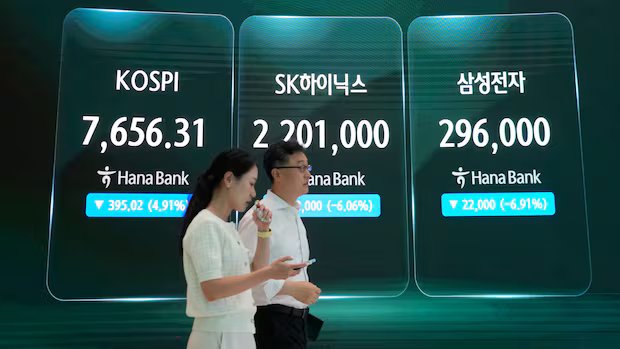

Listen to this article
Estimated 4 minutes
The audio version of this article is generated by AI-based technology. Mispronunciations can occur. We are working with our partners to continually review and improve the results.
Oil prices are rising and stock markets are falling worldwide Wednesday after U.S. President Donald Trump raised doubts about the temporary truce in the war with Iran.
The S&P 500 fell 0.5 per cent after Trump said the agreement to pause fighting was “over,” although he added that he would allow negotiations to continue. The Dow Jones Industrial Average was down 550 points, or one per cent, as of 10 a.m. ET, and the Nasdaq composite was 0.2 per cent lower.
The action was stronger in the oil market, where the price for a barrel of Brent crude climbed more than six per cent to top $79 US on Wednesday morning. That’s still well below its peak from earlier in the U.S. and Israel-Iran war, when the price for the most actively traded contract reached nearly $120 US. But the jump is unsettling because oil prices had just dropped back to where they were before the war.
The worry is that a continuation of the war will block the Strait of Hormuz and keep oil tankers bottled up in the Persian Gulf instead of delivering crude to customers worldwide. That could worsen inflation, which economists expected would ease with oil prices, and in turn force the U.S. Federal Reserve and other central banks to raise interest rates.

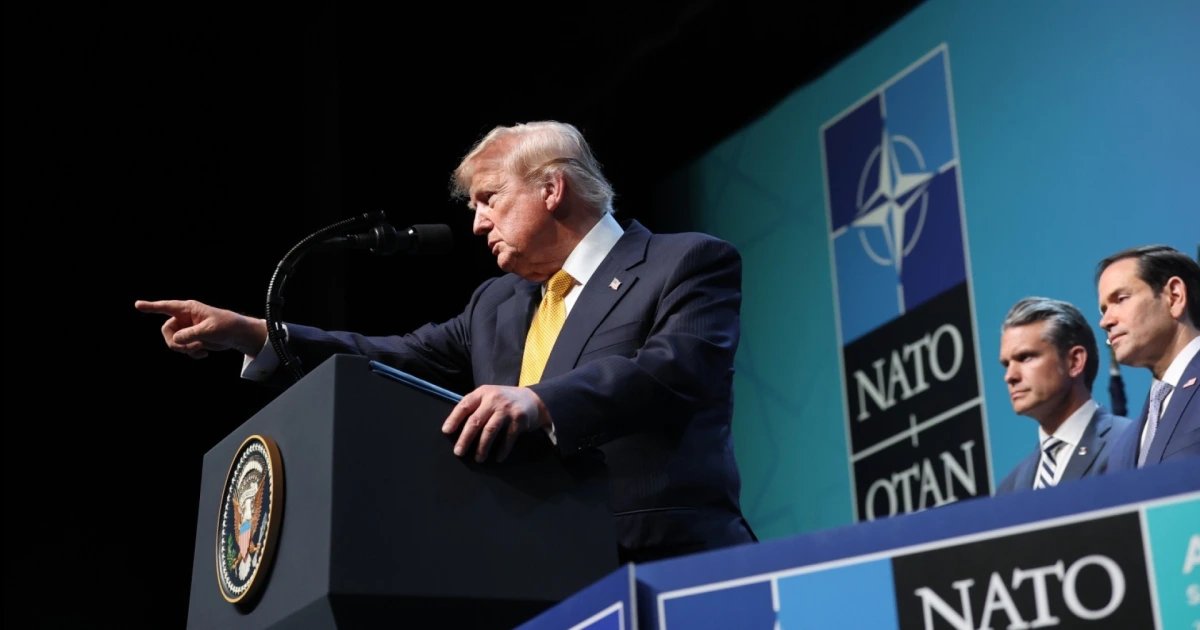
U.S. President Donald Trump says he considers the memorandum of understanding with Iran, which includes a ceasefire, to be ‘over.’ Earlier, Tehran carried out new attacks on U.S. bases in the Gulf after U.S. forces struck Iranian targets in response to attacks on tankers in the Strait of Hormuz.
Higher rates can keep a lid on inflation, but they also slow the economy and hurt prices for all kinds of investments.
Stock markets in Europe turned lower and oil prices climbed immediately after Trump said “for me, I think it’s over” about the status of the ceasefire. He added that U.S. representatives can continue negotiations, but he cast doubt on the outcome.
“They can talk, but I think they’re wasting their time.”
Trump later said the United States was preparing for another night of strikes against Iran.
On Wall Street, companies with big fuel bills fell to some of the biggest losses. American Airlines lost 3.4 per cent and Norwegian Cruise Line Holdings fell 2.4 per cent.
Stocks of companies in the housing industry were also particularly weak. They were hurt by worries that rising Treasury yields in the bond market would lead to higher rates for mortgages and chill the industry.
Builders FirstSource, which sells counters, windows and other building supplies, fell 5.2 per cent for one of the sharper losses in the S&P 500. Homebuilders PulteGroup fell 3.8 per cent, and D.R. Horton sank 3.6 per cent.
Helping to offset those losses was a steadying for some influential stocks in the artificial intelligence industry. They’ve been under pressure in recent weeks on worries that their prices shot too high and that AI may not produce enough productivity and profits to make all the investments in chips and data centers worth it.

As investors pour billions into artificial intelligence, warnings of a looming AI bubble are intensifying. Andrew Chang breaks down what’s fuelling those fears. Plus, how one reporter’s question struck at the core of U.S.-Saudi relations.
Their swings carry a lot of weight on Wall Street because AI stocks have grown into some of the U.S. market’s biggest, which gives their movements more effect on the S&P 500 than other stocks.
In the bond market, Treasury yields rose with the price of oil. The yield on the 10-year Treasury rose to 4.58 per cent from 4.55 per cent late Tuesday and from just 3.97 per cent before the war with Iran began.
In stock markets abroad, losses for European markets worsened after Trump made his comments and Germany’s DAX lost 1.6 per cent.
In Asia, South Korea’s Kospi dropped 5.3 per cent and continued its sharp swings amid duelling worries and euphoria about the AI stocks that dominate its market.
Hong Kong’s Hang Seng index was an outlier and rose three per cent.
Shares that trade in Hong Kong of Chinese AI startup Zhipu, known also as Z.ai and traded as Knowledge Atlas Technology, jumped 13.4 per cent. A six-month lockup period for “cornerstone” investors following its January trading debut in Hong Kong expires this week.
Zhipu’s share price has risen more than 1,300 per cent since its debut.