dailynewsnblog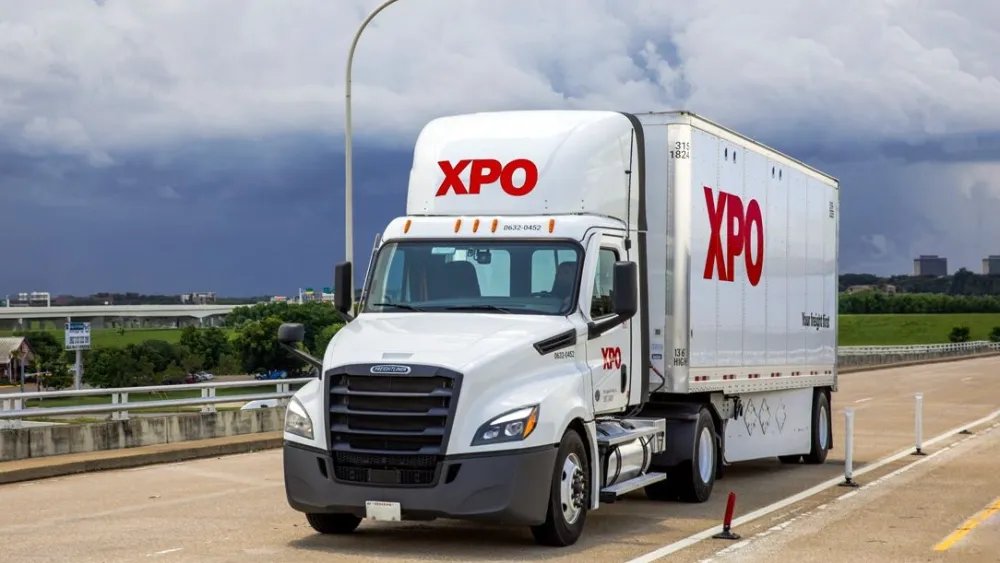
In an analysis by Sourcing Journal of global publicly traded companies in the in the cargo ground transportation sector, the top 25 companies by market capitalization are dominated by industry giants that have built businesses with massive capital investments and unmatched infrastructure.
The sector, as defined by S&P Capital IQ, has 142 constituents with a total market cap of $241.9 billion. Surprisingly, the top 25 of those companies generate $227 billion in market cap. The data was as of July 3.
Coming in at number one was Old Dominion Freight Line Inc. with $45.2 billion and was followed by J.B. Hunt Transport Services Inc. with $26.9 billion and XPO Inc. with $24.2 billion. FedEx Freight Holding Company Inc. clocked in at $22.5 billion. FedEx Freight was spun off as a standalone business by FedEx in early June.
Market capitalization is the total dollar value of a company’s outstanding shares of stock and is calculated by multiplying the current share price by the total number of outstanding shares. Wall Street uses market cap to classify companies into categories, which helps it gauge risk and growth potential. Companies that have larger market cap values, such as the top 25 listed below, generally tend to be more stable, while smaller companies can offer higher volatility but greater growth potential.
Behind the numbers
The multi-billion-dollar market capitalizations of the top five on the list are driven by highly defensible business models, massive capital moats (as analysts describe them), and structural advantages within the freight sector.
Unlike the highly fragmented standard truckload market, these giants operate primarily in the Less-than-Truckload (LTL) and intermodal shipping spaces, which feature incredibly high barriers to entry. Old Dominion, XPO and FedEx Freight focus heavily on Less-than-Truckload (LTL) shipping, while J.B. Hunt dominates intermodal (rail-to-truck) transport.
Establishing the complex, continent-spanning hub-and-spoke networks of physical cross-dock terminals or acquiring massive fleets of integrated rail-and-truck infrastructure takes decades of real estate acquisition and billions of dollars in capital.
This immense infrastructure moat tends to insulate them from new competitors and secures their market dominance.
Investors reward top players with premium valuations due to their exceptional structural profitability, operational efficiency and capacity to absorb market share during industry shakeups. Companies such as Old Dominion command elite market caps by maintaining industry-leading operating ratios, premium pricing power and superior service standards, according to analysts.
Additionally, the consolidation of the LTL sector, which was accelerated by major industry bankruptcies like that of Yellow Corp, has allowed these powerhouses to capture lost capacity, purchase prime real estate assets and leverage proprietary logistics technology.
Whether through J.B. Hunt’s cost-efficient rail partnerships or XPO and FedEx’s expansive LTL networks, these companies own the vital infrastructure that drives modern supply chains.