dailynewsnblog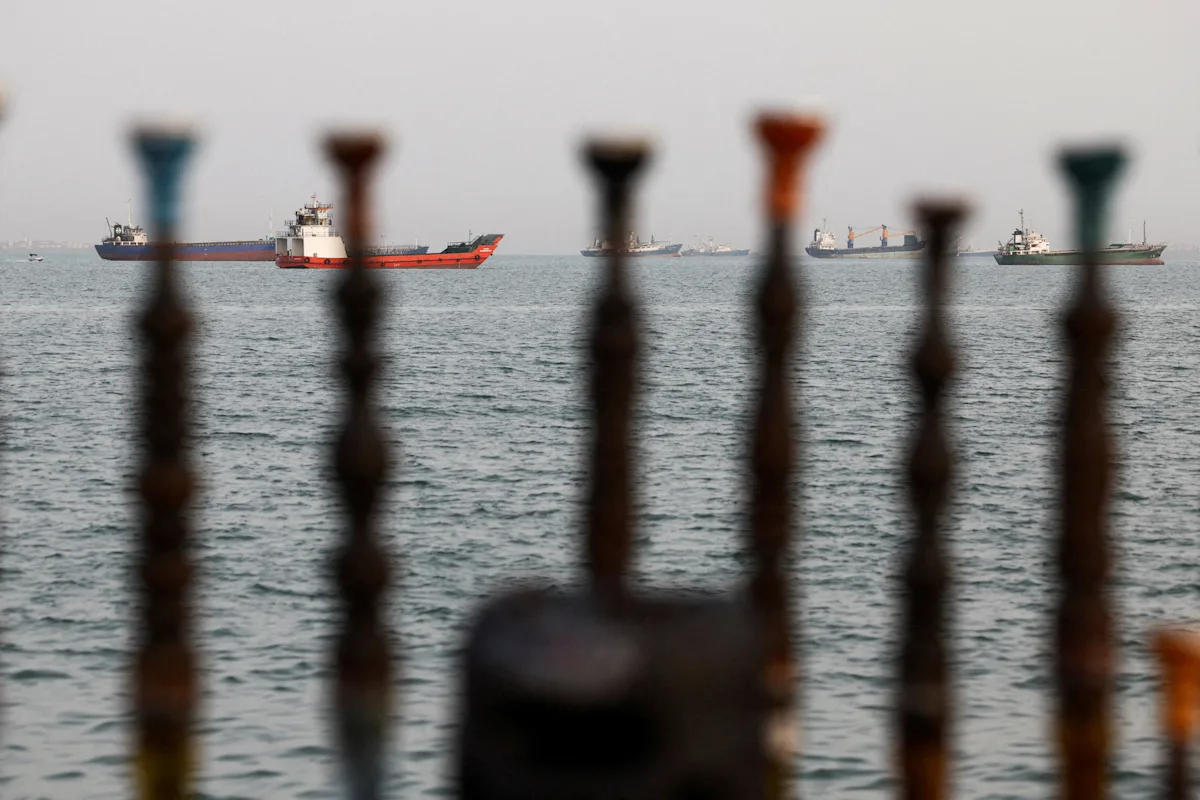
Oil prices fell at the start of futures trading on Sunday, spurred by comments from President Trump over the weekend that Washington and Tehran are close to announcing a deal that will allow peace negotiations to resume and reopen the Strait of Hormuz.
Futures on Brent (BZ=F) crude, the international benchmark, fell 4.6% to $98.8 per barrel after closing on Friday above $103. Those on the US benchmark West Texas Intermediate (CL=F) crude fell 4.7% to trade at $92 per barrel after ending last week above $96.
The leg down in oil prices comes after President Trump said Saturday evening that an agreement with Iran that will set the framework for renewed peace talks and reopen the Strait of Hormuz — a critical shipping lane for global energy flows — would be announced shortly, renewing hopes for a potential end to the war.
The framework is “subject to finalization” between the US, Iran, and several other countries, with “final aspects and details of the deal” to be announced shortly, Trump said in a Truth Social post on Saturday.
However, the president tempered his comments on Sunday, saying that while negotiations were ongoing, the US won’t rush into a deal, especially with time “on our side,” Trump said in a Truth Social post. US officials have said the US isn’t ready to sign a deal, per Bloomberg.

The president appeared to tap the brakes further Sunday evening in a social media post saying a deal “isn’t even fully negotiated yet,” while Secretary of State Marco Rubio said more news could come on Sunday. Trump added that the US blockade of the Strait of Hormuz, designed to cut off sales of Iranian oil that provide critical funding to the Islamic Republic, would remain in effect until a concrete agreement had been signed.
Inside Iran, a senior Iranian source told Reuters that if Iran’s Supreme National Security Council approved the memorandum, it would be sent to Supreme Leader Ayatollah Mojtaba Khamenei for approval. Iran’s foreign ministry spokesman Esmail Baghaei said earlier Saturday that Washington and Tehran were in the “final stage” of drafting a “memorandum of understanding.”
However, the state-managed Iranian news agency Tasnim reported Sunday that the deal on the table could still fall apart as the US refuses to bend on key demands from Tehran, including an unfreezing of Iranian assets frozen by the US Treasury Department.
While firm details around the terms of an agreement haven’t been made public, Iranian media and sources throughout the US and Iranian governments have said that a deal could include a full ceasefire on all fronts of the conflict, a reopening of the Strait of Hormuz, and a gradual easing of sanctions on Iranian crude oil sales. Other key issues such as the fate of Tehran’s nuclear program and its stores of enriched, near-weapons grade uranium, would be negotiated at a later date, according to reporting from various media outlets.