dailynewsnblog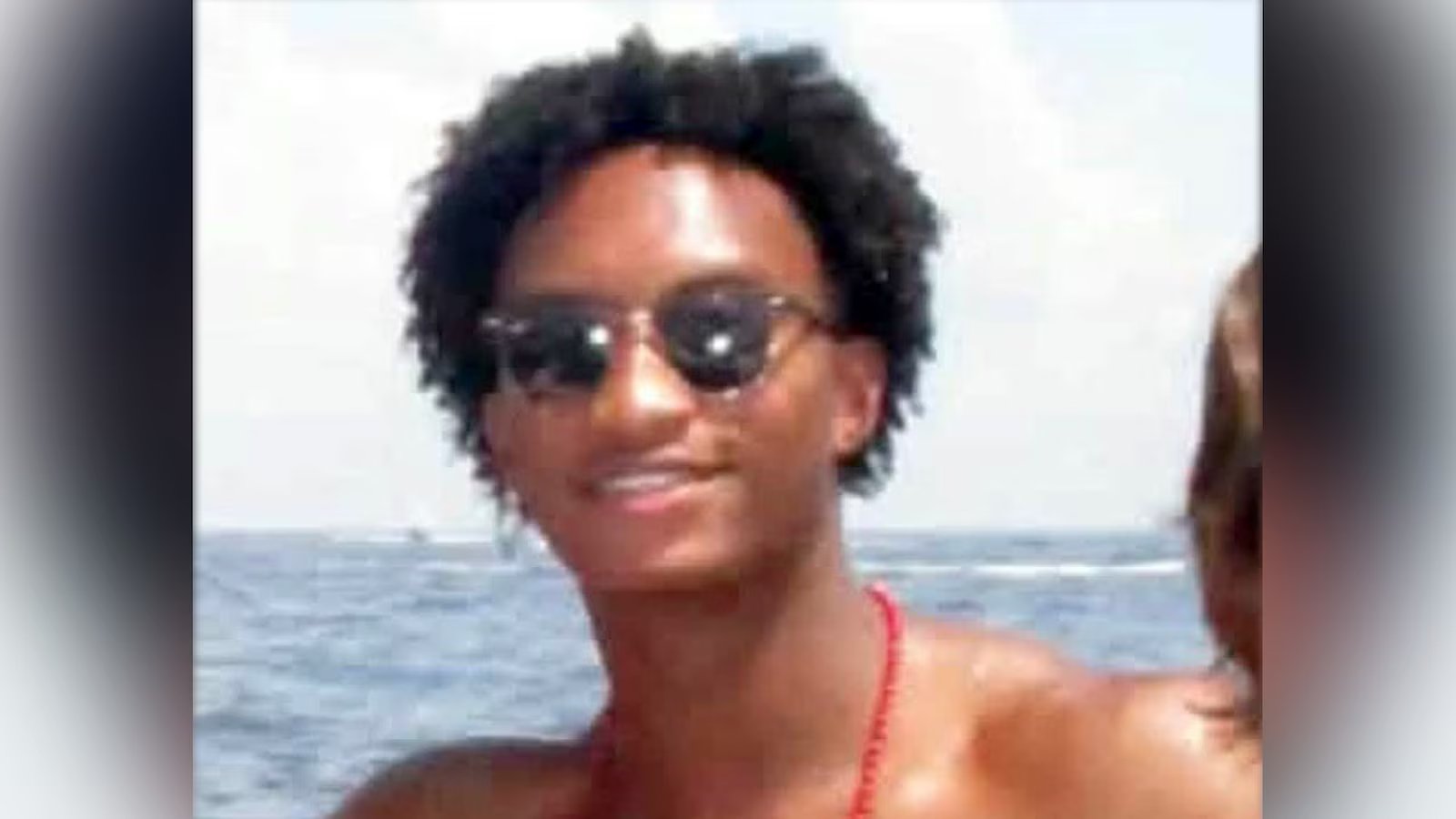
The grand jury reviewing the evidence in the death of Nolan Wells has found that no criminal charges are warranted at this point, according to the Jackson County Grand Jury Report released late Monday night.
The report says that the “position of, condition of, time of discovery, and location” of the 18-year-old’s body off the coast of Mississippi this July is “consistent with drowning.”
Wells vanished after he and friends had gone out celebrating the Fourth of July holiday on barrier islands off the Gulf Coast. His body was recovered in the waters off Horn Island two days later.
Authorities have previously said they believe the college football player drowned, but the final determination would go to a grand jury that would review all the case materials, including the state medical examiner’s completed autopsy report, to decide whether Wells’ death involved a crime.

The Jackson County Sheriff’s Department released this photo during the search for Nolan Xavier Wells, 18, in Mississippi.
Jackson County Sheriff’s Department
The grand jury of 23 people, convened last week, found “no credible evidence to support the public allegations” that anyone riding to or from the island that day surrounding Wells “engaged in any criminal conduct related to” his death.
The panel was comprised of what the report called a “cross section of citizens” from the area: 13 men and ten women, including “12 Caucasians, five African Americans, one Asian, two Hispanics, two Native Americans, and one individual who preferred ‘other.'” Their ages ranged from 27 years old to 68 years old.
The grand jury heard from 43 witnesses and reviewed materials including physical evidence collected at the scene, digital evidence, police reports and interviews, videos, images and maps collected during the investigation.
That Wells drowned is a conclusion by the process of elimination, the grand jury report said, adding that the condition of the body made it harder to figure out. The long-awaited toxicology report was “not particularly informative as decomposition fluid is an unreliable source for evaluating substance levels within a body.”
The panel found, however, that Wells had no cocaine in his system and no evidence he’d ever used it. The panel did find that Wells bought alcohol with a fake ID, and no adults of alcohol-buying age provided any to him on the island that day.

An undated photo of 18-year-old Nolan Xavier Wells, whose body was believed to be recovered after going missing on July 4, 2026.
Courtesy of the Wells Family
There was bruising on the back of Wells’ head, which was “not a fatal injury,” the report said. The grand jury “found no evidence of any fatal injury or organic disease to Mr. Wells’ body.”
The report said it’s still unclear how Wells got that bruise on his head.
One witness testified under oath that around the time of his last being seen, they saw Wells “slip awkwardly off the side of a boat” but “could not say whether Mr. Wells struck his head during the fall,” and that he “continued to socialize after the fall and did not appear injured.”
“The Grand Jury finds that Mr. Wells was not in any physical altercation or argument on July 4, 2026,” the report said.
Much of the report also addresses the sudden deluge of national attention in the wake of Wells’ death, as well as the online speculation and even interstate threats the pending investigation has garnered.
Addressing unanswered questions about Wells’ phone, which was retrieved later from friends on the mainland after he went missing, the report said the panel found “it is not unusual or suspicious for individuals to return from the island on boats they did not travel to the island on; nor is it unusual for individuals to place their phones and personal items on other boats they visit and socialize on.
The Grand Jury finds that Mr. Wells’ phone was not the only phone to travel back to the mainland without its owner.”
The “public clamor and malicious allegations against the occupants of” the three boats on which Wells and his friends went to the island “have extended to their family members and friends,” and that the “public attacks” are “malicious, false, and have no truth in fact or evidence,” the report said.
The report said Wells’ family was given the opportunity to produce evidence from their private investigation into Wells’ death and the family’s lawyers advised that their investigation “revealed no witnesses or evidence whom the legal team reasonably believes possess information germane to potential criminal activity that warrants referral.”
The report also noted that there is no statute of limitations on homicide cases in the State of Mississippi. “If credible evidence comes to light in the future that suggests Mr. Wells’ death was non-accidental, this matter should be represented to the Jackson County Grand Jury for further consideration,” the report said.