dailynewsnblog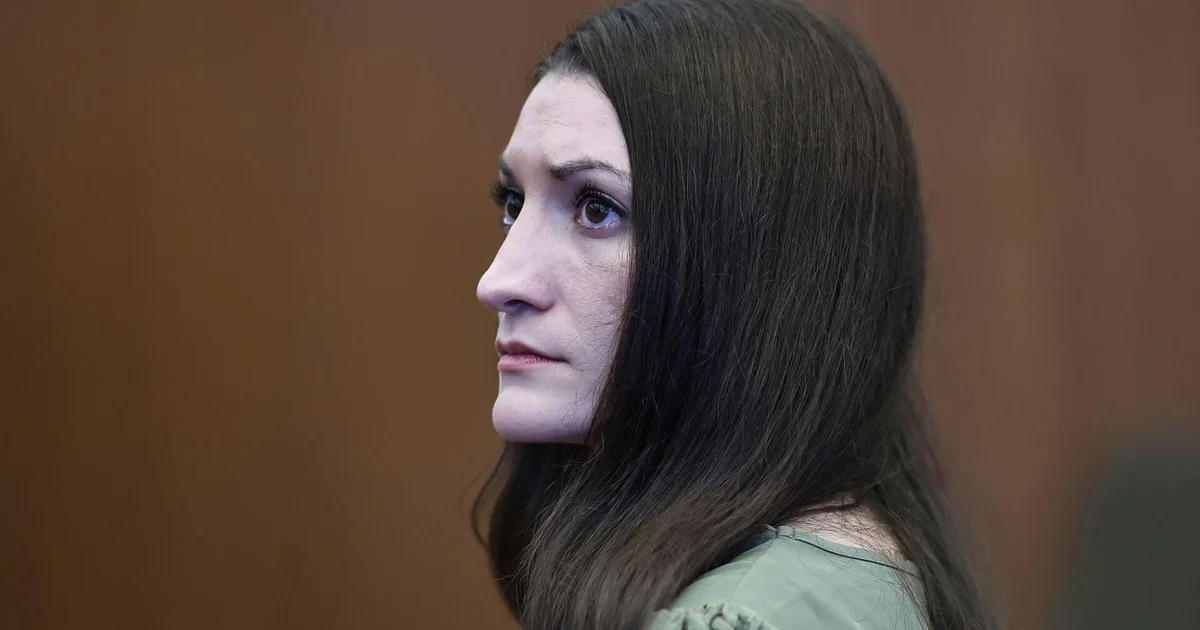
Lawyers for Lindsay Clancy have asked a judge to investigate the conduct of the lone juror who wanted to convict the mother from Massachusetts of murder in the deaths of her three children. Her lawyers have also asked the judge to dismiss the criminal case, claiming any successive trial would violate her double jeopardy rights.
In a motion filed Friday but made public Monday, Clancy’s lawyers asked the court to question the juror about his alleged use of a cellphone during deliberations, his truthfulness on a questionnaire that prospective jurors filled out before the trial began and his truthfulness when jurors were questioned by the judge a day before the trial ended.
The judge declared a mistrial Sept. 4 after the jury insisted it couldn’t reach a unanimous verdict, despite days of trying. Eleven of 12 jurors were ready to clear Clancy of criminal responsibility, with the majority feeling that she was in the grip of a rare condition called postpartum psychosis when she strangled her kids — 5-year-old Cora, 3-year-old Dawson and 8-month-old Callan. But one juror, Michael Desronvil, sided with the prosecutors, who had argued that Clancy knew what she was doing.
Among other things, Clancy’s lawyer, Kevin Reddington, asked the court to obtain a record of any calls or texts Desronvil made between 8 a.m. and 4:30 p.m. on each day the jury deliberated. Phone use during deliberations is prohibited in the state.
Prosecutors have yet to say whether they plan on putting Clancy on trial again. She remains charged with murder and is in a psychiatric hospital until her case is resolved.
In another motion on Monday, Clancy’s lawyers asked the judge to take the unusual step of dismissing the criminal case, rather than putting on a new trial, on the grounds that a mistrial shouldn’t have been declared in the first place.
They argued that the judge should have replaced the holdout juror with an alternate during the deliberations after a jury foreperson complained to the judge that one juror was refusing to listen to the law on reasonable doubt.
“Ms. Clancy, like all criminal defendants, had a Constitutional right to have her fate decided by an impartial jury of her peers, faithfully applying the law as instructed rather than superimposing the juror’s own view of legal right and wrong, including the foundational principle that, absent proof beyond a reasonable doubt of her guilt, she must be acquitted,” her attorneys wrote in a motion to dismiss. “The multiple reports of a juror violating this bedrock principle, therefore, required a judicial inquiry sufficient to ascertain whether her right to an impartial jury was being violated.”
A spokesperson for Plymouth County District Attorney Timothy Cruz would not comment on the motions.
Desronvil hasn’t been accused of any wrongdoing in connection with his service on the jury, though other jurors complained that he was inflexible in his opinion that Clancy was guilty.
In a statement released by his lawyer last week, Edward Paltzik, Desronvil said he “didn’t have any doubts” that Clancy knew what she was doing when she killed her three children.
“As I tried to explain different possible theories during deliberation, I kept getting cut off as if I had doubts based on the evidence present,” he said in his statement.
“Based on all the physical evidence, key witnesses, and what the prosecution presents, I thought it was enough proof that she knew exactly what she was doing and planned,” the statement read.
Reddington’s motions come as Clancy’s ex-husband, Patrick Clancy, sat down for an interview with “60 Minutes” to talk about the illness he believes his then-wife was battling when she killed their three children.
Asked what ideas like accountability and justice mean in cases where an illness is involved, Patrick Clancy told correspondent Ross Douthat, “I think we can find a compassionate way to deal with these tragedies.”
“And that, that doesn’t mean no accountability,” Patrick Clancy said. “It just means that we recognize the suffering and the stigma, and we try to find a way to prevent this from happening in the future. That’s always how I’ve looked at it.”