dailynewsnblog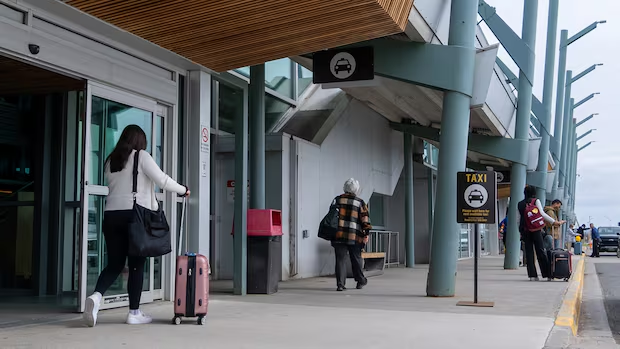

Listen to this article
Estimated 3 minutes
The audio version of this article is generated by AI-based technology. Mispronunciations can occur. We are working with our partners to continually review and improve the results.
The Thunder Bay International Airport is getting a hotel, marking the first Cambria Hotel to be built in Canada.
The four-storey, 107-room building will feature a full-service restaurant and bar, fitness facilities, and meeting and conference spaces.
The project is being led by Rideout Bay Developments and will be 90 per cent First Nations-owned, with Wabigoon Lake Ojibway Nation as the majority shareholder alongside partner Boundary Waters Anishinaabeg Development LP.
“I think that’s a sign of the times. First Nations are starting to get directly involved in economic development in the region and the territories,” Wabigoon Lake’s Chief Clayton Wetelainen told CBC News.
Construction is expected to start this September or October and be completed by next fall.
Wabigoon Lake Ojibway Nation is about 325 kilometres northwest of Thunder Bay. The community already owns a hotel in Dryden, Wetelainen said.

“There’s so much economic impact from the First Nations that use Thunder Bay as a hub,” Wetelainen said.
“We’re not going to be on the sidelines; we’re going to be involved in projects in Thunder Bay and in the region.”
Boundary Waters Anishinaabeg Development LP is owned by four Treaty Three First Nations: Couchiching First Nation, Mitaanjigamiing First Nation, Nigigoonsiminikaaning First Nation and Seine River First Nation.
“By collaborating on this first-class facility, we are not only expanding regional infrastructure but ensuring our First Nations are central drivers of northern Ontario’s economic future,” chief executive officer Peter Moen said in a news release on Tuesday.
The hotel will take up about 50,000 square feet at the airport’s former parking lot exits, which have recently been relocated to accommodate the build.
“It’s convenient. Hotel rooms are tough to come by here in Thunder Bay and there’s a lot going on in the region — the airport is extremely busy,” Graham Ingham, president and chief executive officer of the Thunder Bay International Airports Authority, told CBC News.
“Being able to support the growth within the region is super important.”
‘Make sure our people that stay there feel safe’
Collaborating with Indigenous communities is part of the airport authority’s three-year strategic business plan that took effect last year, said Ingham.
This has been reflected in the airport’s new logo and the Indigenous artwork at its new terminal check-in counters, said Ingham, with Indigenous culture also integrated in the hotel’s design.
“We’re super proud of the progress that we’ve been able to make,” he said.
Members of dozens of surrounding First Nations travel to Thunder Bay to access health and social services, education and employment.
Wetelainen said it’s important for Indigenous people to have access to culturally-appropriate accommodations in the city.
“Make sure our people that stay there feel safe — and they’re proud when they stay at a First Nation-owned hotel,” he said.