dailynewsnblog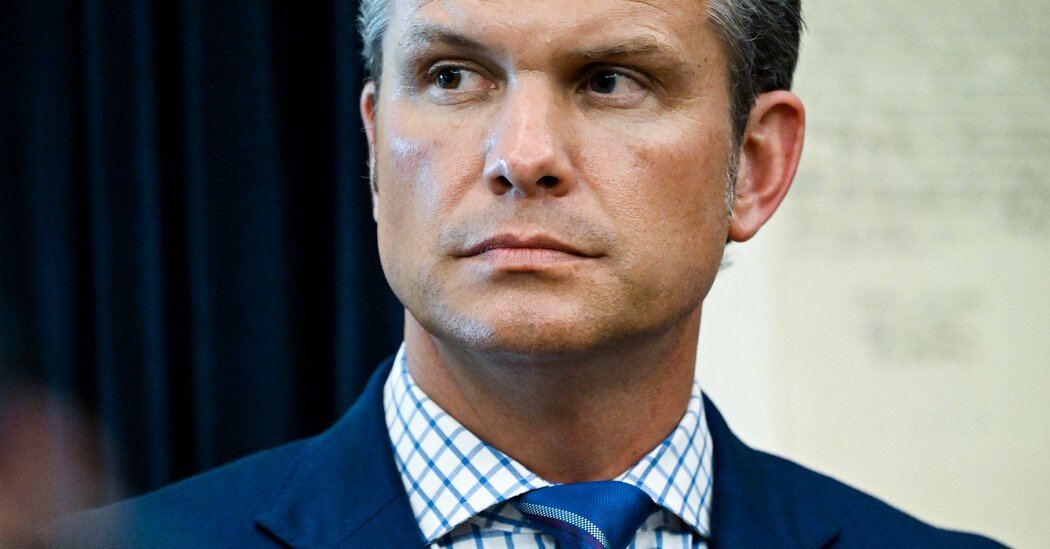
The National Security Agency has lost access to a powerful A.I. model developed by Anthropic amid the Trump administration’s brawl with the start-up, U.S. officials said, depriving the intelligence agency of a tool that has impressed and alarmed its analysts with how good it is at finding software weaknesses.
This month the Trump administration imposed export controls on Anthropic, citing national security concerns. That action forced Anthropic to pull back the release of its most advanced models, known as Mythos 5 and Fable 5.
The N.S.A.’s cybersecurity analysts had been testing versions of Anthropic’s tools when the latest models were unplugged.
The controlled tests proved impressive even within the halls of the N.S.A., a secretive fortress outside Washington that specializes in developing digital espionage techniques against foreign adversaries and protecting U.S. networks from cyberattacks.
The power of Anthropic’s tools, and their importance to the N.S.A., were highlighted in a congressional hearing this month that underscored the administration’s increasing reliance on the most advanced A.I. systems for cybersecurity even as it battles a leading U.S. developer.
During the session, Senator Mark Warner, the top Democrat on the Intelligence Committee, said that the N.S.A. chief, Gen. Joshua Rudd, had informed him that Mythos “broke into almost all of our classified systems, not in weeks, but in hours.” The comments attracted considerable attention after The Economist cited them in a report.
But Mr. Warner’s statement — about highly technical issues — was oversimplified, the officials said, and set off rampant speculation on social media that the latest A.I. offerings were even more earth-shattering for cybersecurity than realized. Some concluded that sophisticated A.I. models were now able to quickly compromise the classified networks that should be among the most secure on the planet.
In reality, the tests involved “red teams” of N.S.A. analysts who were using Mythos in a highly tailored environment that would be extremely unlikely for an adversary to replicate, officials said. The red teams began their tests within classified N.S.A. systems designed to be accessible only from certain computers and completely cut off from the broader internet.
The tests found that Mythos was able to identify cybersecurity flaws within that classified network quickly, but it did not actually break into those systems, the officials said.
Red-teaming is a common practice in the field of cybersecurity to stress-test computer systems in order to identify and fix vulnerabilities. Technology companies big and small, as well as government agencies, routinely engage internal and external red teams to improve their digital defenses.
Still, even though the N.S.A. did not experience the doomsday scenario some had feared, analysts at the spy agency were stunned by how capable Mythos appeared to be in controlled test settings, which exceeded already lofty expectations.
A White House official, speaking on the condition of anonymity, said that the administration had taken action to protect classified systems from cyberthreats. The official said the government was continuing to use advanced A.I. models to mitigate vulnerabilities but did not say which technology was being used.
On Monday, cybersecurity agencies from the United States, Britain, Canada, Australia and New Zealand — an alliance known as the Five Eyes — issued an unusual public statement warning that artificial intelligence was “rapidly transforming cyberrisk.”
The statement called on businesses to urgently invest in adopting A.I. to protect their networks before it was too late.
“Frontier A.I. models are anticipated to exceed current industry expectations, fundamentally transforming both offensive and defensive cybercapabilities,” the alliance said. It added, in a turn of phrase echoing Mr. Warner’s statement: “The timeline is not years, it is months.”
Anthropic first came into major conflict with the Trump administration this year over a $200 million Defense Department contract for A.I. use in classified systems. In a feud that became extraordinarily public, the two sides disagreed over the parameters for how A.I. technology should be used in war.
Defense Secretary Pete Hegseth decided in February to label Anthropic a “supply chain risk,” declaring the company a danger to national security. It was the first time the label had been used against an American company. Anthropic has sued the government over the designation.
In April, Anthropic unveiled Mythos, a new A.I. model. Mythos was so powerful at identifying security software vulnerabilities that Anthropic said it could pose an existential risk to digital technology — a view endorsed by some independent security experts but met with skepticism from others. The start-up would hold back the model, it added, except to a select few organizations and companies.
The N.S.A. was among the first organizations to be granted access, putting it in an unusual position of testing a product that the Pentagon deemed a risk to national security. The agency continued testing Anthropic’s latest products until the export control directive was issued this month.
Some administration officials have in recent weeks been looking for an off-ramp in the Pentagon dispute, according to U.S. officials and others familiar with the matter, and are trying to resolve the export control issue as well.
The White House and intelligence officials had pushed forward a classified contract between Anthropic and the N.S.A., which would allow the spy agency to use the company’s technology for a variety of purposes, including intelligence analysis and detecting new computer vulnerabilities.
That contract has not been finalized, and some Pentagon officials want the N.S.A. to find a way to work with other models.