dailynewsnblog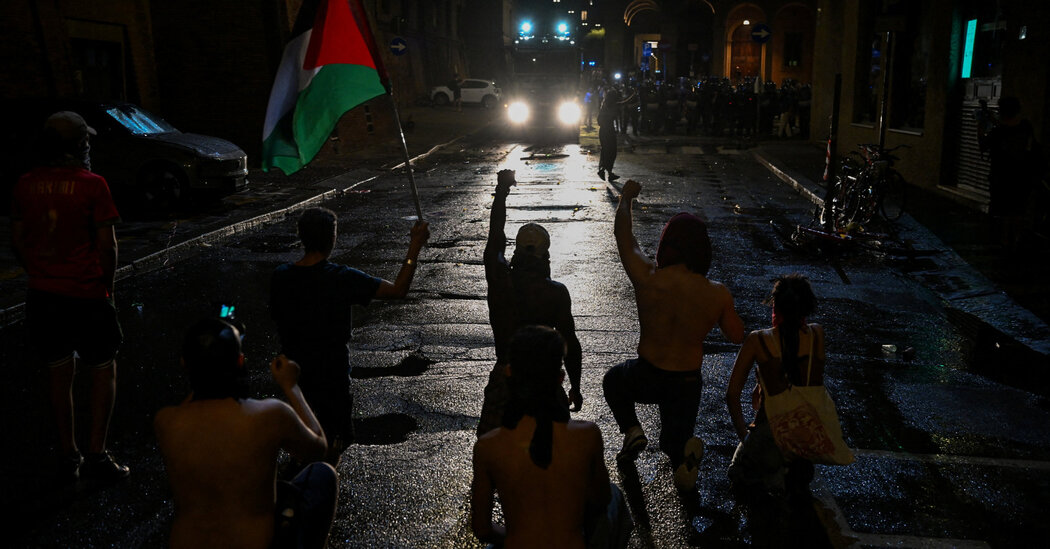
The death of Mr. Fakir earlier last week is reverberating across the country he had called home since childhood. Some Italians have presented Mr. Fakir, the owner of a logistics and construction business, as the victim of a system stacked against immigrants. Others have seized on his drug-dealing convictions from the 2000s, as well as probation violations.
More broadly, the discussion has evolved into a wider standoff over the police treatment and role of foreigners in Italy, a country with high immigration rates that is dependent on migrant labor but whose government has moved to expel asylum-seekers and undocumented workers. Italians of opposing political factions have seized on Mr. Fakir’s death — and the unrest that followed it — to duel over immigration and racism, police brutality and crowd violence.
“While I watched the video” of Mr. Fakir’s arrest, “the debate had already shifted elsewhere,” wrote Paolo Giordano, a novelist and commentator, in a column in Corriere della Sera, a centrist daily newspaper. “The incident itself had already been shattered, scattered into countless tangential discussions,” he added.
Mr. Fakir arrived in Bologna from Morocco with his family around 1990, at age 6, and attended Italian schools, according to his immigration lawyer, Barbara Spinelli. He received permission to stay in the country as a child but was never granted citizenship and was jailed for seven months after a string of drug offenses as a teenager, before turning to the construction industry.
Because of his convictions, he struggled to renew his residence permit, but in 2010, when he married an Italian woman, he obtained legal residence again. After the couple separated two years later, Mr. Fakir’s permit eventually expired, according to his former defense lawyer, Donata Malmusi. He later married a woman in Morocco, two friends said.