dailynewsnblog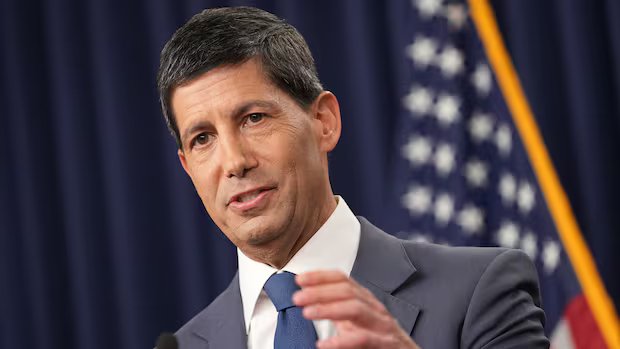

Listen to this article
Estimated 5 minutes
The audio version of this article is generated by AI-based technology. Mispronunciations can occur. We are working with our partners to continually review and improve the results.
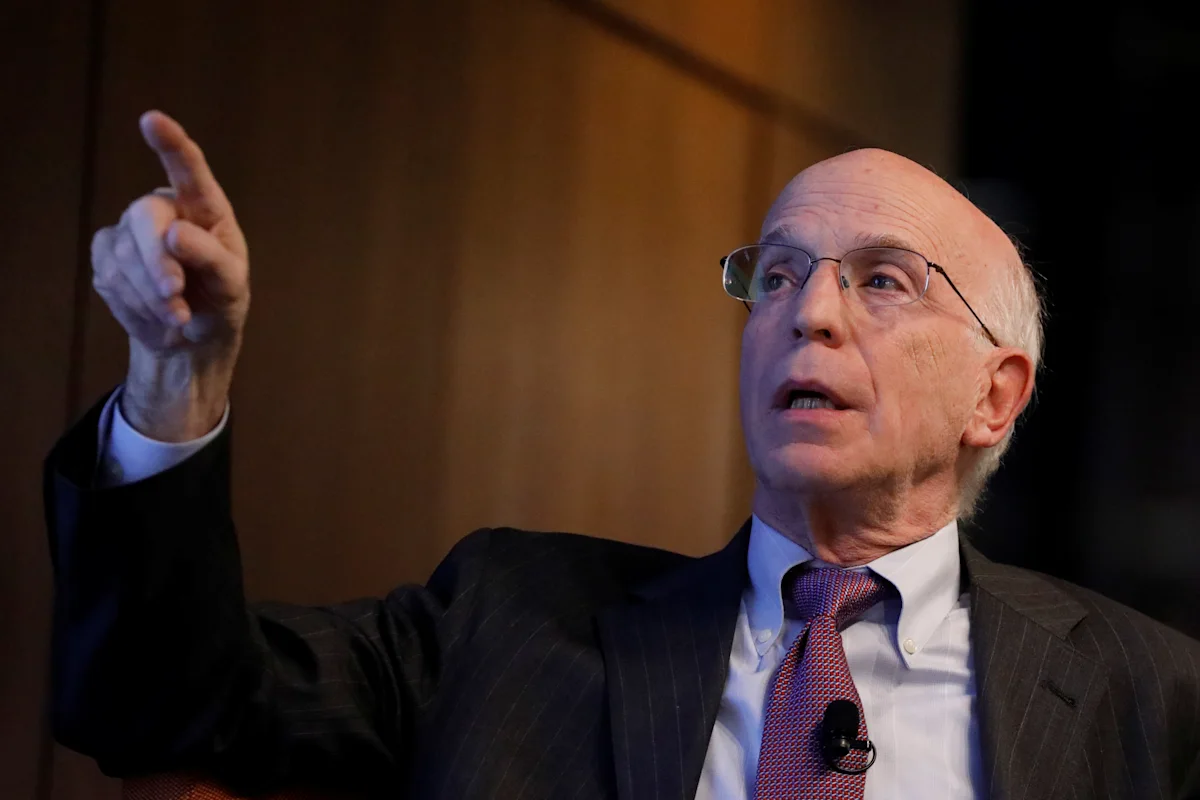
U.S. Federal Reserve chair Kevin Warsh said Friday that inflation is still too high and suggested the country’s central bank may have to raise interest rates in the coming months to bring it down, a clearer signal than he had sent previously about his economic outlook.
In his first high-profile speech at the Fed’s annual conference in Jackson Hole, Wyo., Warsh acknowledged that recent U.S. reports show that inflation has cooled a bit, but “they do not tell me that underlying trends have meaningfully improved.”
“We must be confident that underlying inflation is moving to our objective, clearly and at sufficient speed,” Warsh said.
“Otherwise, we have work to do.”
The speech by Warsh, who took over for Jerome Powell in late May after his predecessor’s term ended, was highly anticipated. As the Canadian economy heads towards challenges, the U.S. economy also faces major hurdles related to its debt and upheaval because of its tariff policy — creating a needle Warsh had to threat in today’s speech.
Comments from the new Fed chair appeared to reassure Wall Street that fighting inflation remains the priority for the central bank. Warsh did not imply in his speech that a rate hike is imminent, but at the same time, he seemed to dismiss perceptions that inflation is not a threat.
He pointed to data showing that inflation remains stubbornly above the central bank’s two per cent target.

Central banks typically raise interest rates to get prices under control during times of inflation, but the Bank of Canada and the U.S. Federal Reserve just cut rates. Plus, why Trump just ‘terminated’ Canada-U.S. trade talks.
The U.S. stock market held steady after the speech, but expectations are building in the bond market for the Fed to hike interest rates. The yield on the two-year Treasury, which closely tracks expectations for what the Fed will do with its federal funds rate, moved from 4.22 per cent to 4.30 per cent, a sign that investors expect short-term yields to move higher.
Longer-term yields on 10-year and 30-year Treasuries were mostly flat, suggesting investors aren’t worried that higher rates will be needed for a long stretch of time to fight inflation.
No ‘forward guidance’ from Warsh
Jon Faust, an economist at Johns Hopkins University and a former adviser to Powell, said Warsh succeeded in conveying a tougher approach on inflation while, at the same time, avoiding the detailed guidance customary among his predecessors that he has disparaged.
“He found a way to convey that if necessary he would support raising rates, which is one thing people were concerned about,” Faust said.
Yet Michael Strain, director of economic policy studies at the American Enterprise Institute, said the Fed chair has talked tough on inflation before without hiking the Fed’s key rate. His Friday remarks don’t provide any clearer guidance on the timing of any Fed moves, he added.
The high-stake speech comes as questions swirl around Wall Street about Warsh’s focus on fighting inflation.
Those concerns may have contributed to rising bond yields, which can increase the cost of borrowing for the government and everyone else. Yet Warsh has said he doesn’t want to provide what analysts call “forward guidance” about whether the Fed will hike or cut rates or stay on hold at upcoming meetings. He argues that it limits the Fed’s flexibility by committing it to a specific policy.
Some economists have argued that he could say more about his views on Fed policy without tipping his hand about future actions.
U.S. inflation cooled in June
Warsh’s comments don’t necessarily signal that the central bank will raise rates at it next meeting in mid September. But his speech indicated that rates may not be high enough to bring inflation down to the Fed’s two per cent target.
As a rule of thumb, interest rates often need to be high enough to limit borrowing and spending to cool inflation.

Warsh noted that in the past year, 54 per cent of goods and services tracked by the government have seen price increases of three per cent or higher. While that is down from the pandemic peak, it is “well above” the 32 per cent that saw such increases in the two decades before the pandemic.
But he did suggest that interest rates currently aren’t restricting economic activity, pointing to robust business investment in AI equipment and infrastructure and strong consumer spending.
Inflation cooled in June and July after spiking in May from soaring gas prices, yet it remains above the central bank’s target.
Previous Fed chairs have often used speeches at Jackson Hole to address broad questions about interest-rate policy and the economy, or to signal upcoming changes in their approach. In 2022, with pandemic-era inflation having soared to 9.1 per cent, Powell signaled the Fed would continue to sharply raise interest rates in a fight against runaway prices, and he acknowledged that such maneuvers would bring “pain” to consumers and businesses.
Wall Street investors now see the potential for a rate hike at the Fed’s next meeting Sept. 15 and 16 as basically a coin flip, according to futures pricing tracked by CME FedWatch, up from previous odds that put the chance of a hike at just one-third.