dailynewsnblog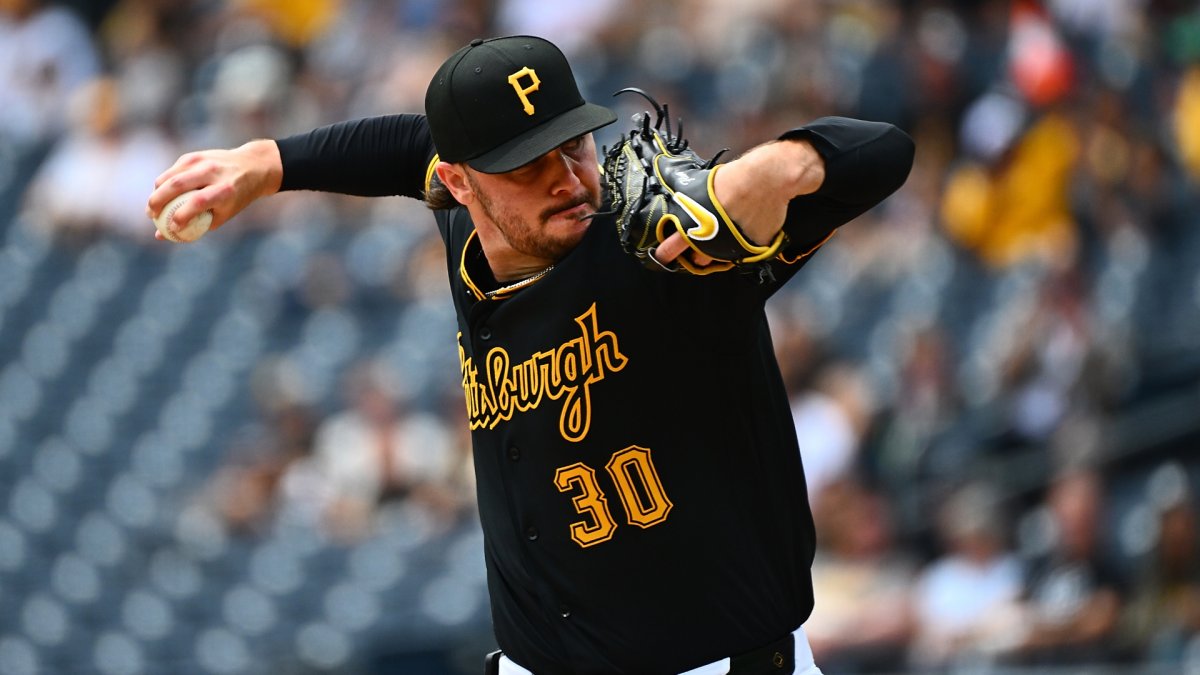
We passed the mathematical halfway point of the season last week and we’re less than two weeks away from the All-Star break. The trade deadline is only a month away. Are the various postseason races any clearer now than they were a month ago? No, not really. That could make swinging deals at the deadline even more challenging because there are fewer willing sellers.
Until the trade market really heats up, here are three trends around the league to keep an eye on as we head into the dog days of summer.
Paul Skenes’ recent rough patch


By any measure, Pirates ace and reigning NL Cy Young winner Paul Skenes is having a fantastic season. Going into Tuesday, he ranked fifth among qualified starters with 2.8 WAR and was second with a 30.6% strikeout rate. His expected ERA, which factors in contact quality allowed (exit velocity, etc.), was second only to Jacob Misiorowski. Skenes has been terrific.
It is also true that Skenes this year has not been quite as dominant as in the last two years. His 3.10 ERA is more than a full run higher than 2024-25, his 2.75 FIP is up almost half a run from 2025, and his overall pitching value per Statcast has slipped from the 100th percentile last season to the 95th percentile this season. Still excellent, obviously, but a step down from 2024-25.
In his last eight starts, Skenes has a 4.40 ERA and 3.45 xERA, and he’s allowed four runs three times. Already three times this year, he’s allowed five runs, and five times he’s allowed at least four runs. Last year, Skenes allowed five runs once and at least four runs only four times. That has prompted a round of “what’s wrong with Skenes?” questions, understandably.
There are two big and pretty obvious reasons 2026 Skenes has been a (slight) step down from 2024-25 Skenes. Let’s examine.
1. Pittsburgh’s defense is awful. The eye test says it and the numbers confirm it. The Pirates, with an outfield full of DHs, have -12 outs above average as a team. Their Defensive Efficiency, which is simply the percentage of batted balls converted into outs, is sixth-worst in baseball at 0.691 (69.1%). The MLB average is 0.700.
The defense has hurt Skenes more than most. Among the 168 pitchers who’ve had at least 100 defensive opportunities behind them, only three have been hurt more by their defense than Skenes.
The Pirates are at -12 OAA as a team, remember, which means they’re at -6 behind Skenes alone and -6 behind every other pitcher on the staff. They’ve channeled half their poor defense behind a guy who’s thrown 12% of their innings. xERA and barrel rate tell us Skenes doesn’t give up much hard contact, yet the Pirates aren’t making plays behind him.
2. There’s some sample size noise with men on base. With the bases empty, Skenes is holding hitters to a .178/.244/.342 batting line. With men on, those numbers jump to .254/.286/.328. This is a new issue. Skenes held hitters to a .187/.257/.251 line with men on base from 2024-25 and that looks a lot like his 2026 numbers with the bases empty.
Because he doesn’t allow many baserunners in general, only about one-third of the batters Skenes has faced this year have come with men on base. Those batters have a .319 batting average on baseballs in play, up from .262 with men on the last two years and his .276 career average overall. In a relatively small sample with men on, more balls have found grass this year.
This ties back to Pittsburgh’s shaky defense. We saw it right in the first inning on Opening Day. Surely you remember this:
It is notable that Skenes has lost velocity. His average fastball has dipped from 98.8 mph in 2024 to 98.2 mph in 2025 to 97.0 mph in 2026. Velocity loss is normal. Most pitchers never throw harder than they do in their first year in the big leagues. The velocity loss only shows up in Skenes’ fastball. It’s not an across-the-board decline, suggesting he may be taking something off to locate better.
Even with the velocity loss, Skenes is getting great results with his fastball. The swing-and-miss and hard contact numbers are not just in line with 2024 and 2025; they’re better. This is the most effective Skenes’ fastball has ever been, really. I understand pointing to the velocity loss and worrying about it, but it’s not the root cause of his recent problems. His fastball’s plenty good.
More than anything, the Pirates have to do a better job catching the ball behind their ace. Playing just below-average defense would be an improvement. The numbers with runners on base scream small sample size weirdness. Skenes showed us the last two years he can dominate in those situations. As long as he’s healthy, and by all accounts he is, I wouldn’t worry about him at all.
“I’m happy with it overall,” Skenes said about his season to date last week (via MLB.com). “I think it’s been a little bit odd. But in terms of the controllables, I’ve been happy with how I’ve been throwing, and just gonna continue to get better.”

Cleveland’s uncharacteristically shaky bullpen
For several years now, the Guardians boasted one of baseball’s best and deepest bullpens. By OPS+, Cleveland has not had even a league-average offense since 2022. The formula has been good starting pitching, scratch out a few runs, then smother the other team with the bullpen. It’s worked well for them. The Guardians have won the last two and three of the last four AL Central titles.
This year, things are not quite going according to plan. José Ramírez’s hamate injury has, predictably, been a significant blow. Going into Tuesday, the Guardians were averaging 3.46 runs per game since Ramírez’s injury. It was 4.01 runs per game before that, and even that is well below the 4.49 league average. Cleveland has very little margin of error with this offense now.
To make matters worse, the bullpen is no longer the dominant, best-in-the-league force. It isn’t a bad bullpen by any means, but it’s closer to middle of the pack now rather than elite. Here are the bullpen’s numbers going into Tuesday:
ERA | 2.57 (1st in MLB) | 3.44 (3rd in MLB) | 3.94 (13th in MLB) |
xERA | 3.38 (2nd) | 3.63 (3rd) | 4.03 (14th) |
K rate (per batter faced) | 26.0% (3rd) | 24.6% (5th) | 26.4% (1st) |
BB rate (per batter faced) | 8.1% (7th) | 8.6% (9th) | 9.7% (15th) |
HR rate (per 9 IP) | 0.75 (1st) | 0.81 (3rd) | 1.07 (18th) |
WAR | 7.8 (1st) | 6.6 (3rd) | 2.6 (11th) |
Win probability | 14.89 (1st) | 8.45 (3rd) | 2.69 (7th) |
By win probability added, the 2024 Guardians had the best bullpen in baseball history. That was a dominant, suffocating unit that carried a not-quite-league-average offense to 92 wins and an ALCS berth. Last year’s bullpen was not 2024 good, but it was very good, and one of the best in baseball. Manager Stephen Vogt has almost no bad options out there.
This year’s bullpen piles up strikeouts but is middle of the pack everywhere else. xERA, or expected ERA, incorporates exit velocity, and tells us Cleveland’s bullpen is giving up more hard contact this year than in the past. That shows up in the home run rate too. Closer Cade Smith has given up three homers already this year. He gave up five over the previous two years combined.
Last week, Smith gave up home runs on back-to-back pitches to blow a save against the White Sox. The Guardians came back to win that game, but it was the sort of ninth-inning meltdown that a) Cleveland can’t afford with their current offense, and b) is uncharacteristic for Smith, who has otherwise been terrific this season.
The elephant in the room here is Emmanuel Clase, who will almost certainly never pitch in MLB again given the gambling scandal. Clase’s last game was last July 26 and he was a top closer right up until he was put on administrative leave. He’s gone now and that’s one fewer high-end reliever the Guardians have to work with. Clase’s on-field production has been missed.
Without a top-tier bullpen, the plan becomes much harder to execute. Only the Padres average fewer runs scored per game than the Guardians. Whatever leads they can build, the bullpen must make stand up, and the bullpen hasn’t always made things easy this year. Again, it’s a good bullpen. It’s just not a great bullpen, and the Guardians were built around great bullpens for years.
The sudden drop in ‘drag’
Three months into the season, offense has been up and down league-wide. Up and down and then up again, more accurately. It’s easiest if I just show you the numbers:
April | 4.51 | 1.07 | .243/.323/.393 |
May | 4.30 | 1.07 | .239/.314/.390 |
June | 4.65 | 1.29 | .249/.320/.419 |
The league’s home run rate and thus overall offense always tick up in the summer. The weather warms up and the ball flies further, plus hitters get into midseason form. There’s also attrition on the pitching side. Whenever a pitcher gets hurt, he is replaced by someone who was in Triple-A. A diluted pitching pool contributes to the league’s offensive environment as well.
Offense ticks up as we get into the summer, though it rarely dips in May like it did this year. It dipped significantly. The difference between April (4.51 runs per game) and May (4.30 runs per game) is one run per team every five games, give or take. It’s six additional runs each night across the league for an entire month. It adds up. For whatever reason, offense dipped in May.
It’s also notable that the offensive uptick in June came with a decline in “drag” on the baseball. In English, drag measures how the baseball interacts with the air. When there’s more drag, the ball doesn’t fly as much. When drag is low, the ball carries. The seams on the baseball, how tightly wound the core of the ball is, things like that affect the drag on the baseball.
Right now, drag is at its lowest point since 2019, when all sorts of home run records were set. It wasn’t like this all season. Drag was in line with last season until about mid-May, then it fell off a cliff. The fine folks at Statcast keep tabs on drag. Here’s the data:
Baseball Savant
MLB has not always been the most forthcoming when it comes to the state of the baseball. The league denied intentionally juicing the ball in 2019, then they said any changes to the baseball that season were unintentional, then we learned two different baseballs were used in 2021. Every year, it’s a mystery how the ball, the single most important piece of equipment in the game, will play.
On Wednesday, MLB issued a statement to The Athletic saying there was a recent aesthetic issue related to “excess oil from the yarn inside the baseball,” and added they don’t see any evidence showing this issue is causing the decline in drag. Here is the league’s statement:
In early February, Rawlings notified MLB of an aesthetic issue with the baseballs that shipped for 2026 Spring Training and the Regular Season. In approximately 50% of the baseballs, some excess oil from the yarn inside the baseball filtered through the leather cover of the ball, creating some yellow discoloration. Both Rawlings and MLB’s independent laboratory at UMass-Lowell completed testing on these baseballs, and the baseballs were within specifications and performed consistent with prior years. We notified the Clubs and the MLBPA of the issue in February, and consistent with baseball chain of custody procedures, MLB’s gameday compliance monitors remove any baseballs that show cosmetic imperfections after the pregame mudding process. Rawlings has resolved the issue with the yarn supplier, but due to the necessary lead times associated with baseball production, the balls without the staining will not be shipped to Clubs until late in the 2026 season or early 2027.
MLB makes drag data available to the public on Baseball Savant and we are aware of the recent reduction in drag. To be clear, there has been no change in the materials or manufacturing process of the baseball. Because the baseball is hand-sewn and is made with natural materials, we expect variation in performance both throughout the season and between seasons. Rawlings and our scientists do not see any evidence to date that the yellow staining is related to this change in drag. We will continue to monitor the performance of the baseball as the season progresses.
Every baseball is handmade at the Rawlings factory in Costa Rica (MLB owns Rawlings) and every handmade process will come with variations. Some baseballs have higher seams than others, a tighter core, etc. The league has specification ranges for the baseball and even little variations within those ranges (seam height, etc.) can have a big impact on the way the baseball plays.
Whatever the reason, drag on the baseball has declined these last few weeks, and when drag is down, the ball carries more. We’re seeing that show up in the league’s home run rate. Drag is one of several factors explaining why offense was up last month. Drag, the weather, pitching talent, games in Las Vegas, all that contributes to the state of offense.