dailynewsnblog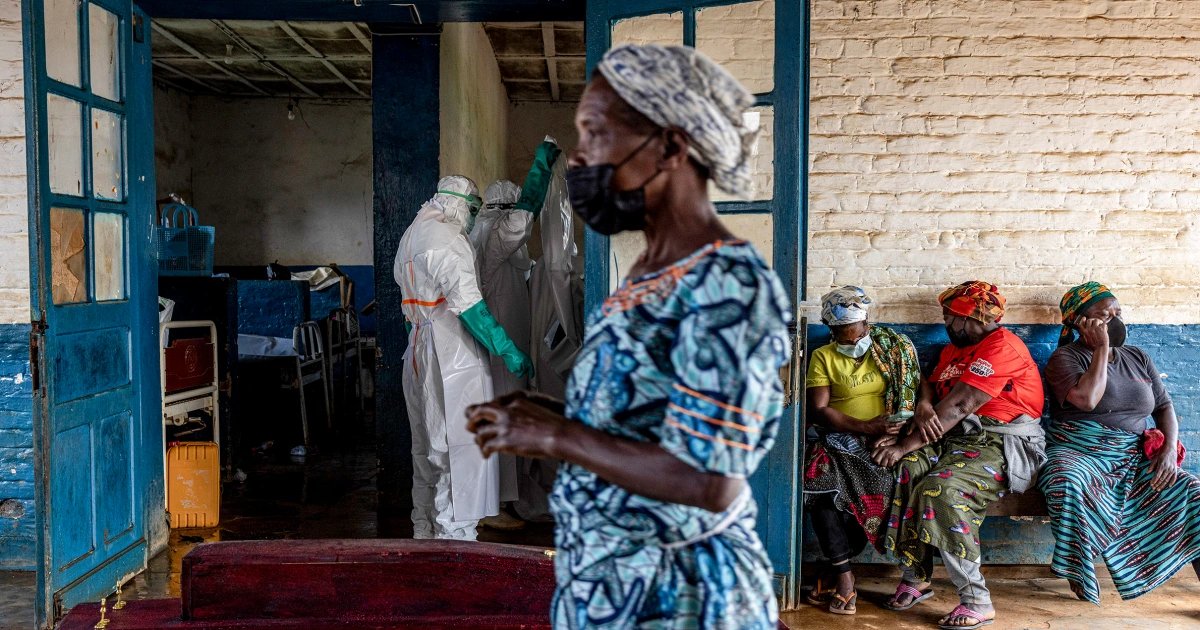
One of the first cases of Ebola that Rose Tchwenko heard about in the current outbreak in the Democratic Republic of the Congo was in a healthcare worker. But instead of going to a hospital, she said, his family tried to care for him.
Subscribe to read this story ad-free
Get unlimited access to ad-free articles and exclusive content.

“The initial thought for the family, even the patient, was that this was related to traditional practices, or maybe even witchcraft,” said Tchwenko, Congo country director for the humanitarian aid organization Mercy Corps. “That’s part of the speculation, because it was handled almost entirely in the family with caregivers, religious leaders and community leaders.”
The man died and was given a traditional burial, she said, which likely spread the virus to even more people. In the course of caring for him, the wife was also infected.
“There are still, unfortunately, a lot of false beliefs around Ebola,” said Tchwenko, whose group, a nongovernmental organization, is focusing on community engagement to help educate people about the virus. “There’s also a lot of suspicion in certain areas around humanitarian actors or government.”
On Thursday, protesters in the town of Rwampara set fire to hospital tents after they weren’t allowed to take back the body of a loved one for burial. Bodies can be infectious for several days after death, and touching and preparing them for traditional funerals have been driving factors for transmission.

Misinformation is just one of the battles healthcare workers and aid groups are fighting on the ground in Congo, where the uncontained Ebola outbreak has exploded. As of Friday, the World Health Organization has reported 750 cases and 177 deaths.
It’s Congo’s 17th outbreak of the deadly disease, which wreaks havoc on the body by attacking the immune system, organs and blood vessels. It causes severe inflammation and widespread damage leading to multi-organ failure.
“It has all the potential of being the worst outbreak,” said Ky Luu, who has led responses to past outbreaks in the region and is now president and chief operations officer for International Medical Corps, a nonprofit humanitarian organization.
Most recent Ebola outbreaks have been detected quickly, after a handful of cases. But this outbreak went undetected, likely for weeks, experts say. The standard Ebola tests were coming back negative, even as patients were dying from the virus.
Those tests weren’t able to identify the rare strain of virus called Bundibugyo, which WHO confirmed is causing this current outbreak, said Alan Gonzalez, director of operations for Médecins Sans Frontières, or Doctors Without Borders. Tests were only able to pick up a more common strain called Zaire.

Now, Gonzalez said, tests are being sent to a lab on the other side of the country in Kinshasa, taking days for results to come back.“We cannot diagnose as fast as we want,” he added. Now that the outbreak has been identified, however, suspected cases are immediately put into isolation, even without test results.
There is also no vaccine or therapeutics for Bundibugyo, leaving doctors with few tools to stop chains of transmission.
“In other recent Ebola responses, the Zaire strain, which is the one that has been responsible for the most Ebola outbreaks in the last decade, you can do ring vaccination within that community, and at least provide some protection at this stage,” Luu said. It’s a strategy that involves identifying all of the contacts of a sick person and vaccinating them.
“We don’t have that tool,” Luu said. “We’re kind of back to where we were with the West Africa Ebola outbreak.”
That outbreak, which lasted from 2014 to 2016, is the largest to date, with more 28,000 cases and more than 11,000 deaths.
“As long as we don’t have an authorized vaccine, it is pretty much back to the basics of Ebola,” Gonzalez said. His teams on the ground are now focusing on contact tracing, isolating suspected patients and infection control.

Having enough space to isolate patients has also proven to be a challenge right now, Gonzalez said.
“In Bunia, the biggest city in Ituri, places to isolate suspected cases, they are full,” Gonzalez said. They were forced to turn a surgical center into an improvised isolation facility.
As cases grow each day and more problems emerge, teams on the ground are scrambling to contain what they feel is like a growing wildfire.
The U.S. State Department this week committed to mobilizing an initial $23 million in foreign assistance for response efforts. Some of that money will help fund efforts by Luu’s organization, International Medical Corps, which has already deployed four rapid response teams in the region along with its country team, which is ready to start building new facilities.
“It’s a race to set up the treatment centers, the screening units,” Luu said. “It’s a race to be able to get supplies into these impacted areas, so you know we’re having to look at sourcing locally for materials, simple things like gowns and gloves and chlorine.”

Greg Ramm, Save the Children’s country director in Congo just returned from the epicenter of the outbreak in the Ituri Province. He said there isn’t enough disinfectant and personal protective equipment including masks and gowns, a problem that he attributes to cuts in humanitarian assistance.
“The amount of humanitarian assistance that’s come into Congo this year compared to two years ago is much less,” Ramm said. “We are working in fewer health centers than we were before. Therefore, we have fewer mobilized community health workers now.”
Complicating matters is that the epicenter of the outbreak is in a conflict zone. Some areas are run by rebel groups, others by the government.
“There’s about 100 armed groups that are just fighting for control, so it makes it very, very difficult in order to get access to have appropriate surveillance, and it’s going to be a logistical challenge,” Luu said. “It’s remote. It’s densely populated, and the fact that we have a protracted conflict, it’s making the response at this point in time very, very challenging.”