dailynewsnblog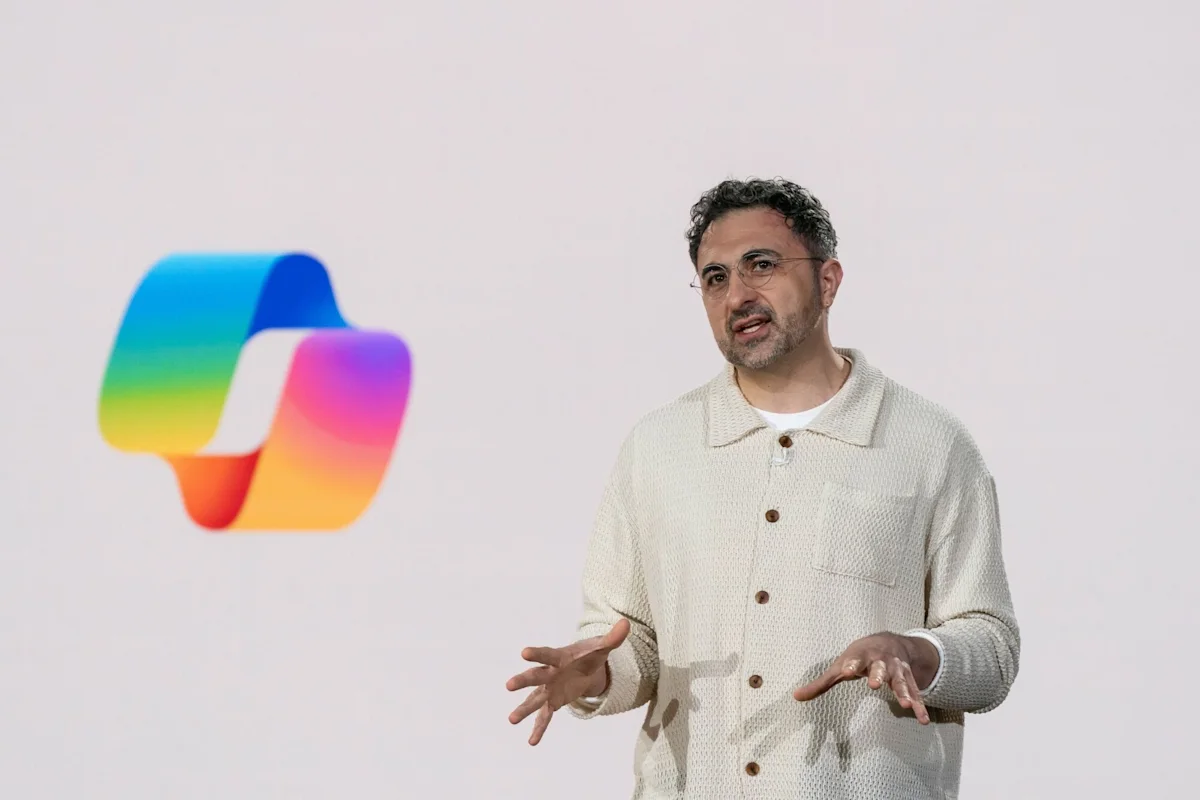
(Bloomberg) — Microsoft Corp. artificial intelligence chief Mustafa Suleyman said concerns about China’s progress on AI shouldn’t be used as an argument against putting guardrails around the rapidly advancing technology.
Most Read from Bloomberg
“I don’t think we should use China as the bogeyman for not making progress on our own efforts” on AI safety, Suleyman said on CNN’s Fareed Zakaria GPS.
His comment contrasts with those from President Donald Trump, who has increasingly called for largely unfettered development of AI and called fears of potentially catastrophic consequences of out-of-control artificial intelligence a hoax. “We will not in any way hinder or stifle the Growth of this incredible Industry,” he said in a social post Saturday.
Suleyman’s Microsoft AI team on Tuesday published a manifesto guiding its own AI development with the goal of keeping humans in control of future AI systems developed by the company.
He also released an essay last week that took aim at some of the language in the guiding documents behind Claude, Anthropic PBC’s family of large language models — a high-profile rebuke of a firm that has positioned itself as a more responsible steward of AI.
AI developers should give models goals that are “bounded by the humanist code that I think everyone in the industry should set for them, which is that they should have clear guardrails,” Suleyman told CNN.
Regulation shouldn’t be viewed as “a bad thing,” but rather as “creating shared norms and standards to increase safety,” he said. “It shouldn’t have to slow us down.”
Trump said Saturday he plans to name an AI czar and rejected concerns that technology may pose risks to humans. “We are leading China, and the rest of the World, and I intend to keep it that way!” he said.
Those comments followed a week of warnings by leaders of the US’s biggest AI platforms that it’s time to slow the development pace of their most advanced and most lucrative models.
Alphabet Inc.’s Google, OpenAI, Anthropic PBC and Meta Platforms Inc. have all disclosed instances of their AI agents hacking into other companies’ systems.
Michael Kratsios, Trump’s science and technology adviser at the White House, said Sunday that AI safety “needs to be approached from a use case-specific, industry-specific way, not through these one-size-fits-all approaches.”