dailynewsnblog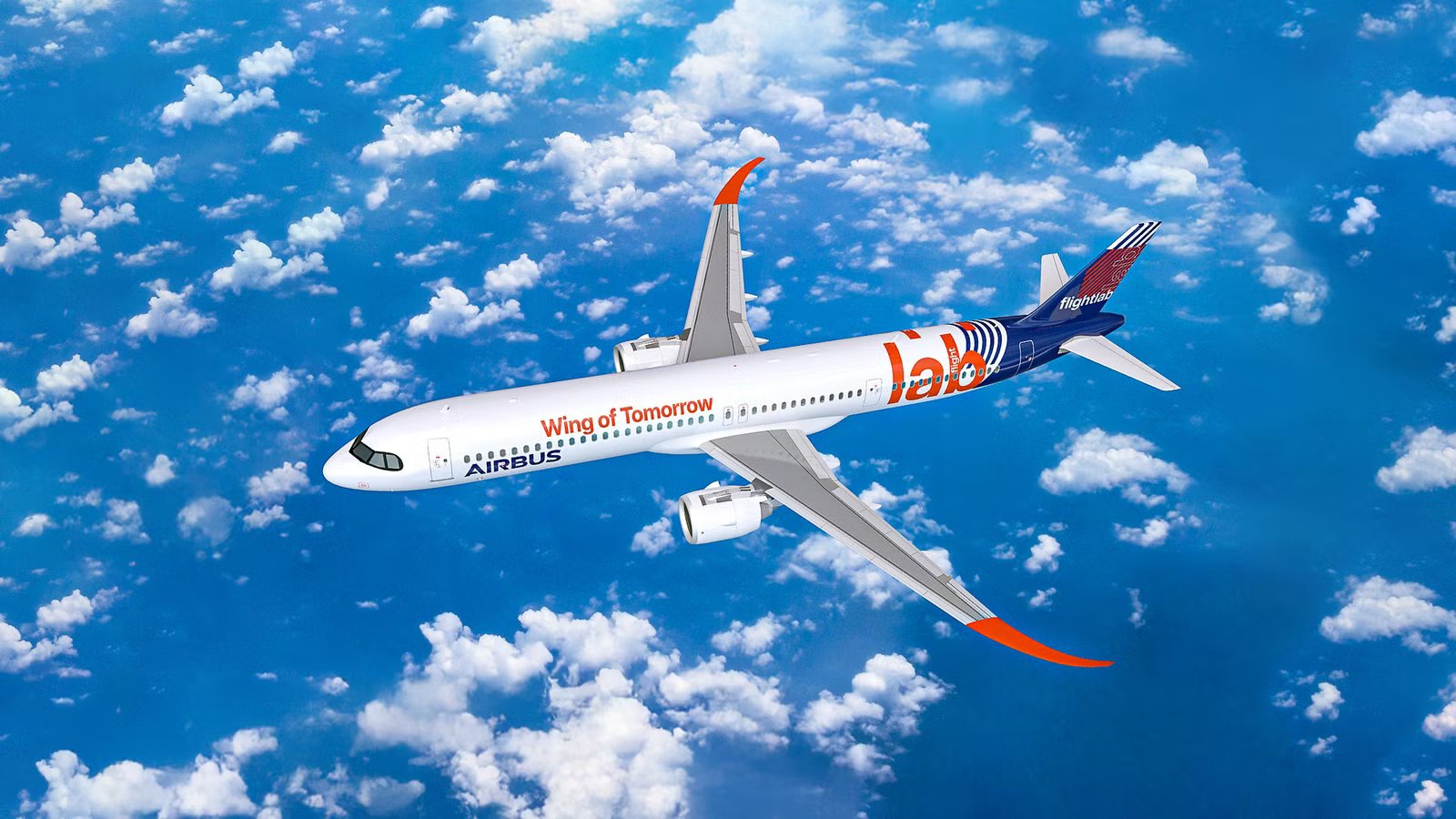
What will be the next major leap in environmental and operational efficiency for aviation? Plenty of advancements have been made over the last few decades, which leaves many to wonder what more can actually be done to continue to push the industry forward.
Attention is moving away from traditional incremental updates and toward fundamental aerodynamic changes, seen as the most logical next step. In this article, we will explore how longer, highly slender wings could reshape the architecture of Airbus‘s next-generation single-aisle aircraft, and how increasing the length of aircraft wings could become a global standard.
Against the backdrop of the Farnborough International Airshow 2026, aerospace manufacturers face mounting pressure to deliver radical reductions in fuel burn while managing unprecedented order backlogs. While engine technology has long dominated efficiency gains, aerodynamic enhancement has emerged as one of the single largest levers for future aircraft designs, and Airbus is going all in on this idea.
Why Are Wings So Restricted?

Maximizing aerodynamic efficiency on narrowbody airframes has traditionally been constrained by airport gate dimensions and existing ground infrastructure limits. As highlighted by the unique folding wingtip design on the upcoming Boeing 777X, manufacturers have to work within assigned ICAO limits for wingspan, making it difficult to simply elongate an already designed wing.
However, designing cleaner, longer spans offers an exponential payoff in induced drag reduction and overall fuel economy. Achieving this breakthrough, therefore, means rethinking how wings handle aerodynamic loads across varied flight profiles without imposing excessive structural weight penalties. Alongside propulsion advancements, the wing is one of the most critical components manufacturers possess to improve aircraft efficiency.
As shown in research from Técnico Lisboa, increasing the aspect ratio of a wing significantly reduces induced drag and boosts fuel economy by minimizing wingtip vortices. At the same time, however, it increases the structural bending moment at the wing root, which can massively affect the structural integrity of the wing.
Airbus has already laid the foundational groundwork for this transition by constructing full-scale ground-based demonstrators to test a wide array of advanced manufacturing and assembly technologies. Building upon this extensive research, the ongoing push toward higher aspect ratios may just be the biggest change yet in single-aisle design philosophy. As the industry looks toward future fleet replacements, optimizing wing geometry will dictate the competitive landscape for decades to come.
Setting The Stage For The Future

Aerospace technology is transitioning from theoretical studies to tangible hardware, and Airbus has accelerated its research through one of its most comprehensive industrial initiatives. Launched during the Farnborough Airshow, the latest phase of the Wing of Tomorrow programme shifts focus from ground-based structures to live flight testing.
Over the next three years, engineering teams will design, build, and evaluate full-scale wing extensions on an Airbus A321neo flight-test aircraft, all with a view to proving that this new wing design is what the next generation of airliners need. The wing extensions, each measuring several meters, are designed to replicate a folding wing in the fully extended position during flight.
By gathering live telemetry, Airbus aims to safely challenge traditional design limits and measure how extended spans alter aircraft handling. However, technological readiness is only half the battle. Speaking to journalists at the airshow, Sue Partridge, Head of the Wing of Tomorrow Programme, Airbus, emphasized the critical importance of ecosystem alignment:
“It’s very important that we work with all our partners as we go through this technology development journey, and of course, the certification authorities, especially EASA, are a key partner of Airbus. So we are already in dialogue with EASA, and we’re discussing what the requirements will be, and we’re making sure that we all go on the journey together.”
This collaborative approach extends deep into the industrial supply chain to ensure complete manufacturing readiness ahead of any future commercial program launch. Partridge noted that working closely with suppliers and exploring multiple concepts together prevents the team from locking into suboptimal solutions prematurely. As she explained:
“One of the main things we’ve tried to do on Wing of Tomorrow is make sure we explore more than one option because actually, when you’re doing technology development (…) you don’t necessarily know what’s going to be the best option.”
The Materials That Can Change The Game

Pushing commercial aircraft wings to higher aspect ratios means that traditional aluminum manufacturing methods no longer work as well as they do with more conventional wings. As spans grow longer and more slender to maximize aerodynamic efficiency, the resulting structural bending moments place immense stress on the wing root, shown in research from CSAA.
Traditional metallic alloys would require heavy internal reinforcement to handle these loads, adding weight that would entirely offset any fuel-burning advantages gained by the new geometry. Overcoming this weight penalty means using advanced carbon fiber composite materials that are capable of aeroelastic tailoring.
Unlike rigid metal, composite structures can be engineered with specific fiber orientations that allow the wingtip to twist passively under heavy aerodynamic loads, a dynamic behavior known as wash-out. When the aircraft encounters severe gusts, the outer wing naturally flexes upward and sheds peak aerodynamic loads, dramatically lowering the mechanical stress transferred back to the wing root.
Fabricating these complex, slender geometries is a real challenge for manufacturers, bringing entirely new production techniques into the mix. Some of tgese techniques, shown by Addcomposites, include automated dry fiber placement and large-scale resin infusion. Getting these advanced composite innovations off the ground and out of laboratory-scale experiments to high-rate production lines remains one of the ultimate tests for the aerospace supply chain. The key now is to see if structures can be manufactured consistently at high commercial volumes.
Investing In The Future Early

Bringing advanced wing architectures from concept to reality cannot be done with just a small-scale effort, and in Airbus’s case, it is pushing forward a parallel evolution in manufacturing infrastructure. Airbus has anchored the core development of the Wing of Tomorrow programme within its specialized UK facilities, primarily centered around Filton and Broughton, as reported by Advance.
These sites house dedicated advanced manufacturing research hubs designed to lead digital design and translate that into high-rate physical production, so that complex composite geometries can be scaled efficiently. At the heart of this industrial strategy is the Wing Technology Development Centre, a facility where engineers assemble full-scale structures and test innovative production
Rather than relying on traditional assembly lines, teams here evaluate more than 100 distinct manufacturing and assembly technologies. These include automated dry fiber placement, advanced tooling, and single-shot resin infusion processes that reduce manual labor while maintaining structural precision across spans measuring 55.8 feet (17 meters) and beyond.
Rigorous industrial testing is essential because when a future narrowbody program transitions into serial production, the supply chain needs to be fully prepared for high-volume output. Standardizing automated processes and refining assembly tolerances early, Airbus is doing everything it can to reduce manufacturing risk and lay the groundwork for the next era of commercial aviation.
Already On The Road To Success

A major milestone for the Wing of Tomorrow initiative has already been hit, moving from computer simulations and ground test fixtures to active flight testing. Over a three-year campaign, Airbus is set to evaluate full-scale wing extensions installed directly onto an A321neo testbed aircraft operating out of Toulouse, as reported by Engineering and Technology Magazine.
This flight-test phase translates theoretical aerodynamic gains into tangible, empirical data to make sure that every design adjustment behaves as predicted under actual atmospheric conditions. The flight-test hardware consists of multi-meter wing extensions designed to replicate a folding wing in its fully extended configuration during flight, stretching across several feet beyond standard frames.
Fitted with comprehensive sensor arrays, these extensions capture detailed telemetry on pressure distribution, structural flexing, and dynamic response during various flight maneuvers. By intentionally pushing past conventional design limits, flight test engineers can analyze how extreme gusts and high-speed cruise conditions interact with ultra-slender geometry and better prepare designs for dealing with the harsh and unpredictable environments that aircraft operate in every day.
Validating these characteristics in a live environment is crucial for mitigating risks before any commercial program is formally launched. Gathering high-fidelity data from real-world flights allows aerodynamicists to refine computer models and verify that structural weight savings do not compromise aircraft stability or control responsiveness. Ultimately, this rigorous flight campaign provides the empirical foundation needed to secure regulatory approval and redefine single-aisle performance standards.
Time To See The Results Of This Project

Bringing an aerodynamic leap of this magnitude is something that extends far beyond the engineering hangar. De-risking structural innovations alongside regulatory authorities like EASA ensures that compliance pathways are established well before any official program launch.
Fostering a collaborative ecosystem from the ground up is Airbus’s way of closing the gap between experimental flight-testing and certified commercial operations. For airlines and industry observers, the evolution of single-aisle architecture brings with it a transformative shift in fleet economics.
As carriers face increasing pressure to lower emissions and operate more efficiently, adopting high-aspect-ratio wings offers a permanent structural advantage that complements future propulsion developments. These design choices will ultimately redefine operational ranges and payload economics across global networks and become the basis for a future where environmental targets become stricter and ever more ambitious.
The insights gathered from flight trials and manufacturing facilities will be the baseline for the next generation of commercial airframes. Whether these innovations debut on a brand-new clean-sheet design or an evolutionary derivative, the technological groundwork being laid today means there is a good chance that the future of single-aisle flight will be defined by unprecedented aerodynamic efficiency.

![British Airways Launches New US Route From Heathrow In Just 2 Months [Map]](https://dailynewsnblog.com/wp-content/uploads/2026/08/british-airways-boeing-787-10-on-stand.jpg)