dailynewsnblog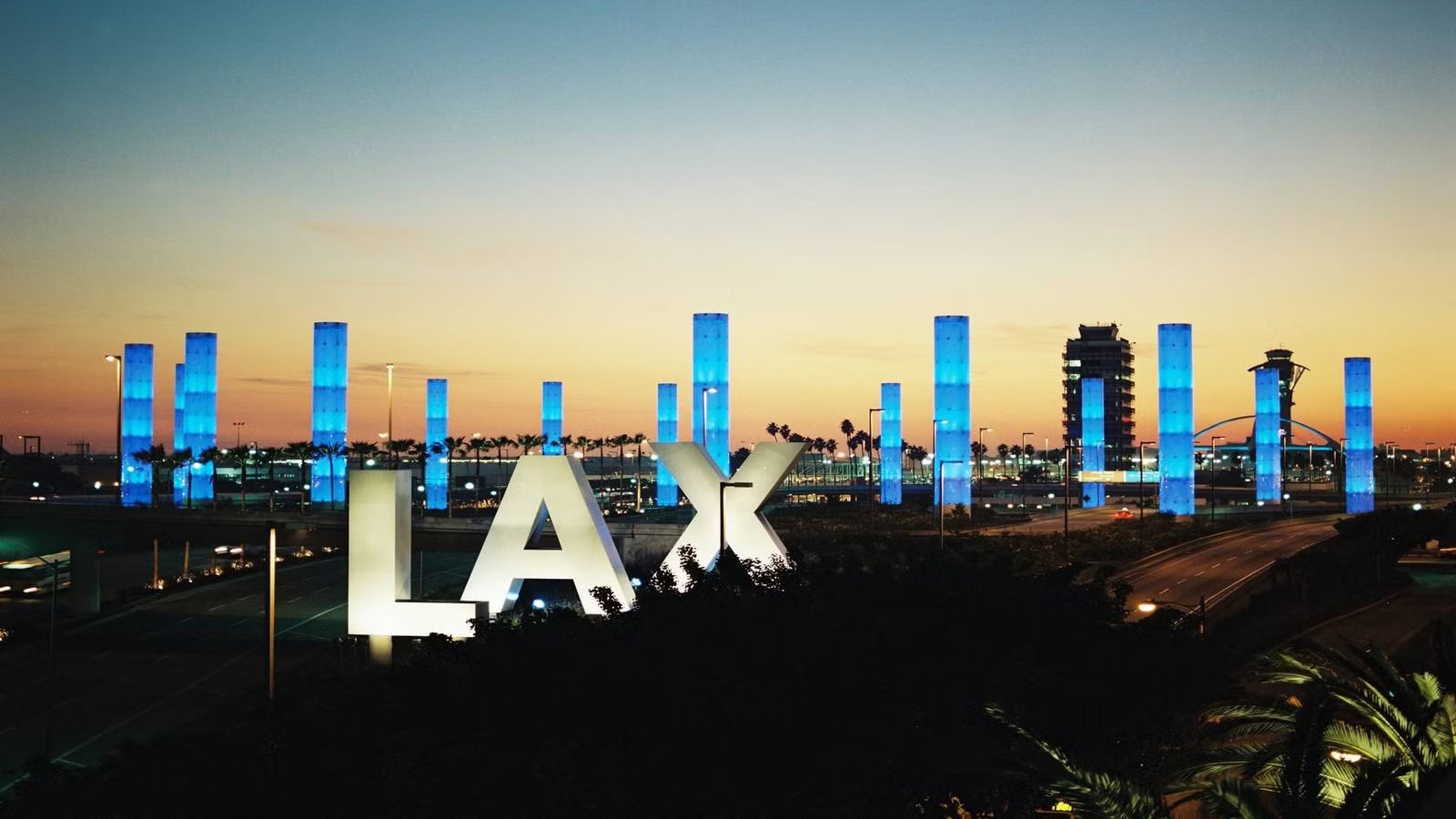
Across the 3,500 acres (1,416 hectares) of tarmac at  Los Angeles International Airport(LAX), fewer aircraft took to the skies, and fewer travelers passed through the terminals during 2025. Annual passenger volume dropped by 3.76% compared to the previous year, shedding nearly 2.88 million travelers from gate areas and terminal concourses. A worrying sight on the surface, but inside the administrative offices of airport operator Los Angeles World Airports, financial results painted an entirely different picture. Rather than reflecting a contraction in activity, top-line operating revenues reached unprecedented heights, pushing toward an estimated $2.34 billion for the fiscal period.
That widening disconnect between foot traffic and financial yield is one of the most intriguing shifts in modern airport economics. While commercial airlines trimmed capacity and consolidated domestic routes, municipal administrators pushed through restructuring measures across aeronautical user fees, terminal rate agreements, and commercial concessions. So how did LAX manage to generate record financial results during a year of declining passenger numbers?
Fewer Passengers But More Revenue?

Where a lot of this top-line growth is coming from, despite reduced traffic, is the restructuring of aeronautical charges approved by Los Angeles World Airports. Airport leadership instituted a 19% increase in aviation revenues and airfield landing fees, according to data published by the airport authority. This rate adjustment ensured that operating carriers bore higher fixed costs to access West Coast airspace, shielding airport operating budgets by increasing direct carrier fees rather than relying on passenger terminal spending.
For both the airport authority and the carriers serving Southern California, the operational outlook became very different following these changes. An analysis published by the Los Angeles Business Journal reported that overall calendar-year passenger counts declined from 76.59 million in 2024 to 73.71 million in 2025. The contraction hit domestic routes hardest, dropping nearly 5% to 50.11 million travelers, whereas international passenger traffic held relatively firm with a minor 1.63% drop to 23.60 million. Even with lower passenger volume, LAX raised its operating income as updated lease rates took effect across all nine terminal complexes.
The cost recovery was moved directly onto airline landing fees and terminal space rentals, which has helped Los Angeles World Airports to protect its balance sheet against broader fluctuations in domestic demand. However, raising aeronautical rates in a year when total passenger numbers fell raises immediate questions about how individual airlines adjusted their flight schedules, seat capacity, and gate commitments in response.
Market Share Remaining Stable

The traffic contraction experienced in 2025 was largely driven by domestic capacity cuts, but market share across the ramp remained remarkably stable. Unlike single-airline hubs such as  Atlanta (ATL) or
  Dallas/Fort Worth (DFW), Los Angeles International operates as a fiercely contested battleground where no single operator holds a majority share.
  Delta Air Lines maintained its position as the leading carrier at the facility, transporting 13.92 million passengers to capture an 18.9% market share.
  United Airlines followed closely as the second-largest operator with 11.87 million passengers and a 16.1% share, positioning LAX as its primary southern West Coast gateway.
Catch what other flight trackers miss
Emergency squawks, holds, NOTAMs — live signals, no signup.
Open tracker
Catch what other flight trackers miss
Emergency squawks, holds, NOTAMs — live signals, no signup.
Open tracker
According to data published by Cirium and Road Genius, this distributed market share structure meant that domestic traffic reductions were spread across all five major operators rather than being isolated to one airline.  American Airlines secured the third spot with 11.31 million passengers and a 15.3% market share. Meanwhile, discount and regional carriers absorbed smaller shares, with
  Southwest Airlines accounting for 6.19 million passengers (8.4%) and
  Alaska Airlines processing 4.88 million (6.6%). Across all nine terminal complexes, airfield operations recorded 580,996 total aircraft movements during 2025, including 546,465 commercial flights, while air freight volume slipped by 4.58% to 2.29 million tons (2.08 million metric tons).
However, even as these leading carriers trimmed non-hub domestic routes to protect passenger yields, their fixed financial commitments to Los Angeles World Airports did not shrink. Terminal lease agreements and landing fees were restructured on a compensatory cost-recovery basis, meaning airlines found themselves paying significantly more per passenger to maintain their gate footprints. The challenge is how an airport authority can legally force carriers to absorb escalating operating charges during a period of softening passenger demand.
Locking Airlines Into The System

LAWA hopes to reach its $2.34 billion revenue target by operating under a compensatory cost-recovery methodology that separates the airport balance sheets from passenger headcount. Under this lease structure, the airport authority establishes the precise cost of operating airfield runways, passenger terminals, and landside facilities, then calculates landing fees and terminal space rates to cover those fixed expenditures. When domestic passenger volume contracts, the baseline cost to operate nine terminal complexes remains unchanged, automatically driving up the Cost Per Enplaned Passenger (CPE) that tenant airlines must pay to maintain their gate footprints.
Operating revenue is projected to grow from $2.05 billion in fiscal year 2025 to $2.34 billion for fiscal year 2026, though the underlying financial split shows how dependent LAWA is on aeronautical recovery versus commercial spending. Terminal dining, duty-free concessions, and central parking garages bring some supplementary income, but they remain vulnerable to lighter terminal foot traffic. By contrast, fixed terminal space leases and airfield landing charges guarantee stable cash flows regardless of whether aircraft depart with full load factors or empty seats.
The rate-setting framework protects municipal debt obligations during traffic lulls, but it binds tenant airlines directly to LAX’s multi-billion-dollar capital modernization program. Every dollar spent on airfield improvements or landside transit expands the airport’s overall rate base, meaning that carriers will absorb higher operational fees year after year. That financial structure faces an immediate test as leading capital projects run into contractor disputes, cost overruns, and delayed completion timelines.
Not Going Entirely To Plan

At the core of the airport balance sheet is the $5.5 billion Landside Access Modernization Program, an ambitious infrastructure overhaul that includes a brand new automated people mover. Designed to span 2.25 miles (3.62 km) across six total stops, the driverless electric train system aims to prevent gridlock inside the central terminal area by directly connecting passenger concourses to off-site parking, a consolidated rental car facility, and regional light rail connections. To finance this massive undertaking alongside ongoing terminal revamps, Los Angeles World Airports backed the initiative through extensive municipal revenue bond issuances. Having this heavy debt load leaves the airport operator carrying significant capital liabilities that depend on project completion to realize projected operational efficiencies and revenue streams.
Operational execution, however, has drifted far beyond initial schedules, creating a costly bottleneck for airport management. Originally slated to open in 2023, the train project faced repeated delays into late 2026 amid legal and contractual friction between Los Angeles World Airports and the LINXS developer consortium. According to the Los Angeles Times, protracted disputes over system integration, design revisions, and utility interconnections culminated in formal litigation and more than $880 million in dispute-related settlement payments, pushing total project commitments past $4.9 billion over its 25-year contract lifecycle. Rigorous certification standards require a 30-day continuous, error-free demonstration run before passenger service availability can be granted, leaving credit rating agencies to downgrade project debt as longstop deadline margins narrow.
The mounting financial overhang means the airport authority must take on increased debt service obligations while maintaining costly temporary workarounds, including continuous diesel shuttle bus service throughout the terminal roadways. Pushing passenger availability toward late 2026 has added pressure to final testing procedures and prolonged roadside congestion. Clearing these final commissioning hurdles remains vital to stabilizing airport finances, ensuring that debt service yields long-term operational relief well before Los Angeles welcomes major global events like the 2027 Super Bowl and the 2028 Olympic Games.
Looking To Regional Competitors

Even though LAX experienced a domestic contraction in 2025 down to 50.11 million passengers, nearby regional gateways present a mixed picture across a 50-mile (80-kilometer) radius. Ontario International Airport (ONT) reached 7.11 million passengers in 2025, maintaining steady Inland Empire growth, whereas Hollywood Burbank Airport (BUR) dropped 5% to 6.22 million passengers and Long Beach Airport (LGB) fell 8% to 3.8 million passengers. Although secondary gateways absorb localized point-to-point traffic, LAX remains the indispensable long-haul and international gateway for the region, leaving major carriers with little choice but to maintain mainline operations at the central hub despite escalating operating expenses.
This cost environment creates a clear divide in how different airline business models react to rising landing and lease rates. Ultra-low-cost carriers facing tight profit margins, like Frontier Airlines, have trimmed non-essential domestic point-to-point routes out of LAX to avoid escalating cost per enplanement charges. Conversely, legacy carriers like Delta Air Lines, United Airlines, and American Airlines continue to face higher fixed gate fees. For these legacy operators, the airport is an essential international feeder where premium transcontinental and intercontinental fares offset increased airport operating costs.
As capital debt payments increase through fiscal year 2026, the gap between legacy hub operations and discount carriers will widen across the Los Angeles basin. Low-cost operators may increasingly shift point-to-point domestic flights toward secondary regional airports where landing fees remain lower. However, as long as LAX maintains an exclusive lock on high-yield international long-haul traffic, mainline carriers will remain tied to the airport rate base, which is excellent news for the airport authority, which continues to push forward ambitious improvement plans.
Will The Airport Be Ready In Time?

LAX’s financial trajectory through 2025 and into fiscal year 2026 proves that an airport’s economic strength can diverge significantly from its immediate passenger throughput. Under a compensatory rate-setting structure, LAWA successfully protected its bottom line, driving revenue toward $2.34 billion even as domestic passenger volume contracted. Through locking airlines into long-term rate agreements that guarantee debt service coverage, the airport established a sustainable financial foundation capable of underwriting its massive capital program.
The critical challenge facing LAWA lies in translating these heavy capital investments into operational efficiency before global attention shifts to Southern California. With major international sporting events on the horizon, culminating in the 2028 Summer Olympic Games, the timely completion of key projects, such as the $5.5 billion, 2.25-mile (3.62 km) automated people mover, is essential.
For tenant airlines operating out of LAX, operating out of LAX will remain a high-cost endeavor, characterized by higher cost-per-enplanement figures and strict capital recovery fees. However, given LAX’s position as the primary West Coast hub for transpacific and international long-haul traffic, carriers have little choice but to maintain their core mainline presence. After all, LAX is one of the most vital global hubs, and leaving it behind over increased fees may do more damage than simply accepting the immediate costs.