dailynewsnblog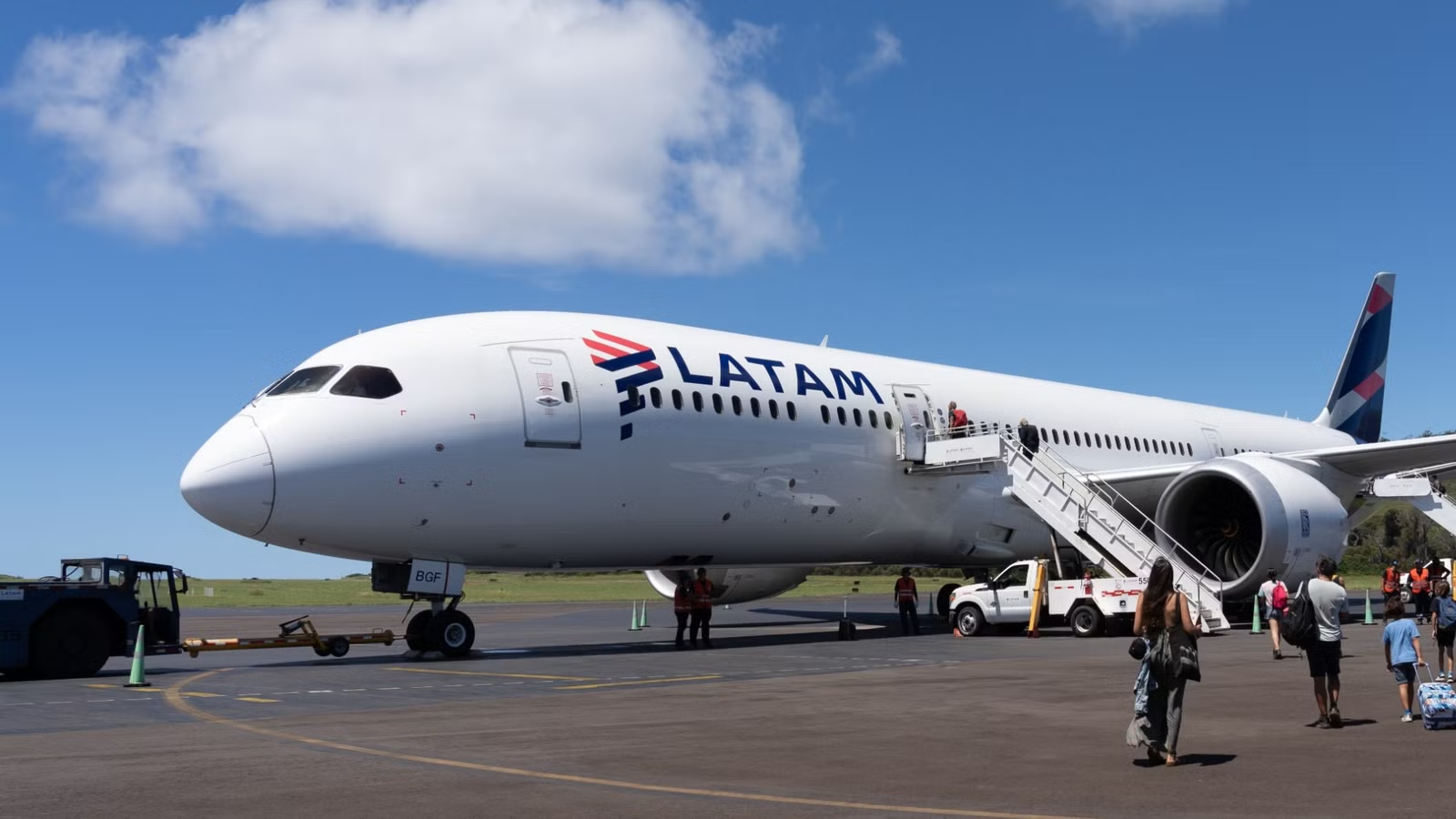
Dreamliner Down: Stranded On Easter Island

The now-grounded 787 last flew a five-hour journey from Santiago de Compostela Airport (SCL), crossing 2,336 miles (3,759 km) of open ocean before the incident. According to Planespotters.net, tail number CC-BBD is almost a 13-year-old jet at this point, but has never suffered an incident prior to this since it began service with LAN, later LATAM, in 2013. Initial reports state that an airstairs truck ripped of the 787’s L2 door after the jet had landed.
Mataveri International Airport has maintained an exceptionally safe operational history. Because there are no alternative runways nearby, Chilean aviation authorities strictly prohibit more than one aircraft from being in the airspace. Once a flight from Santiago passes the halfway mark, no other plane can cross that threshold until the first has safely landed. The runway was extended to a massive 10,885 feet (3,318 m) by NASA in 1987. It was designed to serve as a designated emergency abort site for the US Space Shuttle.
A complete passenger cabin door cannot simply be patched up, so it must be replaced, and any surrounding structural damage will also need significant work to fix. No other standard commercial airline flies to Easter Island. This means LATAM will likely have to commission a dedicated charter cargo aircraft or use one of its own scheduled Boeing 787 flights to transport a replacement door, specialized tooling, and heavy jacks from its main maintenance bases in Santiago or Sao Carlos Airport (QSC). The ultimate goal of the onsite team will not be to return the plane to passenger service, but to make it ferry-flyable.
Patching Up A Widebody: LATAM’s 787 Field Repair

Unlike older aluminum aircraft, the Boeing 787 is constructed mostly from carbon-fiber reinforced plastic. When a metal plane is hit, it dents, making structural damage easy to see. When carbon fiber is struck by a heavy vehicle, it can split apart without showing major cracks on the outside. LATAM will need to fly in a specialized Nondestructive Testing team equipped with ultrasound scanners to map out the exact structural damage surrounding the door frame before any repairs can begin.
Mataveri International Airport also has no hangars large enough to house a Boeing 787. Composite resin curing and structural alignment require highly controlled environments. High Pacific winds, dust, humidity, and changing temperatures on the open tarmac make this incredibly difficult.
Mechanics will perform a temporary structural fix and door securement to get the aircraft approved for a one-time ferry. The plane will then be flown back to a LATAM maintenance depot to undergo comprehensive reconstruction and a battery of tests before it is allowed to carry passengers again in normal service.
Seconds From Disaster: LATAM Boeing 777 Rejects Takeoff During Rotation
The aborted takeoff appears to have happened after VR, creating a potentially disastrous situation.
Safety First: Flying Low And Slow To Home Base

Passenger aircraft fly at altitudes where the outside air is too thin to sustain human life, requiring the cabin to be highly pressurized. The fuselage of a commercial jet acts like a pressure tube, expanding and contracting with every flight. To bypass this danger, ferry flights for structurally compromised aircraft are almost always flown unpressurized and at a much lower altitude, under 10,000 feet.
The flight back to Santiago will cover thousands of miles of open ocean with zero emergency landing strips along the way. A Boeing 787 flying low and fighting high drag will burn through its fuel reserves rapidly. Air at lower altitudes is also significantly more turbulent than the smooth air of the stratosphere. Constant, heavy buffeting from low-level ocean winds puts immense mechanical flexing stress on the damaged fuselage.
Aircraft technicians will need to fabricate a custom reinforcing plate, or ‘doubler,’ out of aviation-grade aluminum or composite sheets to seal the exterior of the door. This plate is bolted over the damaged door area to restore the aerodynamic profile and prevent the door from failing under loading. Only a skeleton crew will fly the plane back to the mainland.
The departure will have to wait for ideal weather for take-off. Not only to avoid adverse weather systems, but also to take advantage of any tailwind that could push the plane. That will save both time and fuel on the long slog back to Santiago, where the jet will finally be made whole again.