dailynewsnblog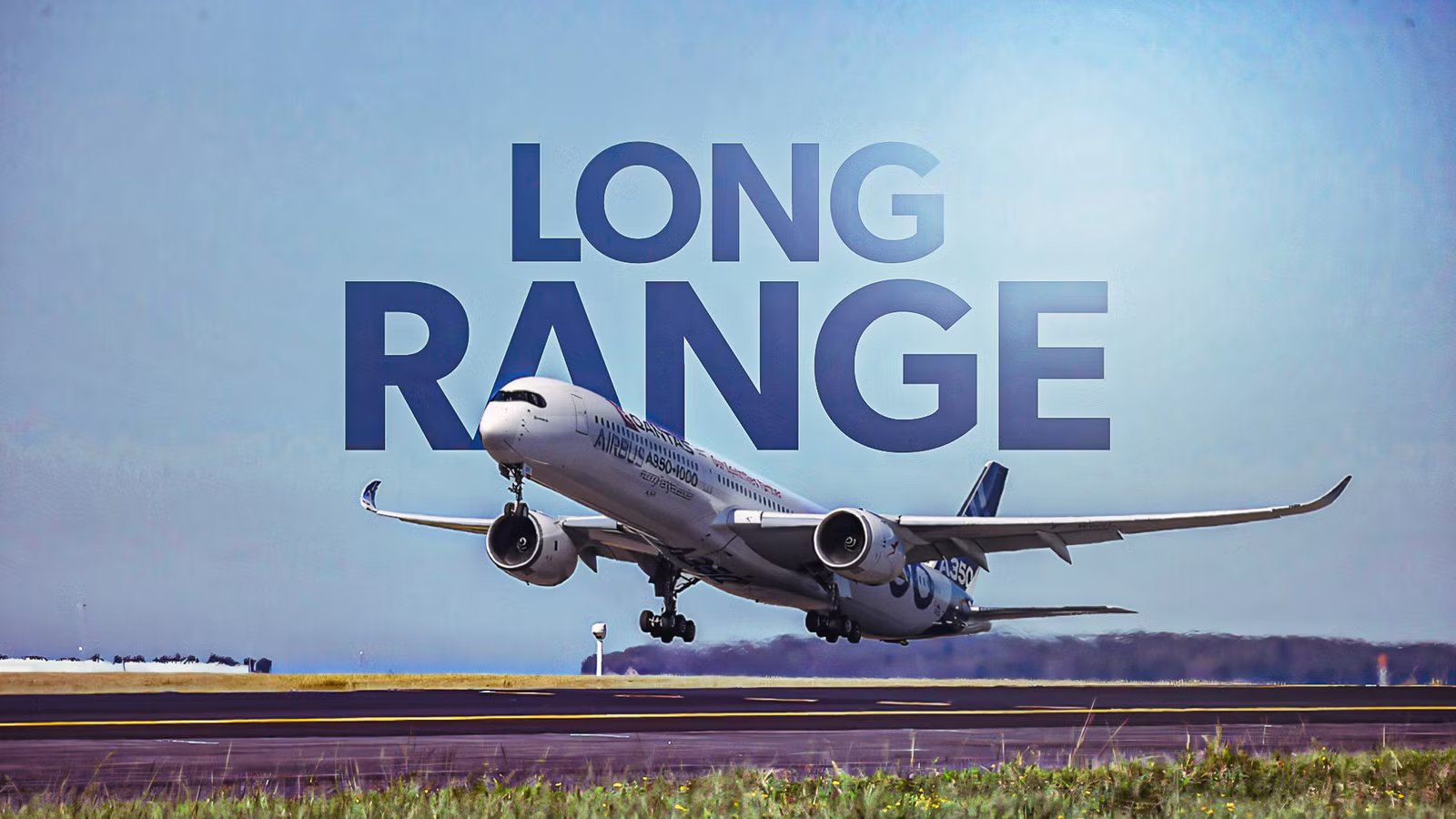
Introducing The A350-1000

The largest variant of the A350 family, the A350-1000 variant, received its certification in late 2017 and entered commercial service in early 2018, with the launch customer  Qatar Airways. Per the latest order and delivery data from Airbus, the manufacturer has delivered a total of 113 examples of the type (as of the end of April), while holding an order backlog of a further 254 aircraft.
The manufacturer’s specifications note that the aircraft has an operational range of 9,000 nm (16,700 km) and a maximum seating capacity of 480 passengers, which reduces to between 375 and 400 passengers when configured in a three-class layout. With the Rolls-Royce Trent XWB-97 engine designed specifically for the aircraft, the aircraft achieves considerable fuel savings, making it a customer favorite.
Catch what other flight trackers miss
Emergency squawks, holds, NOTAMs — live signals, no signup.
Open tracker
Catch what other flight trackers miss
Emergency squawks, holds, NOTAMs — live signals, no signup.
Open tracker
The A350-1000 has fewer orders and customers than the smaller A350-900. This is because the A350-900 also boasts a significant operational range but is easier to fill, making it more suitable for most airlines. However, this has not stopped airlines such as Qatar Airways, Cathay Pacific, and more from operating both variants of the A350 family.
Comparing The Two A350 Variants

The smaller A350-900 was certified a few years before the -1000, and Qatar Airways launched the aircraft type in 2015, marking the entry of Airbus’ next-generation, clean-sheet long-haul aircraft design. The type quickly became popular and started receiving orders from airlines around the world. As such, the question arises as to how the two passenger variants of the A350 compare.
The two A350 variants are powered by two different variants of the Rolls-Royce XWB engine family, and while the A350-1000 is larger, accommodating more passengers and a higher payload, Airbus has designed the aircraft to allow the variant to fly farther than the A350-900. This is due to the more powerful engine on the A350-1000, along with aerodynamics and fuel optimization.
|
Aircraft Specifications |
Airbus A350-900 |
Airbus A350-1000 |
|---|---|---|
|
Maximum Capacity |
440 |
480 |
|
Three-Class Capacity |
332-352 |
375-400 |
|
Range |
8,500 nautical miles (15,750 km) |
9,000 nautical miles (16,700 km) |
|
Cabin Length |
167.45 feet (51.04 m) |
190.39 feet (58.03 m) |
|
Maximum Take-Off Weight |
283 tons (283,000 kg) |
322 tons (322,000 kg) |
|
Engine |
RR Trent XWB-84 |
RR Trent XWB-97 |
As seen in the comparison above, the A350-900 on its own boasts a significant operational range, which makes it popular among operators, while the A350-1000 attracts customers who specifically aim to utilize the extra 500 nautical miles (950 km) of range or the additional capacity. That said, there are niche sub-variants of these two aircraft designed to fly beyond their advertised range.
Why The Airbus A350 Is Becoming The Go-To Aircraft For Ultra-Long-Haul Routes
The aircraft offers exceptional ultra-long-range capabilities.
The A350-1000ULR Has Been Selected For Qantas’ Project Sunrise

While the A350s are definitely capable of operating ultra-long-haul flights, both variants still fell short of the needs of Australian carrier Qantas to operate direct flights from Eastern Australia to as far as Western Europe and New York. Currently, the airline’s flights to Europe from hubs such as Sydney fly via Singapore, and its previously nonstop Perth-to-London Heathrow services are also routed via Singapore due to the ongoing Middle East conflict.
After years of deliberation, Airbus agreed to design an Ultra-Long Range version of its A350-1000 for the airline, and the Australian carrier finalized the order for 12 such airframes in 2022. This variant is designed to fly farther, with the manufacturer boosting the aircraft’s range to 22 hours nonstop.
While a specific number for the aircraft range has not been revealed, a considerable increase from the standard 9,000 nm range can be expected. The first A350-1000ULR has already been assembled at Airbus’ facility in Toulouse and is expected to be delivered to Qantas later this year, which will allow the carrier to fly nonstop services from Eastern Australia to Western Europe and New York.
The A350-900ULR Was Made For Singapore Airlines

The smaller variant of the A350 has a ULR version as well. These were made specifically for  Singapore Airlines, as the carrier wished to operate nonstop flights from Singapore Changi Airport (SIN) to
  Newark Liberty International Airport (EWR) and
  John F. Kennedy International Airport on the East Coast of the United States. With outbound services averaging 17.5 hours and flights back to Singapore often exceeding 18.5 hours, they are the longest nonstop flights in the world.
Airbus designed these aircraft to fly ranges of up to 9,700 nm (18,000 km), and the airline operates seven examples of the ULR variant. That said, for such a long flight, the carrier’s A350-900ULR is configured with only premium economy and business class seats, according to aeroLOPA.
|
Aircraft |
Business Class Seats |
Premium Economy Seats |
Economy Seats |
Total Seats |
Aircraft Range |
|---|---|---|---|---|---|
|
A350-900ULR |
67 |
94 |
N/A |
161 |
9,700 nm (18,000 km) |
|
1-2-1 |
2-4-2 |
||||
|
A350-900 |
42 |
24 |
187 |
253 |
8,500 nm (15,750 km) |
|
1-2-1 |
2-4-2 |
3-3-3 |
According to Airbus, the ULR aircraft utilizes a modified fuel system, which increases the aircraft’s existing fuel carrying capacity by 24,000 liters without the need for additional fuel tanks. This modification allows the aircraft to fly such extended ranges on a nonstop basis.
Singapore Airlines is the largest operator of the A350 family, and also has aircraft configured with 303 seats split across business and economy cabins, which are deployed on short and medium-haul routes. However, it is worth noting that the carrier only operates the A350-900 variant. The largest operator of the A350-1000, with 28 aircraft currently active, is the launch customer, Qatar Airways, which has a further 14 examples of the type on order.
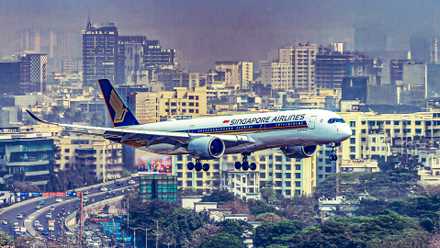
How Much Further Than The Airbus A350-900 Does The A350-900ULR Fly?
Soaring over continents and oceans, the A350-900ULR goes beyond, reshaping ultra-long-haul travel.
The Third A350 Family Variant

Beyond the A350-900 and A350-1000 family aircraft, the family also includes the upcoming freighter variant, known as the A350F. The development of this aircraft is the manufacturer’s attempt to gain a competitive share in the market of widebody freight jets. This sector has been consistently dominated by  Boeing cargo aircraft such as the 777F, 747-8F and the freighter variants of the 767.
Naturally, the freighter variant of the A350 will not boast the levels of operational range found on the passenger versions, but the aircraft can still carry cargo for considerable ranges. Indeed, the A350F is expected to carry payloads of 244,700 lb (111,000 kg) up to ranges of 4,700 NM (8,704 km). Meanwhile, the 747-8F can carry 303,796 lb (137,800 kg) for up to 4,100 nautical miles (7,593 km), and the 777F can carry 224,872 lb (102,000 kg) for up to 4,970 nautical miles (9,204 km).
However, it is worth noting that Boeing is also currently developing its next generation freight aircraft, based on its extremely popular 777 platform. Part of the manufacturer’s 777X series, the 777-8F is expected to have the capability to carry 246,917 lb (112,000 kg) for ranges up to 4,410 nautical miles (8,167 km). While the first airframe of the variant has been assembled in Boeing’s facility in Everett, it will still be a while before the jet can enter commercial operation, as the 777X is yet to be certified.
A Larger A350 With Even More Range?

Recently, there have been discussions among various airlines and other stakeholders within the aviation industry regarding a possible stretch to the existing A350-1000 jet. The interest in this potential aircraft comes from carriers looking for an aircraft with a higher passenger capacity. Subsequently, there is also the competition factor, considering the upcoming 777-9 is set to be the largest twin-engined aircraft on the market.
Furthermore, Boeing could also potentially develop a stretched version of the 777-9, depending on the findings from a feasibility study they would be conducting, as announced at the Dubai Airshow 2025. With that being said, would a larger A350-1000 have even more operational range? While it is impossible to have a definitive answer, based on the order figures for the existing -900 and -1000 variants, it is possible to deduce that it is very unlikely the larger A350 will have a higher range.
This is based on the fact that data from the end of April show the A350-900 has received orders for 1,111 examples, while the larger A350-1000 has only received 367 orders. This goes to indicate that airlines might be interested in the additional capacity, but not many carriers would need the additional operational ranges that exceed what is currently being offered. However, there might be limited demand for niche versions of the aircraft by operators looking to fly very specific ultra-long-haul routes.