dailynewsnblog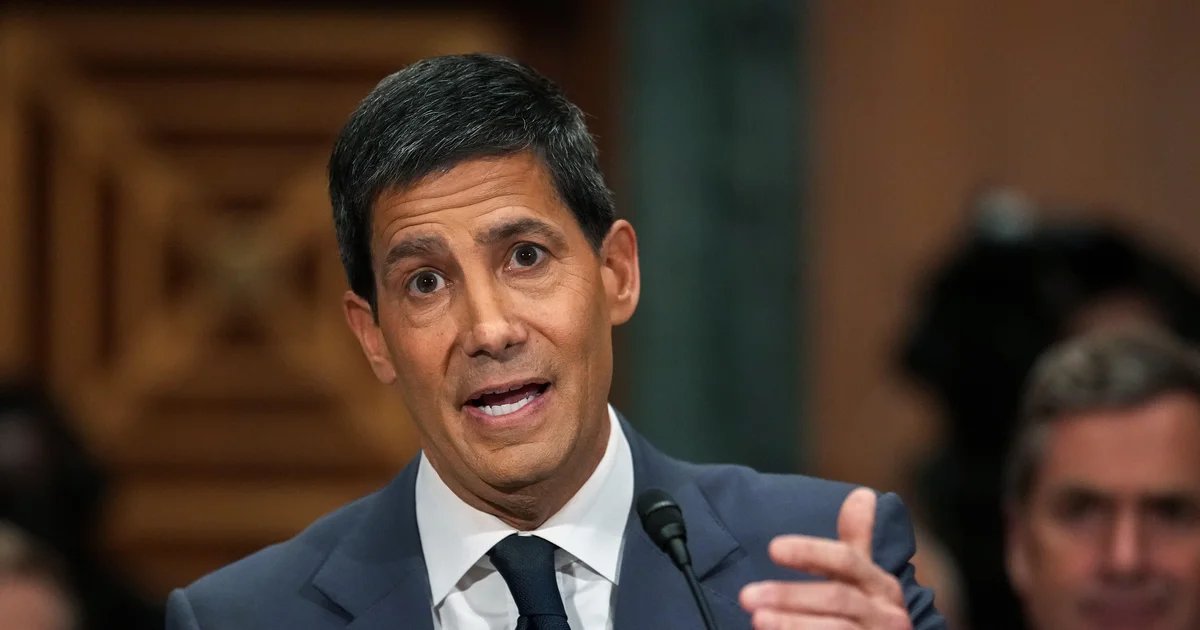
Kevin Warsh, President Trump’s nominee to replace Jerome Powell as chair of the Federal Reserve, testified at his Senate confirmation hearing on Tuesday that the central bank will remain “strictly independent” in setting monetary policy.
Warsh’s opening statement comes after Mr. Trump has repeatedly criticized Powell for not cutting interest rates at a faster pace. At the same time, Powell has steadfastly maintained that the Fed’s interest rate and other policy decisions should be based on economic data, while resisting political pressure from elected officials.
“Monetary policy independence is essential,” Warsh told the Senate Banking Committee. “I am committed to ensuring that the conduct of monetary policy remains strictly independent.”
The issue of Fed independence has grown more pressing in recent weeks, as the Iran war has driven U.S. energy prices higher, pushing inflation to its fastest pace in almost two years.
Hawk to dove?
In recent months, Warsh has signaled support for cutting the Fed’s benchmark interest rate, suggesting that AI could help keep prices down by accelerating economic productivity — a “dovish” pivot from his former “hawkish” views on inflation during his tenure as a Federal Reserve board governor from 2006 to 2011.
“In today’s hearing, we will be curious to see whether Warsh i) sticks to his dovish bias, or ii) acknowledges the risks to price stability from the layering of supply shocks,” wrote Bank of America economists Aditya Bhave and Stephen Juneau in an April 21 research note.
Sen. Elizabeth Warren, a Democrat from Massachusetts, criticized Warsh’s recent stance on inflation and interest rates, saying that his views seem tailored to win Mr. Trump’s approval.
“The Senate should not be aiding and abetting Mr. Trump’s takeover of the Fed by installing his sock puppet,” Warren said.
In his opening statement, Warsh signaled he’s willing to listen to the White House on some matters.
“I am equally committed to working with the Administration and Congress on non-monetary matters that are part of the Fed’s remit,” he wrote.
Trump and interest rates
Warsh faced questioning about whether he might be pressured by the White House to lower interest rates. Sen. John Kennedy, a Republican from Louisiana, asked whether Mr. Trump has asked the nominee to commit to future cuts.
“The president never asked me to predetermine, fix or decide on any interest rate decision, nor would I ever do so,” Warsh responded. “I’ve heard his view on interest rates — it sounded very similar to every other president in economic history I’ve studied.”
“I will be an independent actor if confirmed as chair of the Federal Reserve,” he added.
Powell exit timing unclear
A majority of the 24-member Senate Banking panel must vote in favor of Warsh’s nomination to advance it to the full Senate for a vote, with approval in the chamber also requiring a simple majority.
While Warsh is widely expected to be confirmed to succeed Powell, whose term expires on May 15, one potential roadblock is Sen. Thom Tillis, a Republican from North Carolina, who previously said he wouldn’t approve the nomination until the Department of Justice concludes an investigation into Powell.
It’s unclear who will run the central bank if the Senate is unable to confirm Warsh by next month. Powell has said he plans to remain at the Fed in his role as a governor as long as the DOJ probe continues.