dailynewsnblog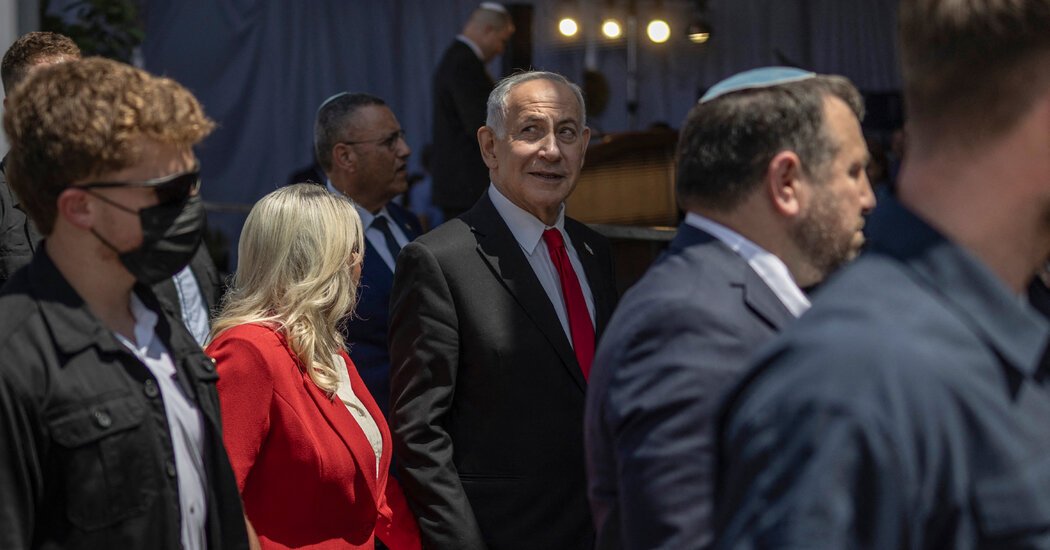
The Israeli government threatened on Sunday to disregard an order by Israel’s highest court, escalating a long-running clash between Prime Minister Benjamin Netanyahu and a judiciary whose authority he has vowed to weaken.
Legal analysts called the statement one of the more brazen steps so far by the Netanyahu government to legitimize defiance of Israel’s Supreme Court. They said it might pave the way toward an eventual constitutional crisis.
On Sunday, the members of Mr. Netanyahu’s cabinet passed a resolution attacking the court over a decision issued last month in a case involving Israel’s broadcast regulator. In apparent defiance of the decision, they said they would not recognize actions taken by the regulator for the time being and would use “every legal means” to annul it.
Yariv Levin, Israel’s justice minister, asserted in a joint statement with another senior minister that the court’s decision “contradicts the clear language of the law.” They said the government “will not recognize actions taken under its authority.”
That stance quickly prompted fierce criticism inside Israel. President Isaac Herzog, whose role is largely symbolic, warned that “statements of noncompliance with Supreme Court rulings strike at the heart of the nation’s unity.”
He said, “Noncompliance with a court ruling is a red line that must not be crossed under any circumstances.”
By Sunday night, the government’s cabinet secretary, Yossi Fuchs, appeared to be trying to defuse the controversy, saying the resolution did not explicitly defy the Supreme Court order. He argued that it had only voiced “sharp criticism of a ruling,” although he did not try to square this explanation with the defiant comments offered earlier by Mr. Levin and the other minister.
The dispute raised fresh fears of democratic backsliding in Israel, where Mr. Netanyahu’s attempt to curb the country’s justice system ignited mass protests three years ago. Critics said the overhaul was aimed at giving the ruling coalition near-unchecked executive power.
At the heart of the latest legal dispute is Israel’s broadcast regulator, known as the Second Authority. The agency is still staffed by a board of commissioners from the previous government, which was run by Mr. Netanyahu’s opponents.
In recent months a group of investors, including Assaf Rappaport, a Netanyahu critic, moved to purchase Channel 13, a major Israeli broadcaster. The acquisition would most likely require regulatory approval by the Second Authority.
When Mr. Netanyahu’s government put forward its own set of commissioners for the board, the Supreme Court froze their appointment while it heard petitions by media organizations and civil rights groups. Some challenged the new board over prospective members’ conflicts of interests.
In the decision that the cabinet appeared to defy on Sunday, the court ruled that the original board could continue operating, given the “exceptional circumstances.” Mr. Netanyahu’s government said that the justices’ decision flew in the face of existing legislation and noted that several members had resigned, leaving the board without the quorum mandated by Israeli law.
Since returning to power in late 2022, Mr. Netanyahu has sought to weaken Israel’s judicial establishment, asserting that the Supreme Court had accrued too much power and was tying the hands of elected officials. He has also denounced the country’s prosecutors for indicting him in 2019 on corruption charges, accusations he denies.
After the Hamas-led attacks on Oct. 7, 2023, ignited the war in Gaza, the judicial overhaul initiative largely ground to a halt as Israelis focused on external threats. But Mr. Netanyahu’s coalition later resurrected the judicial campaign, including by passing a law last year that changed how judges are picked for the bench.
Israel is set to hold parliamentary elections later this year for the first time since the Oct. 7 attacks, a contest that many in the country see as critical. In a recent interview with right-wing Channel 14, Mr. Netanyahu vowed to press on with the judicial overhaul.
“We are continuing with our judicial amendments,” he said. “Is there anybody who doesn’t think there’s a need for them?”