dailynewsnblog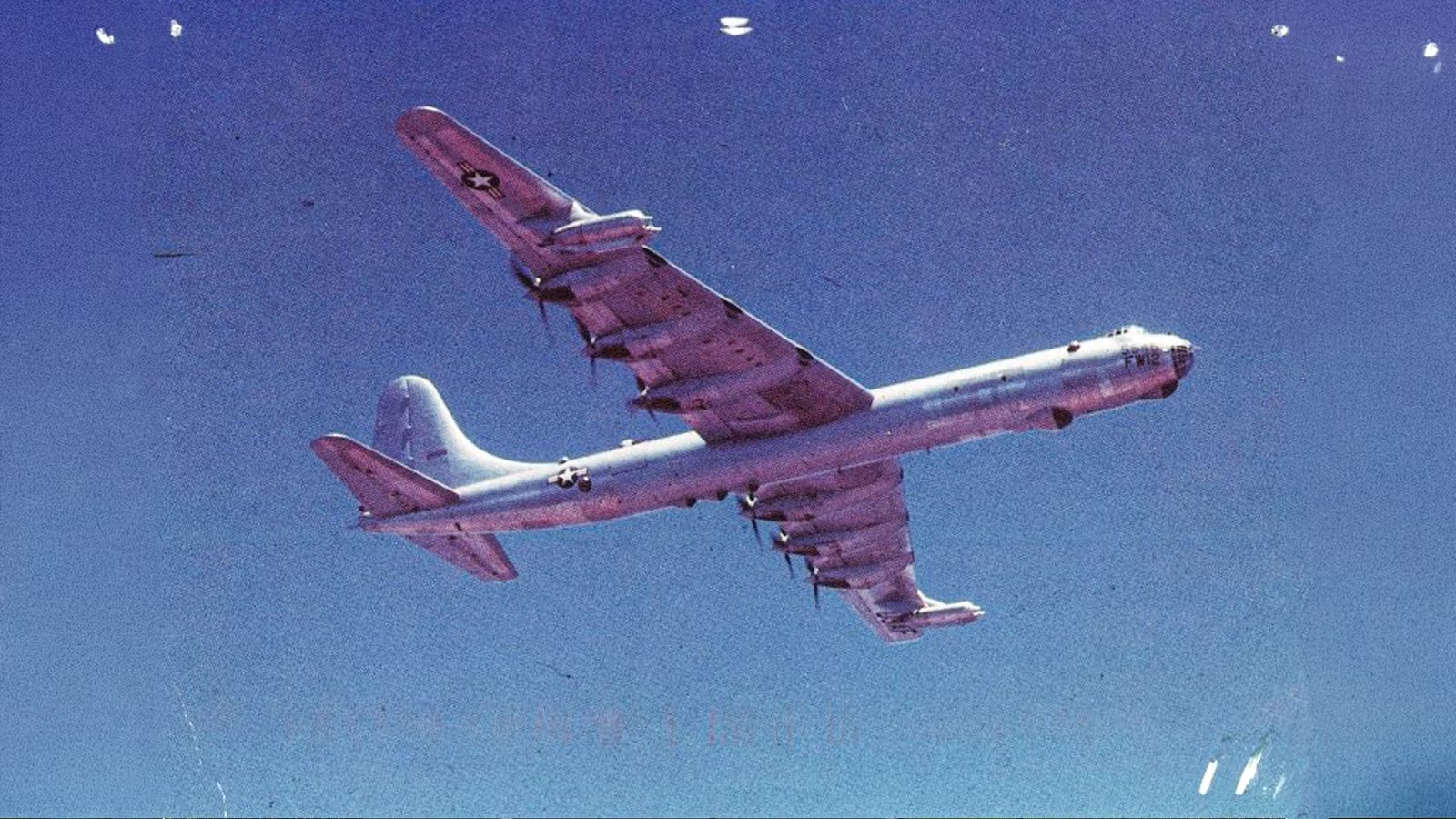
The Convair B-36 Peacemaker was a true masterpiece of military aircraft development and still the largest, mass-produced, piston engine aircraft of all time. It has some incredible credentials, but was it an engineering liability? A persistent question among enthusiasts is whether all 336 spark plugs had to be changed every time it landed for service.
Designed with a maximum unrefueled range of 10,000 miles (16,093 km) without relying on forward allied airfields, the B-36 relied on six massive Pratt & Whitney R-4360 Wasp Major radial engines mounted backward on the wings, which is what this article will look inside of. This article explores the mechanical reality behind the 336 spark plug count, examining how engine design, fuel mixture, and extended flight times created a maintenance workload that blurred the line between official military protocol and air base legend.
It Was Not A Rule, But A Necessity

The math behind the 336 spark plug figure is entirely accurate, but claims that ground crews replaced every single plug after every routine flight are slightly exaggerated. Strategic Air Command regulations did not require a complete ignition system overhaul after brief local sorties or routine training hops, as per the National Interest. However, after long-endurance missions lasting 24 to 40 hours, mechanics frequently pulled and replaced the entire set of 336 plugs because of severe lead buildup and heat degradation.
The arithmetic behind the famous number comes down to the sheer scale of the powerplants on the B-36. Each of the six R-4360 engines featured 28 cylinders arranged in four spiral rows, with two spark plugs per cylinder to ensure complete combustion and ignition redundancy. Multiplying 56 spark plugs per engine across all six wing-mounted radial engines yields exactly 336 spark plugs on a single airframe.
During peak operations in the late 1940s and early 1950s, the extreme conditions under which the Peacemaker flew made massive spark plug swap-outs a recurring necessity rather than a rare event. High-octane leaded aviation gasoline, combined with extended periods of low-power cruise at high altitudes, heavily fouled the ignition electrodes. As a result, pulling hundreds of spark plugs became a standard post-flight task for ground crews trying to maintain fleet readiness.
A Highly Sensitive Engine

So how did ground crews actually decide whether to pull individual spark plugs or begin a total overhaul? Rather than following a strict calendar schedule, plug replacement depended heavily on engine airflow limitations, starting mishaps, fluid contamination, and harsh operating climates. The Pratt & Whitney R-4360 Wasp Major was notoriously sensitive to temperature and fuel quality, so specific operational triggers dictated how quickly its ignition system degraded.
Chief among these variables was the backwards-facing pusher layout of the six radial powerplants. Positioned behind the wing’s trailing edge, the engines received turbulent, disturbed airflow that starved the rear cylinder banks of essential cooling. This chronic overheating, combined with 115/145 high-octane leaded aviation gasoline, baked heavy lead deposits onto plug electrodes during long, low-power cruise profiles. Furthermore, an improperly managed engine start could easily force unburned oil into the lower cylinders, instantly fouling multiple plugs before the bomber even reached the runway.
The environment where Strategic Air Command deployed the fleet further influenced maintenance decisions. Many B-36 bombers operated from arctic airfields in Alaska and northern bases without heated hangars, which meant mechanics had to perform engine maintenance outdoors in extreme sub-zero weather. Because diagnosing a single misfiring cylinder on a freezing flight line was excruciatingly difficult, ground crews often replaced every plug on a troubled engine, or across the entire airframe, rather than risk an in-flight engine failure over desolate terrain.
Hard Work For All Involved

Aviation historians and Strategic Air Command veterans describe the B-36 Peacemaker as an aircraft that required as much effort to keep in the air as it did to fly. Flight crews recognized that the six Pratt & Whitney R-4360 Wasp Major engines demanded constant vigilance, making every long-range mission an endurance test for both pilots and flight engineers.
To manage engine health during flights lasting over 24 hours, flight engineers relied on airborne ignition analyzers that displayed real-time electrical waveforms on onboard oscilloscopes. If an analyzer detected a misfiring cylinder while airborne, the airframe featured an extraordinary design feature to address it: catwalks inside the seven-and-a-half-foot-thick (2.3 meter) wings allowed crew members to crawl directly behind the engines in flight to inspect components, check fluid lines, and check for oil leaks.
These historical accounts show just why complete spark plug changes became legendary among ground personnel. Replacing a full set of 336 plugs required extensive labor, forcing mechanics to work tirelessly around all six engines with torque wrenches and anti-seize compounds. The sheer volume of hands-on work meant that maintenance squadrons were perpetually working to return landed bombers to alert status, reinforcing the B-36 reputation as one of the most labor-intensive aircraft ever operated by the military.
An Increase To 10 Engines?

Comparing the B-36 ignition system maintenance to other heavy bombers of the late 1940s and 1950s shows just how extreme the Peacemaker was. Predecessors such as the Boeing B-29 Superfortress relied on four Wright R-3350 engines with 18 cylinders each, totaling 144 spark plugs. Even the upgraded Boeing B-50, which adopted four R-4360 Wasp Majors, needed much fewer than the giant six-engined Convair design.
While four-engine bombers shared similar spark plug fouling problems, their smaller total component counts let ground crews perform routine maintenance in far less time. The massive jump to six piston engines on the B-36 pushed flight-line schedules to an unsustainable extreme, often requiring significant maintenance man-hours per flight hour. Adding four General Electric J47 turbojet engines to later B-36D models brought the total tally to 10 powerplants, creating an even more complex hybrid fleet before jet engines proved their superior reliability.
The stark difference in maintenance efficiency ultimately accelerated the B-36’s retirement in favor of all-jet platforms. Turbojet engines eliminated continuous spark-plug ignition, carburetors, and massive oil reservoirs, replacing intricate mechanical assemblies with continuous combustion systems. Transitioning to bombers like the Boeing B-47 Stratojet and B-52 Stratofortress allowed Strategic Air Command to maintain constant nuclear alert without subjecting mechanics to the endless cycle of pulling hundreds of fouled spark plugs.
A Short Flight Was Not Enough

While military lore paints a picture of 336 spark plugs being yanked out after every single touchdown, practical flight line operations included clear exceptions. Ground crews did not perform a total ignition overhaul after brief local sorties, pattern work, or short ferry flights. If post-flight engine ground runs and magneto checks indicated clean combustion without RPM drops, mechanics left the ignition system intact. Replacing all 336 plugs unnecessarily introduced severe operational risks, including cross-threading fragile aluminum cylinder heads, overtightening plugs on freezing flight lines, and introducing defects in hundreds of new ignition parts.
Maintenance protocols frequently called for targeted, partial spark plug replacements rather than a blanket airframe swap. If a flight engineer flagged a specific ignition breakdown on an airborne analyzer, ground mechanics focused their attention on pulling the 56 plugs on that individual powerplant, or strictly the affected cylinder bank. Furthermore, when later B-36 variants added four General Electric J47 turbojet engines to assist with takeoff and dash speeds, ground crews had to balance piston ignition work against jet turbine maintenance, managing labor based on logged pilot reports rather than indiscriminately stripping all six Wasp Majors.
Replacing all 336 plugs was a genuine, grueling requirement after long-endurance missions or severe engine oil-fouling events, but treating it as an absolute rule for every landing oversimplifies Strategic Air Command’s maintenance strategies. Repeating this maintenance cycle regardless of flight length would have been highly detrimental to the aircraft’s usability, and the more considered approach highlights how Air Force crews balanced airworthiness, flight safety, and extreme physical labor without over-servicing their bombers.
The Limits Of Engineering Possibility

The legend that the Convair B-36 Peacemaker required 336 spark plug replacements every time it touched down is rooted in real engineering facts, even if the routine frequency has been slightly embellished over time. Six Pratt & Whitney R-4360 Wasp Major engines, each with 28 cylinders and two plugs per cylinder, meant ground crews had to service 336 ignition points on a single airframe. Brief local flights did not automatically lead to a full ignition teardown, but long-endurance missions lasting tens of hours frequently ended with mechanics pulling all 336 plugs to clear severe lead deposits and oil contamination.
Ultimately, the B-36 represents both the grand peak and the practical limit of mass-produced piston-engine aviation. The complexity of maintaining 168 cylinders and 336 spark plugs across six backward-facing engines, often on freezing flight lines in Arctic conditions, demonstrates the tremendous human effort required to maintain strategic air power in the early Cold War era. Ground personnel worked relentlessly to keep these giant bombers combat-ready, and the tale still lives on today.
As jet propulsion matured, the unsustainable maintenance burden of multi-row radial engines quickly forced a technological shift across Strategic Air Command. The arrival of all-jet bombers like the Boeing B-52 Stratofortress eliminated hundreds of high-wear mechanical parts, showing that operational readiness depended as much on maintenance efficiency as it did on range and payload. Today, the 336 spark plug story stands as a fascinating monument to an era when sheer mechanical muscle pushed aviation engineering to its absolute boundaries.
Catch what other trackers miss
Emergency squawks, holds, NOTAMs — live signals, no signup.
Open tracker
Catch what other trackers miss
Emergency squawks, holds, NOTAMs — live signals, no signup.
Open tracker