dailynewsnblog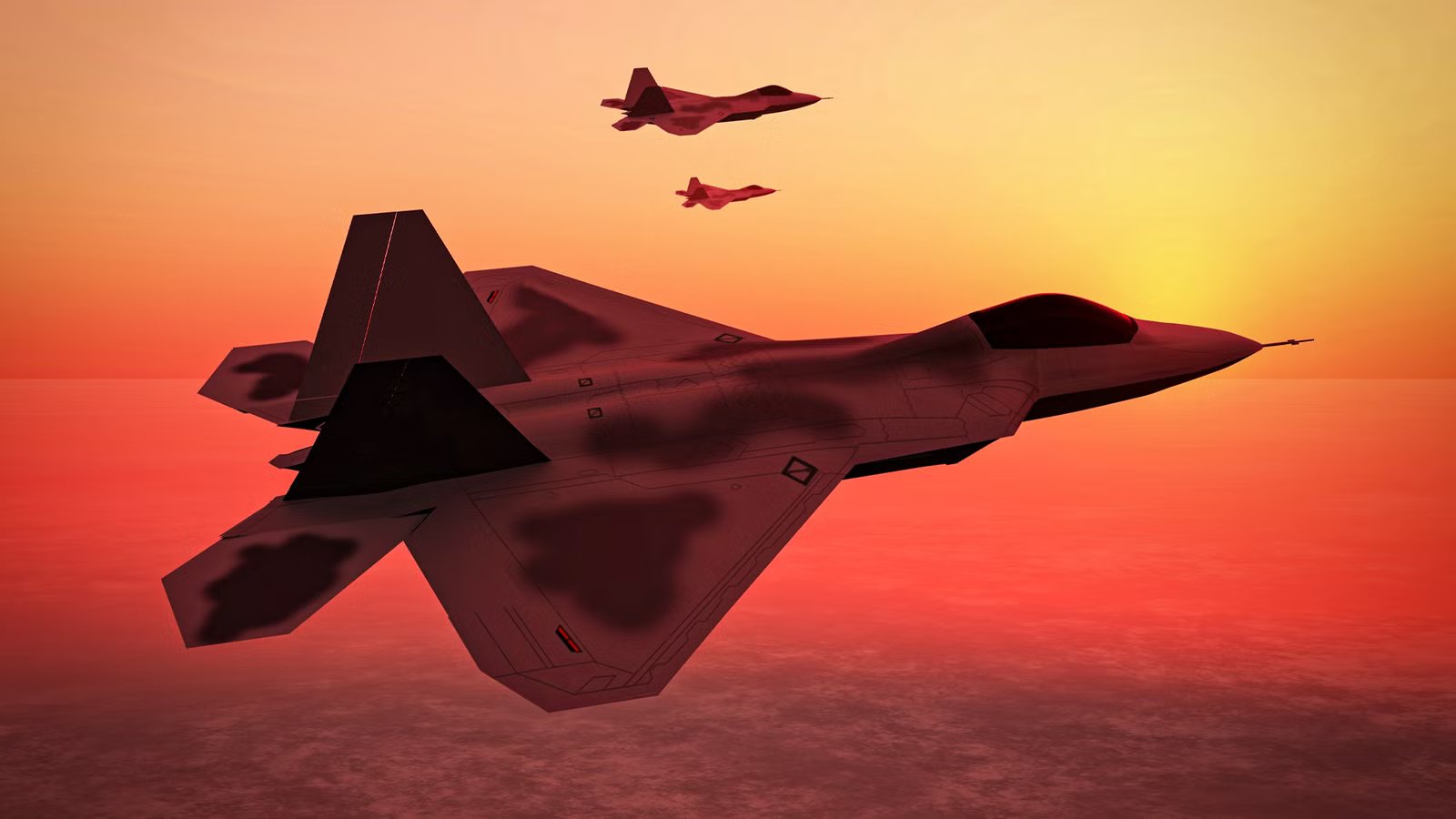
The F-35C made history when it became the first carrier-capable stealth fighter jet to achieve initial operating capability. The Joint Strike Fighter has completely revolutionized naval aviation by bringing stealth technology to tailhook squadrons for the first time in history. Still, that has not deterred America’s Navy from pursuing the next evolution in carrier air power.
The Navy’s sixth-generation strike fighter program, the F/A-XX, has been on the back burner since the US Air Force F-47 was announced. Boeing was awarded the contract to begin ramping up the program for the USAF in a sudden decision by the administration of President Donald Trump, and the Navy’s program was put on life support to maximize resources and workforce available for the F-47.
Congress Resuscitates The F/A-XX Budget

The F/A-XX program was officially launched in 2012, with formal requirements being issued in 2015. Lockheed Martin was eliminated after the 2025 downselect, which narrowed the field to Boeing or Northrop Grumman. Funding in 2026 and the budget request for 2027 seem to indicate that significant progress will be many years down the road.
On January 20, the House and Senate Appropriations Committees increased the funding for the F/A-XX program by roughly ten times its existing budget to a total of $972 million. In July, USNI News reported that the Navy’s annual wishlist of programs without funding included a desired $1.4 billion for research and development of the air wing of the future, or AWOTF.
The unfunded priorities list is an annual list by Congress to outline each service branch’s desired projects that exceed current budget constraints. The Navy’s firm budget for 2026 only requested $74 million to sustain activities already underway on the F/A-XX development as the AWOTF introduces a completely new class of unmanned combat air vehicles, like the MQ-25 or X-47. The F/A-XX will be a manned, or even optionally manned, strike fighter that serves as the foundation of a ‘system of systems.’ The F-35C is not currently capable enough to completely replace the F/A-18’s position in the air wing, but the F/A-XX will surpass both.
Beyond The Super Hornet: The Ultimate Successor

The F/A-18E/F Super Hornet has had a long and illustrious career with the Navy, but it is a fourth-generation fighter, maybe fourth-generation-plus at best, so to make way for the new breed of strike fighter, it will have to be retired. The E/A-18G is also expected to be decommissioned from the fleet as its role as an electronic warfare support jet will be made obsolete by the technology onboard the next-gen strike fighter.
The F-35C was actually not intended to be a replacement for the Boeing F/A-18 EF Super Hornet strike fighter that is currently the backbone of the Navy’s Air Wings. It is a complementary platform as the first fifth-generation fighter jet to hit the flight deck, but the race is still on to develop a sixth-generation fighter jet, dubbed F/A-XX, to truly succeed the Navy’s strike fighter mission set.
Notably, this program looked like it was going to be sidelined when Boeing was awarded the contract to develop the Air Force’s Next Generation Air Dominance. Instead, lawmakers have resuscitated it with $897 million in funding to jump-start the engineering and manufacturing development phase.
The Tailhook Symposium 2025 convention of US Navy and Marine aviators hosted some exciting developments in the race for the next-generation strike fighter, known as the F/A-XX. In July, the budget request for the Navy’s fiscal year 2026 essentially defunded the program altogether, but that appears to have reversed course thanks to lawmakers.
The top competitors are currently a carrier variant of Boeing’s F-47 or an unnamed concept that has been teased by Northrop Grumman for renderings on social media. A decision may come as early as August under the newly accelerated program timeline. Once the winner has been awarded, the Navy is currently targeting initial operating capability for the first squadrons to deploy aboard aircraft carriers in the mid-2030s.
The Industry Race To The Downselect

The US Senate ultimately decided to approve the Navy’s sixth-gen fighter to continue its program independent of the USAF’s F-47 NGAD. The Navy’s top aviation officer, the ‘Air Boss,’ gave key testimony to lawmakers that stressed the program’s unique difference and the importance of designing the plane with carrier capability from the outset. The Navy’s full wishlist for next year was $7.4 billion, including all programs and projects.
Vice Admiral Daniel Cheever, Commander of Naval Air Forces, or Air Boss, was quoted by the Aviationist as saying:
“It’s going to be a very exciting aircraft. I’m looking forward to the downselect. I’ll leave it to the professional acquisition folks…but I’m looking forward to that because that sixth-generation means air superiority in that timeframe in the future, which means sea control. And as long as you have air superiority, you have sea control around the globe.”
In the latest update, the Pentagon officially elevated the F/A-XX to an ACAT-1 high-priority program, transferring decision authority directly to the Office of the Under Secretary of Defense for Acquisition and Sustainment. The Chief of Naval Operations, Admiral Daryl Caudle, announced that it would proceed to the EMD phase in pursuit of a final contender.
The Tip Of The Spear: Power Projection

The carrier air wing is a vital element of not only US Navy operations, but the US Armed Forces as a whole. The Navy and Marines’ fighter squadrons are often first in-country, the tip of the spear, when conflict breaks out. The F-35B and C variants are a powerful addition, but the F/A-XX will be far more capable and directly replace the aging F/A-18 Super Hornet instead of complementing it.
For years, detractors of carrier strike group strategy have argued that aircraft carriers are obsolete in the era of stealth technology and long-range standoff missiles. The advent of hypersonic cruise missiles like China’s anti-ship DF-27 and the proliferation of stealth aircraft like the J-20 has given a superficial boost to this point of view; however, there are fundamental fallacies in this argument. The most basic value of an aircraft carrier is the fact that it is literally a moving air base.
The carrier strike group is rapidly deployable to anywhere on Earth, putting 80 aircraft within a short distance of enemy forces. Combining the exceptional flexibility of the CSG with sixth-gen air power will make it one of the most powerful military assets in the world. The fearsome flotilla that accompanies the carrier can perform a wide variety of missions, and a simple presence is often enough to escalate potential hostilities.
The Flying Quarterback And Its Loyal Wingmen

The F/A-XX allows the US Navy to constantly move its launch positions across millions of square miles of open water. In the Indo-Pacific, terrestrial bases are targets, while movable airfields are weapons. The United States and its allies maintain vast, heavily armed air bases in Japan, Okinawa, Guam, and the Philippines, collectively known as the First and Second Island Chain. In the event of a conflict, China can use precision ballistic and cruise missiles to strike them.
The US Indo-Pacific strategy relies on using the F/A-XX to exploit this mobility by massively extending the carrier’s reach. The F/A-XX is being engineered with a massive internal fuel capacity and advanced variable-cycle engines, giving it an unrefueled combat radius exceeding 1,000 miles. This single advancement allows US supercarriers to park safely outside the heart of China’s hypersonic missile envelope while still threatening the Chinese mainland.
The F/A-XX will not fly alone. It acts as a flying ‘quarterback’ for stealthy, low-visibility Collaborative Combat Aircraft derived from stealth drone programs like the X-47. They act as scout nodes, electronic warfare jammers, and ‘missile trucks’ carrying extra ammunition. The F/A-XX protects its human pilots by sacrificing inexpensive drones to absorb enemy air-defense missiles. The F-35C completes the package by functioning as a low-observable, passive sensor node that provides target data to the carrier strike group’s ships or other harder-hitting aircraft.
Exploiting Mobility In The Indo-Pacific

The equipment necessary to sustain and operate combat-effective squadrons on a ship at sea is unique. The Air Force, Navy, and Marines each maintain separate units that are tailored to fulfill specific mission sets for each’s unique needs. The challenges of flying from a ship are more than simply the corrosive power of salt water. An offshoot of the F-47 may still become the basis of the F/A-XX, but it will require extensive design modifications from its USAF cousin if it does win.
The Navy’s independent approach in pursuing a sixth-generation fighter has also allowed for greater flexibility in incorporating new technologies, particularly those involving AI and autonomous systems, according to Aviation Week. AI is expected to make it possible to make better, faster decisions in the heat of battle. Pilots and squadrons can use resources more effectively and efficiently.
By combining extreme stealth, a 1,000 miles (1,609 km) striking range, and disposable drone swarms, the F/A-XX ensures that the aircraft carrier remains the most lethal, survivable, and indispensable weapon in the US Pacific strategy. By operating fluidly outside the primary threat zones, the F/A-XX and its integrated drone fleet can launch persistent, heavy-hitting counter-offensives. This mobility complicates enemy planning, secures the gaps between the island chains, and ensures that allied forces can maintain air and sea dominance across the Indo-Pacific.
The F/A-XX’s ability to work with unmanned systems will likely be its defining characteristic, aside from stealth. That will be a key component of the jet’s development, marking a dramatic shift from previous fighter designs. Zona Militar reported that the F/A-XX will focus on air superiority and strike capabilities like the current Super Hornet, but with greater performance and lethality across the board. The next-gen fighter will also have stealth capabilities that surpass anything in the F-35.