dailynewsnblog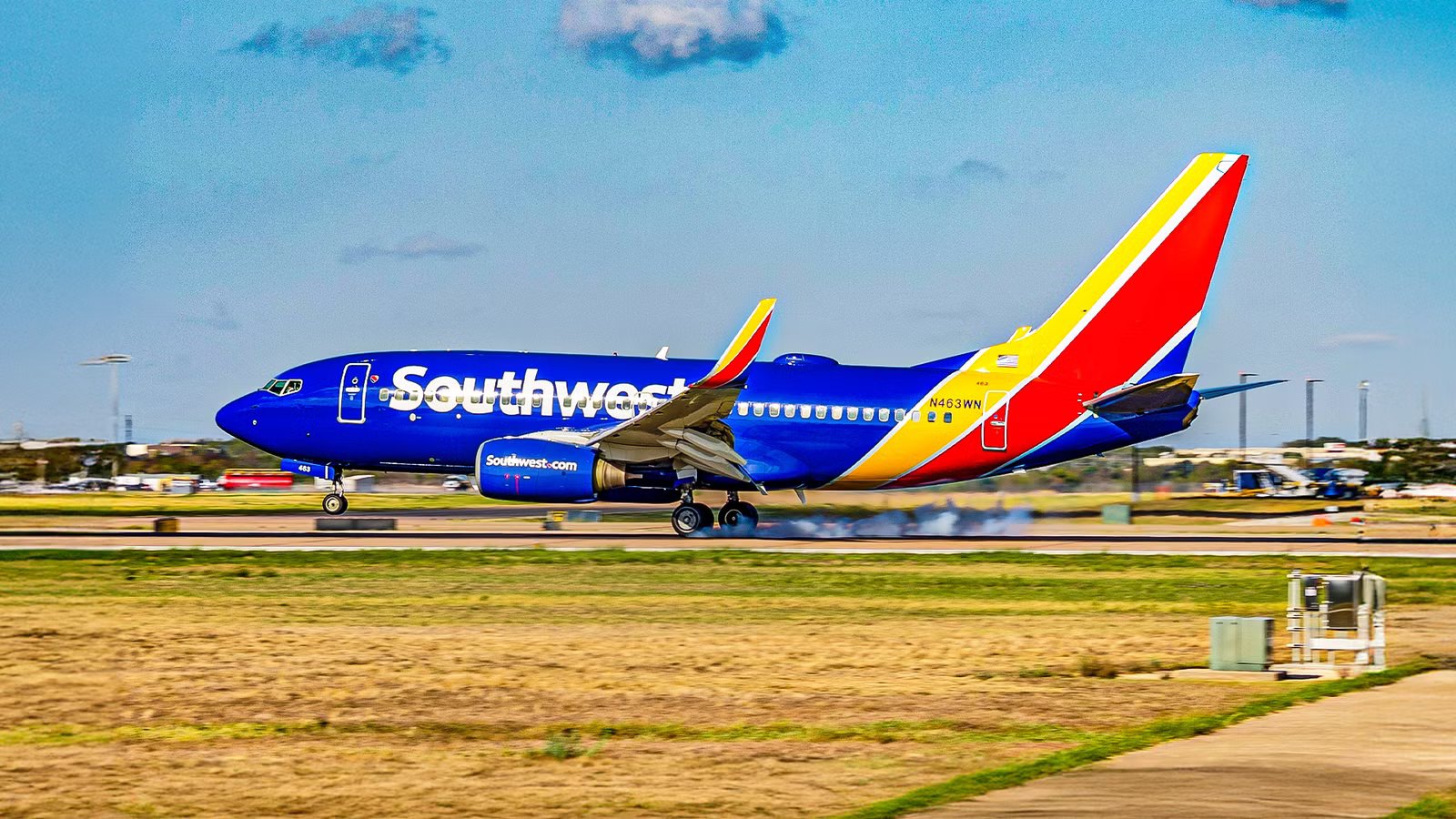
Air travel can feel complex, especially during takeoff and landing, the two phases most passengers instinctively pay the most attention to. Of these, landing tends to invite the most scrutiny. When an aircraft touches down with a noticeable thud instead of a gentle glide, it’s completely natural to wonder if something went wrong. Many travelers assume that a “perfect” landing should be almost unnoticeable, and anything firmer must be the result of an error or lack of skill. That perception, while understandable, doesn’t fully reflect how aviation actually works.
In reality, pilots are not judged on how smooth a landing feels, but on how safe, controlled, and precise it is under the given conditions. A landing that feels firm is often deliberate and, in many situations, the safest possible choice. Factors like runway length, weather, and aircraft performance all influence how a touchdown is executed. Join us as we explore why pilots sometimes land harder than expected, and why those landings are often a sign that everything is going exactly to plan, instead of signaling a ‘poor’ landing.
The Difference Between Firm And Hard Landings

A common misunderstanding among passengers is that any noticeable or “bumpy” touchdown is automatically considered a hard landing. In everyday language, people tend to label anything that feels slightly firmer than normal as “hard.” Hard landings do occasionally occur, sometimes so hard they can cause damage to aircraft, but in general, the terminology is far more precise. A firm landing is a controlled, intentional technique used by pilots, while a hard landing is a technical event where the aircraft experiences forces higher than normal operating forces.
Pilots are actually trained to deliver firm landings when conditions require it. This means guiding the aircraft onto the runway with a deliberate, positive touchdown rather than trying to ease it on as gently as possible. While it may feel abrupt from the passenger cabin, a firm landing ensures that the aircraft establishes solid contact with the runway immediately. This is especially important for activating braking systems and maintaining control.
By contrast, a true hard landing is not intentional and is treated seriously in aviation operations. It may occur due to factors like excessive descent rate, misjudgment during the flare (the final phase before touchdown), or sudden environmental changes such as wind shear. When such an event happens, airlines typically require inspections to confirm that no structural damage has occurred. So while passengers may casually use the term “hard landing,” in professional aviation, it represents a distinct and undesirable situation.
Why Smooth Isn’t Always Safer

There is a widespread belief that the best pilots always deliver perfectly smooth, barely noticeable landings. While smoothness can be a sign of skill in ideal conditions, such as minimal or favorable wind and a long runway, it is not the primary goal of landing an aircraft. In reality, safety, consistency, and accuracy take precedence over passenger comfort.
One of the key risks of trying to achieve an ultra-smooth landing is “floating.” This happens when the aircraft remains slightly airborne above the runway for longer than intended, often because the pilot is trying to reduce the descent rate too much by flaring too early when the aircraft enters the ground effect. While this may result in a gentle touchdown, it also means the aircraft travels farther down the runway before making contact. On long runways, this may not be an issue, but on shorter or more constrained runways, it can significantly reduce the available stopping distance.
Pilots are trained to avoid excessive floating by prioritizing a precise touchdown point. This often means accepting a slightly firmer landing in exchange for accuracy. In many situations, a firm landing is actually the safer choice because it ensures that the aircraft touches down where planned, allowing braking and deceleration systems to function as intended. In this sense, what feels less comfortable to passengers can actually represent better airmanship and decision-making.

The Hardest Airports In The World To Land At
A look at some of the most challenging approaches in the world, and what makes them so difficult for pilots.
The Role Of Runway Length And Design

Runway characteristics play a major role in how a landing is executed and how it feels to passengers. Not all runways are created equal; some are long and forgiving. Think of large hub airports such as  London Heathrow Airport (LHR),
  Denver International Airport (DEN), or airports that are, or were, military bases. Contrary to this, others are short, sloped, or surrounded by obstacles or water that require precise handling. In Europe, think of Cristiano Ronaldo Madeira International Airport (FNC) and Innsbruck Airport (INN), or in the US, Aspen-Pitkin County Airport (ASE) or Telluride Regional Airport (TEX).
On shorter runways, pilots must be especially careful to touch down early and decisively. Every meter of runway counts, and delaying a touchdown by even a few seconds can reduce the margin available for braking. In these situations, a firm landing is not just preferred, it is often essential. The goal is to get the aircraft on the ground quickly and safely, minimizing the risk of overrunning the runway.
Additionally, certain airports have unique design features that influence landing technique. Some may require steeper approaches due to surrounding terrain or noise abatement procedures. Others may have displaced thresholds, meaning the usable landing area begins farther down the runway. These factors can all contribute to landings that feel more abrupt. What passengers perceive as a “rough” landing is often simply the result of operating within the constraints of a specific airport environment.
Weather And Environmental Conditions

Weather is one of the most significant variables affecting how a landing feels. Even the most skilled pilots must adapt their techniques based on conditions such as wind in mountainous or coastal areas, turbulence, rain, and visibility. These factors can make smooth landings more difficult, or even less desirable from a safety standpoint. More extreme conditions, such as storms, snow, ice, and even wind shear, can all be contributing factors.
Crosswinds are a particularly important consideration. When the wind blows across the runway, pilots must carefully align the aircraft with the runway centerline while maintaining control of its descent. This often involves specific techniques that can result in a stronger touchdown. The goal is to ensure that the aircraft’s wheels make solid contact with the runway as soon as possible, reducing the risk of drifting or losing alignment.
Similarly, wet or icy runways demand prompt and effective braking. A firm landing helps transfer the aircraft’s weight onto the wheels immediately, improving traction and allowing braking systems to work efficiently. In turbulent conditions, minor fluctuations in airspeed and altitude can also affect the smoothness of the landing. Even when everything is handled correctly, the result may feel less gentle simply because the environment is less stable.

White Out: How Do Airports Manage Winter Storms?
A hot topic after recent events!
Aircraft Control And Safety Systems

Modern aircraft are equipped with a range of systems designed to assist with deceleration and control after touchdown. These include spoilers (which reduce lift), wheel brakes, and reverse thrust. However, many of these systems depend on the aircraft being on the ground to function effectively.
Spoilers, for example, deploy automatically upon touchdown to “dump” lift and press the aircraft onto the runway. This increases the effectiveness of braking by ensuring that the wheels, rather than the wings, support more of the aircraft’s weight. A firm landing helps trigger this process quickly and reliably.
Reverse thrust, which redirects engine power forward to slow the aircraft, is also more effective once the wheels are fully in contact with the runway. If the aircraft were to touch down too gently and remain partially airborne, these systems might fail to engage promptly. For this reason, pilots often favor a positive, controlled touchdown over an overly smooth one, particularly when rapid deceleration is needed.
Human Factors And Variability

Despite rigorous training and standardized procedures, no two landings are the same. Aviation involves a complex interaction between human decision-making, aircraft performance, and environmental conditions. Even small variations can influence how a landing feels from onboard and looks from outside the aircraft.
Pilots must continuously assess and adjust parameters during the final approach. Changes in wind speed, minor shifts in aircraft configuration, or slight differences in timing can all affect the outcome. Sometimes, a landing that is technically well-executed may still feel harder than expected because of subtle factors. This variability is a normal part of flying and does not indicate a problem.
Human factors also play a role in perception. Passengers seated near the landing gear may feel the impact more strongly than those seated over the wings or toward the front of the aircraft. Expectations also matter; if someone anticipates a perfectly smooth landing, even a normal, firm touchdown may feel more dramatic. Ultimately, what matters most is not how the landing feels but whether it is conducted safely and within operational limits. That is the ultimate role and responsibility for a pilot.