dailynewsnblog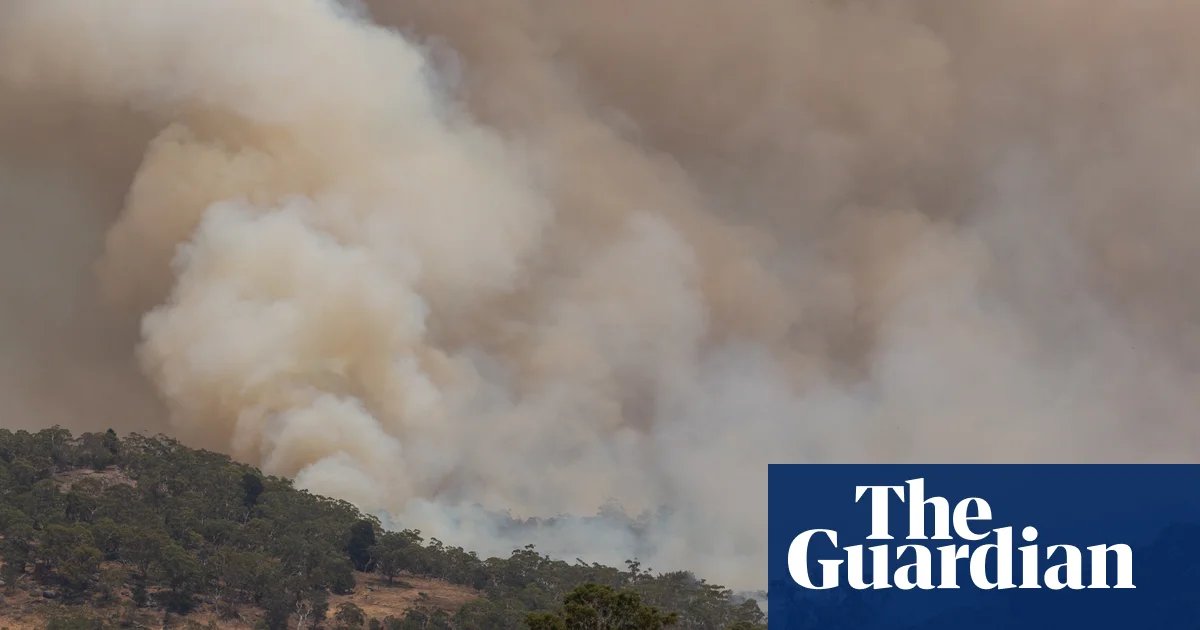
All-time temperature records could tumble in Victoria and New South Wales over coming days, as a dome of intense heat pushed into south-east Australia, bringing extreme to catastrophic fire conditions.
Starting from Saturday, the Bureau of Meteorology has forecast a prolonged period of intense heat across South Australia, Victoria, New South Wales and southern Queensland. Some inland areas could experience more than five days above 40C.
The heat would be “challenging for everyone” said senior meteorologist Jonathan How, who reminded people to stay cool, and stay up-to-date with heat and fire warnings.
High to extreme fire danger was expected across several southern states, with catastrophic fire danger forecast for the Yorke Peninsula in South Australia on Saturday.
Sign up: AU Breaking News email
Fires were still burning in many parts of Victoria after an intense heatwave earlier in January, which analysts said was made five times more likely due to global heating.
While there was no meaningful rain forecast over coming days, winds were not expected to be as gusty or damaging in the coming heatwave, How said.
At their peak, temperatures could soar into the high 40s, challenging all-time temperature records in some states.
The heat was already rising in South Australia, with Oodnadatta hitting 34.7C at 10am Friday. Adelaide was forecast to reach 42C on Saturday, as riders in the Tour Down Under faced their most demanding stage at Willunga Hill.
In Victoria, some centres in the Mallee could see temperatures approaching 49C on Tuesday, How said, challenging the state’s hottest ever temperature (48.8C in Hopetoun on 7 February 2009). Temperatures in Mildura were expected to escalate from 43C on Saturday, climbing to 48C on Tuesday.
In Melbourne, where the Australian Open is in full swing, temperatures were forecast to reach 40C on Saturday, followed by a secondary peak of 42C on Tuesday.
In New South Wales, the heat was expected to spike on Sunday and again midweek, with the Riverina, central west and north likely to bear the brunt. Bourke was forecast to reach 49C on Wednesday, approaching the state’s all-time record of 50.1C set at Wilcannia back in January 1939.
The small town of Thargomindah, in south-west Queensland, could hit 48C on Wednesday and Thursday.
In Western Australia, still subject to heat and fire warnings, a tropical low 660km north-west of Broome was expected to intensify to a category two cyclone – named Luana – as it approached the Kimberley coast.
Australia experienced its fourth-warmest year on record in 2025, with average temperatures up 1.23C nationally, according to the Bureau of Meteorology.
The climate crisis has increased the frequency and severity of extreme weather events, including heatwaves and bushfires.
Hotter than average days and nights were expected to continue until April for much of the country, according to the latest long-range forecast. Sea surface temperatures would remain warmer than average globally, including around Australia.