dailynewsnblog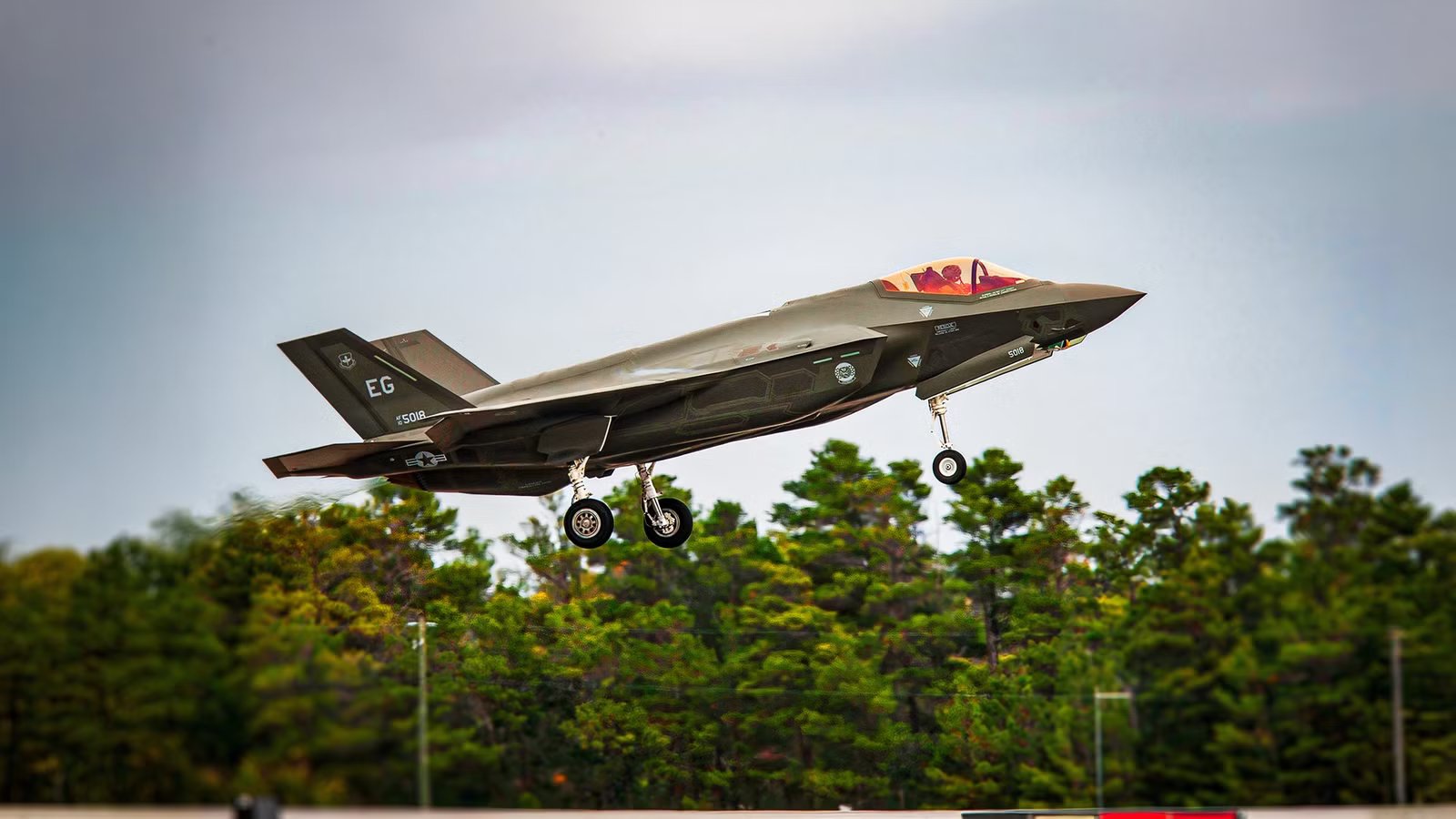
Saudi Arabia’s pursuit of the Lockheed Martin F-35A Lightning II would significantly expand its already formidable airpower, giving the Kingdom access to advanced fifth-generation capabilities. The aircraft could strengthen the Royal Saudi Air Force’s ability to counter regional threats while improving interoperability with its existing US-built fleet.
Yet the proposed sale carries significant security concerns. China’s history of espionage, combined with its expanding telecommunications presence in Saudi Arabia, raises questions about whether sensitive F-35 technology could remain secure once the aircraft enter Saudi service.
Saudi Arabia Is Not New To US Weapons Sales

The Kingdom of Saudi Arabia has traditionally been a primary recipient of US military equipment. Before President Trump took office in 2017, his predecessor, Barack Obama, finalized a weapons sale to the Kingdom worth $29.4 billion (£22 billion), one of the largest US arms agreements with Saudi Arabia at the time.
The arms deal provided immense airpower, setting the stage for the delivery of 84 advanced F-15SA fighter aircraft, upgrades to its existing fleet of 70 F-15 aircraft, and munitions, spare parts, training, maintenance, and logistics. According to the Stockholm International Peace Institute, American weapons accounted for 77 percent of Saudi arms imports between 2021 and 2025, highlighting the country’s continued reliance on the United States for advanced military equipment and combat capabilities.
Building on its solid foundation of strike power, Saudi Arabia’s leadership is highly interested in acquiring America’s most advanced fighter jet. On September 17, 2026, the State Department approved a possible $24.3 billion (£18.4 billion) sale of 48 fifth-generation F-35A fighters to Saudi Arabia, with the possibility of potentially becoming operational in the early to mid-2030s, if the sale is finalized and deliveries proceed as expected.
According to The War Zone, the deal would also include 49 Pratt & Whitney F135-PW-100 engines, support equipment, spare parts, technical assistance, and training. If the sale materializes, this would allow the nation to join an exclusive group of 20 nations that have selected or currently operate the Lightning, while giving the RSAF access to advanced fifth-generation capabilities and greater interoperability with US and allied forces.
What The F-35 Means For Saudi Arabia

If the F-35A sale is completed, the Middle Eastern nation would further add to its formidable array of military aircraft. Today, the Royal Saudi Air Force (RSAF) has an active fleet of 916 aircraft, according to GlobalMilitary.net. Of these, 384 are combat aircraft, with F-15 Eagle variants forming the backbone of the combat fleet and providing the RSAF with a capable foundation of fourth-generation fighters for air superiority, strike missions, and other demanding operations.
Upon entry into the RSAF, the F-35’s advanced sensors and network-enabled systems would enhance its pilots’ situational awareness. This would be accomplished by providing them with a real-time, fused picture of a potential battlespace, a capability that would significantly enhance the RSAF’s existing fourth-generation fleet. The Lightning would improve a mission group’s effectiveness through its data-processing and sharing capabilities. Matched with its F-15s, the F-35 would gather situational data and share it with the fourth-generation aircraft, helping direct them to targets or targets of opportunity and improving mission effectiveness.
Further, operating the F-35 would bring greater interoperability between Saudi Arabia, Israel, and the United States in one of the most volatile regions on the planet. Through shared technology, doctrine, and mission planning, these countries could share threat information and coordinate operations more effectively, including precision strikes where necessary, thanks to the F-35’s advanced sensors.
The Kingdom Sits Within A Rough Neighborhood

Riyadh is likely anticipating a possible rearmament within Iran and the possibility that its arsenals could once again be teeming with domestically produced and foreign-bought medium- and long-range ballistic missiles and drones. In addition to a resurgent threat from Iran, Saudi defense planners maintain an ever-watchful eye toward Yemen and its militant Houthi activities.
Nadwa Al-Dawsari, an Associate Fellow at the Middle East Institute, spoke about the attacks in a letter to the US House of Representatives Committee on Foreign Affairs last month.
“Since 2015, the Houthis have launched more than 1,800 missile and drone attacks. Their missiles can reach targets roughly 2,000 kilometers away, while some of their drones have ranges of approximately 2,600 kilometers. Houthi weapons can now threaten targets across the Arabian Peninsula, Israel, U.S. forces in the region, and vessels transiting the Red Sea and Bab al-Mandab.”
The primary sponsor of the terror group, which has an estimated strength of 350,000 fighters, is Iran, according to Seoul Economic Daily. The main vector for the delivery of small arms, ammunition, drones, and ballistic missile components is illicit trafficking networks that continually operate from the Gulf of Oman along the Arabian Sea to their destinations in Yemen via the humble dhow. These maritime routes sustain the group’s military capabilities while making interdiction particularly challenging for regional security forces and naval assets.
According to the International Institute for Strategic Studies, approximately 4,300 dhows operate in the Arabian Sea, largely in an unregulated environment. To substantiate this continual illicit flow, between May 2021 and January 2023 alone, the US Navy confiscated a vast quantity of weapons and ammunition while conducting security operations within the Gulf of Oman and the Arabian Sea. According to US Immigration and Customs Enforcement, this combined haul included more than 9,000 rifles, 284 machine guns, approximately 194 rocket launchers, more than 70 anti-tank guided missiles, and more than 700,000 rounds of ammunition.
A stealth platform such as the F-35 could help Saudi Arabia’s intelligence services provide ISR coverage of this traffic, including the ports of origin and destination, and conduct precision strikes if needed. The aircraft would also expand the Kingdom’s defense capabilities within the region while giving Saudi forces greater awareness of maritime activity along these important supply routes.
It Is Believed China Could Gain Access To Secrets

While the sale of the 48 F-35As to Saudi Arabia appears to be gaining momentum, there have been loud warnings about the very real possibility of Chinese espionage efforts to access the aircraft’s technology. A key opponent of the sale is Congressman Raja Krishnamoorthi (D-IL), a senior member of the House Permanent Select Committee on Intelligence. The representative opposed the proposed deal on the day it was officially announced,September 17.
Congressman Krishnamoorthi commented on the proposed arms sale.
“The Trump Administration should not move forward with its proposed sale of F-35 fighter jets to Saudi Arabia when our own intelligence community is warning that it could put the crown jewels of American military technology within reach of the Chinese Communist Party … We must not sell our most advanced fighter jet anywhere the CCP may be able to get its hands on the technology inside it.”
This Congressman’s worry concerning the proposed arms deal is quite real, as Chinese espionage activities have harvested vast quantities of information and targeted numerous US government agencies. The Institute for National Security Studies has detailed that between 2000 and 2021, China engaged in 160 known espionage incidents that targeted the White House, State Department, Department of Commerce, Department of Defense, Homeland Security, Department of Energy, and Department of Labor, military branches, intelligence agencies (CIA, FBI, DIA), and NASA, as well as high-profile defense industries, such as Lockheed Martin, Boeing, and Raytheon.
With this in mind, if the F-35 does head to Saudi Arabia, these advanced aircraft will be stored in an environment deeply penetrated by the Chinese telecom industry, according to House of Saud. In 2023, Huawei opened a cloud facility in Riyadh that supports Saudi government services and artificial intelligence capabilities. Additionally, China Telecom launched a project in 2024 that delivers 5G internet services, cloud computing, and AI to Saudi government institutions. Through these channels, Chinese intelligence operatives could potentially attempt to access sensitive data about the F-35.
Denmark’s public transportation network has already shown that Chinese-made products that depend on their manufacturers’ software can be remotely operated, The Guardian reported. In November 2025, authorities in the Northern European nation began investigating a security loophole in hundreds of Chinese-made electric buses that could potentially allow them to be remotely deactivated.
The investigation found that the Chinese supplier, Yutong, had remote access to the vehicles’ control systems for software updates and diagnostics, which could potentially be exploited to affect the buses while in operation. Thus, if a telecom company can access networks that support the F-35, it could attempt to exploit that access.
The F-35 Would Strengthen Saudi Arabia’s Airpower

Saudi Arabia has great reason to seek the F-35. The aircraft will improve interoperability across its fourth-generation fleet and provide enhanced ISR capabilities. Further, the multirole fighter will strengthen its regional strike capabilities by allowing it to hold at risk an adversary’s military and commercial infrastructure, such as Iran’s.
Yet the risk of espionage by a state competitor such as China is serious, as Congressman Krishnamoorthi highlighted. Further, Chinese telecommunications infrastructure in Saudi Arabia creates potential avenues through which sensitive information could be targeted. This concern is underscored by the security vulnerabilities discovered in Chinese-made buses in Denmark, where the manufacturer had remote access to vehicle control systems.
However, one of the most direct pieces of evidence concerning the potential relationship between Chinese private organizations and the country’s intelligence apparatus is Chinese law itself. The Center for Strategic and International Studies reports that Article 14 of the Intelligence Law of the People’s Republic of China states: “National intelligence work institutions lawfully carrying out intelligence efforts may request that relevant organs, organizations, and citizens provide necessary support, assistance, and cooperation.”
This legal framework raises legitimate concerns about the security of sensitive information handled by Chinese companies operating within Saudi Arabia. If Chinese telecommunications companies have access to infrastructure connected to networks supporting the F-35, the possibility of attempts to obtain sensitive information cannot be dismissed. Consequently, the potential F-35 fleet headed to Saudi Arabia could give the Chinese intelligence apparatus opportunities to acquire information Washington would never want in the hands of a geopolitical competitor.