dailynewsnblog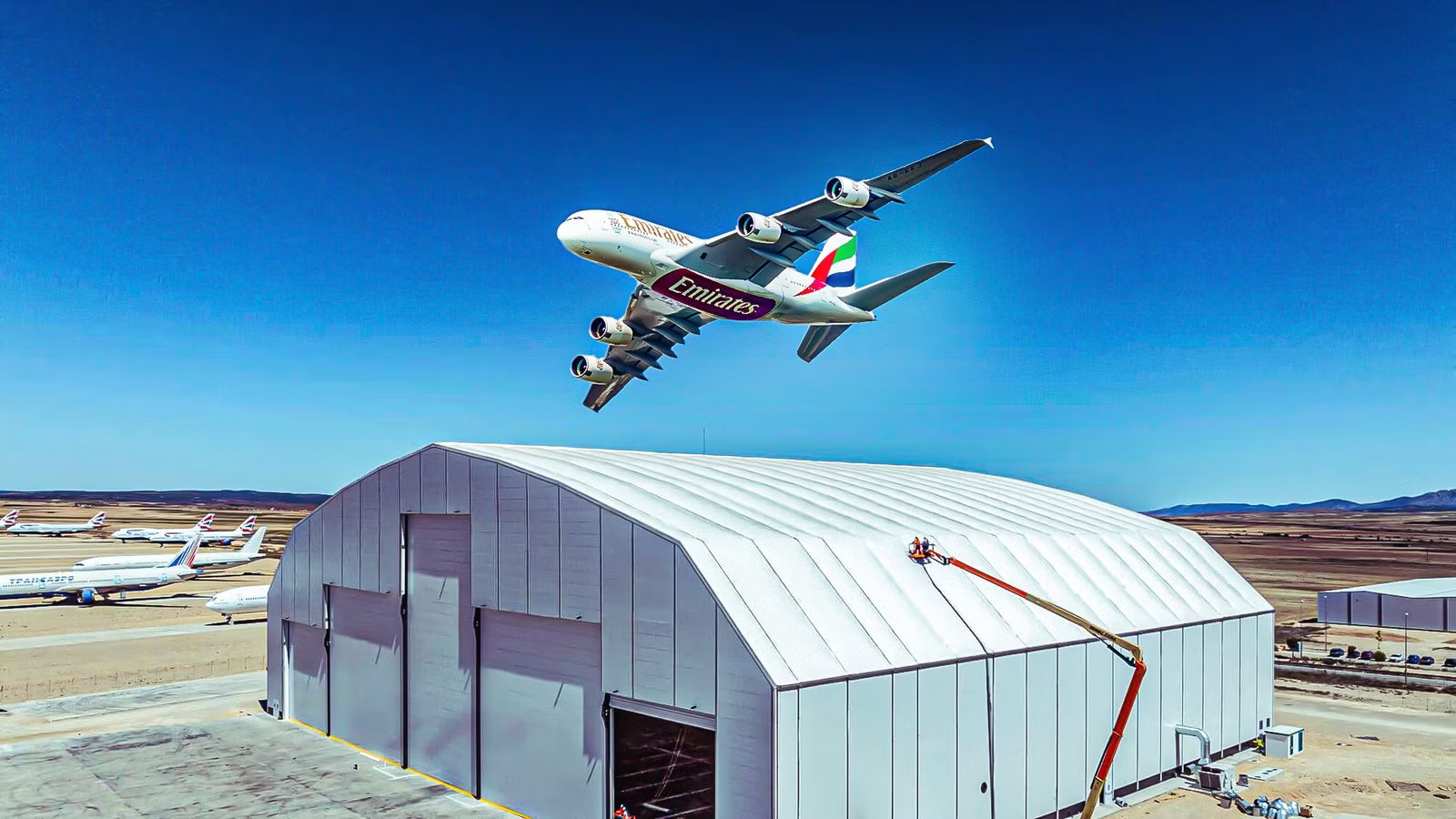
Teruel Airport in eastern Spain has no passenger terminal and no scheduled flights. It is Europe’s largest aircraft storage facility, operated by Tarmac Aerosave, with capacity for approximately 140 aircraft and dedicated hangar infrastructure built to handle the Airbus A380. The facility opened in 2013 and has expanded four times since, most recently in October 2024 with a fourth A380-capable hangar constructed specifically because existing capacity was fully booked.
The A380s arriving at Teruel are heading for two different outcomes. Some are being prepared to return to airline service through heavy maintenance checks and cabin refurbishment. Others are being permanently dismantled, with engines, landing gear, and components removed for the secondary parts market before the airframe is recycled. Both processes run at the same facility, managed by the same workforce, and both are currently operating at capacity.
Why The Middle Of Spain Became The A380’s Most Important Address

Teruel Airport sits on a semi-arid plateau in Spain’s Aragon region at roughly 1,000 meters above sea level, with 242 days of sunshine per year and consistently low humidity. Those conditions are the primary reason the facility exists where it does. Low humidity slows the corrosion process that degrades stored aircraft over time, stable temperatures reduce thermal cycling stress on airframe materials, and dry air minimizes moisture ingestion in sealed engine nacelles and unpressurized cavities. The site was originally a military airfield used during the Spanish Civil War before being converted to its current purpose, opening as a commercial aircraft storage and maintenance facility in 2013.
Tarmac Aerosave, which operates Teruel alongside sites in Tarbes and Toulouse in France, was founded in 2009 as a joint venture with Airbus, Safran, and Suez among its shareholders. The company has recycled more than 220 aircraft since 2007, and 75 percent of all Airbus A340s recycled worldwide have been processed at its facilities. The Teruel site now has capacity for approximately 140 aircraft and 20 engines simultaneously and employs more than 230 people, with a further 50 roles being added in 2026 to support expanding A380 demand.
The boneyard image the facility has acquired through aerial photographs of its crowded aprons is only part of the picture. Around 80 percent of aircraft that pass through Tarmac Aerosave’s facilities end up returning to service, with most activity covering transitional work between lessees, maintenance checks, cabin refits, and repainting. Dismantling and recycling run alongside that, but represent a minority of total throughput. For the A380, both activities are now running simultaneously at capacity.
The New Hangar And What It Says About A380 Demand

Tarmac Aerosave inaugurated its third A380-capable hangar at Teruel in September 2023 and, within a year, had to build another one. The fourth hangar, opened in October 2024, was constructed in nine months at a cost of €15 million. It measures 95 meters in length, 85 meters in width, and 34 meters in height, large enough to accommodate one A380 or four A320-family aircraft. The structure uses a metal-textile design with a steel-and-aluminum frame and rock-wool panel insulation, built specifically to be demountable and reusable if the facility’s needs change in the future.
The reason for the expansion is straightforward. The original A380 hangar was fully booked for the next two years, and Tarmac Aerosave had no available indoor capacity for additional superjumbo work. Hangar space matters for A380 maintenance because the aircraft’s size makes outdoor work impractical for anything beyond basic storage preservation. Heavy maintenance checks, cabin refits, and the detailed inspections required before an aircraft can return to service all require a controlled indoor environment, and an aircraft the size of the A380 requires a very large controlled indoor environment.
The demand pressure reflects a broader shift in how the A380 fleet is being managed globally. Airlines that parked their superjumbos during the pandemic have spent the past two years deciding which airframes to bring back and which to retire permanently. Both decisions generate work for Teruel. Aircraft returning to service need heavy maintenance checks and cabin refurbishment. Aircraft being retired need dismantling and parts recovery. The volume of A380s passing through the facility in both directions has exceeded what Tarmac Aerosave built for, which is why a hangar designed to be erected in months rather than years was the chosen solution.
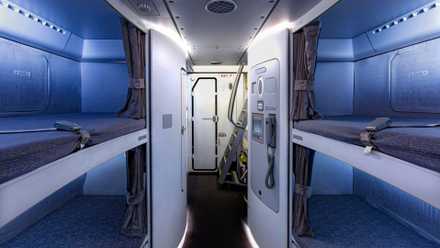
How Cabin Crew Rest & Sleep On The Airbus A380
Crewmembers are able to rest comfortably onboard the A380.
Storing And Reviving Superjumbos: The Return-To-Service Process

When an A380 arrives at Teruel for storage, the preservation process begins within days. Engines are sealed against dust and moisture ingestion, pitot tubes and static ports are covered, flight control surfaces are locked and protected, and the aircraft is placed on a maintenance schedule that keeps it in a condition where return to service remains viable. The level of preservation depends on how long the aircraft is expected to stay. Short-term storage assumes the aircraft will fly again within months. Long-term storage involves more extensive sealing and inhibiting of systems, with periodic checks to ensure nothing has deteriorated beyond acceptable limits.
Returning a stored A380 to service is a substantial undertaking. The process involves a full heavy maintenance check, which on an aircraft of this size means thousands of individual inspection tasks covering airframe structure, landing gear, hydraulic and pneumatic systems, flight controls, avionics, and engine condition. Cabin interiors are typically stripped and refitted, either to match the incoming operator’s configuration or to bring the existing interior up to current standards. The entire process can take several months, depending on the aircraft’s condition and the scope of work required. In 2026, several A380s arrived at Teruel from Qatar Airways, British Airways, and Emirates following airspace disruptions caused by the conflict involving Iran, adding to a facility already operating at capacity.
The return-to-service rate at Tarmac Aerosave’s facilities is roughly 80 percent across all aircraft types, but for the A380 the picture is more nuanced. Some superjumbos arriving at Teruel are genuinely being prepared to fly again. Others are arriving with no realistic prospect of returning to service, with their value lying in the engines, landing gear, and components they carry rather than in the airframe itself. Which category an individual aircraft falls into is typically determined before it arrives.
Catch what other flight trackers miss
Emergency squawks, holds, NOTAMs — live signals, no signup.
Open tracker
Catch what other flight trackers miss
Emergency squawks, holds, NOTAMs — live signals, no signup.
Open tracker
The Other Side Of The Hangar: Dismantling The A380

For an A380 that will not fly again, the dismantling process begins with parts harvesting. Engines come off first as the highest-value items, with a single Rolls-Royce Trent 900 or Engine Alliance GP7200 worth millions of dollars depending on condition and remaining life. Landing gear assemblies, auxiliary power units, avionics, flight control actuators, and cabin components all have active aftermarket value and are removed, inspected, documented, and entered into the parts supply chain. For airlines still operating the A380, sourced components from retired airframes are significantly cheaper than new parts from the manufacturer.
Once the reusable components have been removed, the airframe is broken down. Tarmac Aerosave has developed proprietary tooling for A380 dismantling, including a laser cutter capable of slicing through the superjumbo’s fuselage sections. The A380’s double-deck structure is considerably more complex to dismantle than a single-deck airframe, and the mix of aluminum, carbon fiber reinforced polymer, and GLARE materials requires different cutting and processing techniques depending on the section being worked on. Up to 92 percent of the aircraft’s total weight can be recycled, with aluminum alloys melted down for reuse and other materials sorted into appropriate recycling streams.
The growing volume of A380 dismantling at Teruel is increasing the availability of components on the secondary market, which in turn reduces parts costs for operators still flying the type. That feedback loop makes continued A380 operations more economically sustainable for the airlines that have chosen to keep the aircraft in their fleets.
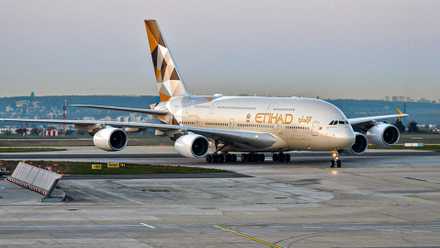
Back From 6 Years In Storage: What It Takes To Make An Etihad Airways Airbus A380 Fly Again
It is an enormous engineering project that can take months, and a lot of money, to complete.
The A380’s Split Fate And What Teruel Reflects About The Superjumbo’s Future

The A380’s position in 2026 is unusual. It is simultaneously being brought back to service by some of the world’s largest airlines and permanently dismantled by others.  Emirates continues to fly over 100 superjumbos as the backbone of its long-haul network. Singapore Airlines, British Airways, and Lufthansa have all returned A380s to active service as post-pandemic demand recovered on high-density routes where filling 500 seats is achievable. Air France, meanwhile, retired its entire fleet permanently during the pandemic, and several other operators have sent airframes to Teruel with no return date.
The split generally follows airframe age and condition. Younger, lower-hour A380s justify the cost of heavy maintenance and cabin refurbishment needed to return them to service. Older examples with higher airframe hours are economically marginal to revive, and their value lies in the engines, landing gear, and components they can supply to the secondary market rather than the routes they could still fly.
Teruel is where both outcomes are physically managed because Tarmac Aerosave is one of the very few facilities in the world with the hangar infrastructure, tooling, and workforce to handle the A380 at this scale. The superjumbo is not dying and it is not experiencing a renaissance. It is in a mid-lifecycle transition, with some airframes flying for decades to come and others being carefully taken apart to keep those aircraft in the air.