dailynewsnblog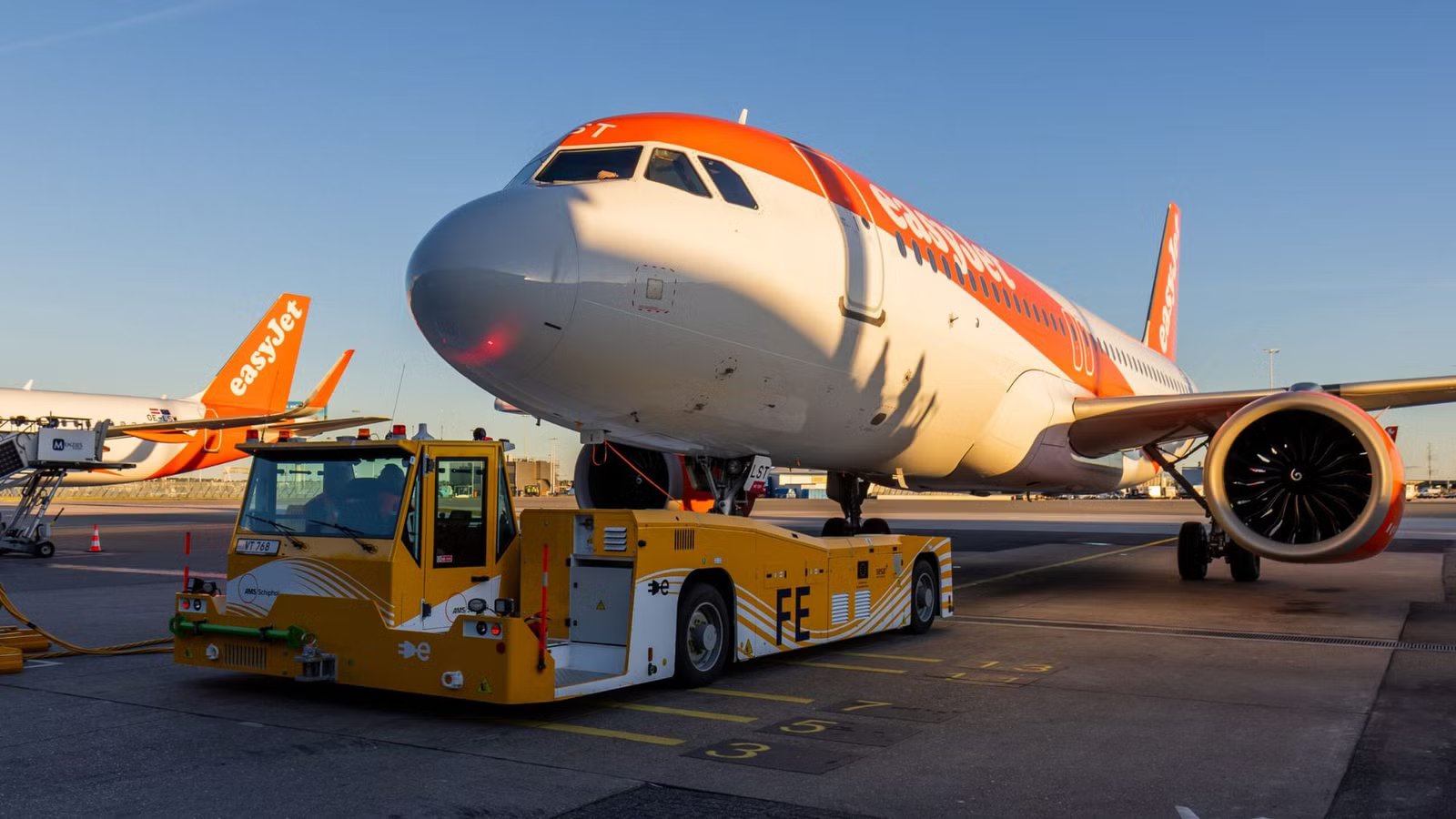
 Amsterdam Schiphol Airport (AMS) and easyJet are utilizing a new form of low-emission ground handling that could reshape how aircraft move around busy airports. The initiative centers on TaxiBot technology, a pilot-controlled towing system that allows aircraft to taxi without relying on their main engines. Instead of burning jet fuel while traveling between the terminal and runway, aircraft are pulled by a specialized vehicle while operating only their auxiliary power unit (APU), significantly lowering fuel use during ground movements. The first official easyJet flight using the system took place on April 30, after a successful trial earlier in the year, marking a major milestone for sustainable airport operations.
The project forms part of a wider push across aviation to reduce emissions using technologies that can be introduced immediately rather than decades from now. Schiphol, which has some of the longest taxi routes in Europe due to the distance between its terminals and runways, estimates that the technology could reduce taxiing fuel consumption by up to 65% on certain routes. An Airside report shows easyJet expects each TaxiBot-assisted flight could save approximately 210 lbs (95 kg) of fuel and prevent nearly 661 lb (300 kg) of carbon dioxide emissions from entering the atmosphere. Four of the airline’s Airbus aircraft are currently being adapted for TaxiBot operations as part of the initial rollout.
The Hidden Environmental Cost of Taxiing

Taxiing is one of the least visible yet most fuel-intensive parts of a short-haul flight. Before take-off, aircraft can spend long periods moving slowly across the airport with their engines running, consuming fuel even though they never leave the ground. At large hub airports such as Schiphol, these delays are amplified by runway layouts that often require aircraft to travel several miles before reaching the runway.
Jet engines are designed primarily for flight rather than low-speed ground movement; therefore, they operate inefficiently during taxiing. This creates avoidable emissions, particularly at congested airports handling hundreds of daily departures. Ground operations can account for a notable share of an aircraft’s overall fuel consumption on short sectors, making them an increasingly important target for airlines trying to reduce environmental impact.
Schiphol believes the TaxiBot system could dramatically cut these unnecessary emissions. By towing aircraft to the runway while keeping the main engines switched off, airlines can reduce fuel burn, lower nitrogen oxide emissions, and minimize noise pollution around nearby communities. The airport has described the program as one of the most practical near-term sustainability measures currently available to commercial aviation. Esmé Valk, Chief People & Transformation Officer at Amsterdam Airport Schiphol, said:
“By deploying the TaxiBot, we’re taking another practical step towards reduced emissions and noise on the apron. This is how we’re creating a healthier and cleaner workplace, and an ever more sustainable and modern airport that is ready for the future.”
How TaxiBot Changes Ground Operations

TaxiBot works differently from a standard airport tug. After attaching to the aircraft’s nose wheel, the semi-robotic vehicle lifts the wheel onto a rotating platform, allowing pilots to steer the aircraft directly from the cockpit. Although the tug supplies the movement power, pilots remain fully responsible for steering, braking, and communicating with air traffic control throughout the taxi process.
Unlike conventional pushback vehicles that disconnect shortly after leaving the gate, TaxiBot stays attached until the aircraft reaches the runway holding point. Only then are the main engines started in preparation for take-off. The system currently uses hybrid-electric technology, although fully electric versions are expected to become more widely available from 2026 onward as airports continue modernizing ground equipment.
The technology has been developed through collaboration between multiple aviation partners, including Airbus, Menzies Aviation, and the European SESAR HERON initiative. Schiphol has stated that it is the first airport in Europe to deploy electric TaxiBot technology specifically for Airbus passenger aircraft operations, positioning the airport as a testbed for future low-emission taxiing systems.
British Airways Will Pay Pilots $100,000 A Year To Taxi At Chicago O’Hare
British Airways is hiring $100,000 taxi pilots at Chicago O’Hare, aiming to cut delays and improve efficiency with dedicated ground-based crews.
Why The Aviation Industry Is Paying Attention

The deployment at Schiphol is being closely watched by airports and airlines around the world because it offers a realistic way to reduce emissions without waiting for entirely new aircraft designs. While sustainable aviation fuel and hydrogen propulsion dominate long-term discussions, ground-based technologies such as TaxiBot can be implemented using existing fleets and airport infrastructure.
Several international airports have already conducted TaxiBot trials, but Schiphol’s partnership with easyJet represents one of the most high-profile operational deployments so far. The project demonstrates how airlines can lower emissions immediately while broader industry decarbonization efforts continue to develop. For low-cost carriers operating large numbers of short-haul flights, the cumulative fuel savings could become commercially significant over time.
Beyond environmental benefits, automated taxiing could also improve operational efficiency at busy airports. Reduced engine usage may lower aircraft maintenance requirements, while quieter taxi operations could help airports address increasing pressure over noise pollution. If the Schiphol rollout proves successful at scale, semi-automated taxiing technology could become a standard feature of airport operations within the next decade.